1984: The Brighton Bomb: the IRA Attempt to Wipe Out Margaret Thatcher and Her Cabinet

The Grand Hotel in Brighton was packed with Britain’s Conservative leadership for their annual conference when a long-delay bomb, planted by the Provisional IRA weeks earlier in a guest room, tore through the building in the early hours. Margaret Thatcher was still awake working on her conference speech in the room next door and escaped with only cuts, but five people died in the rubble and 31 more were injured, some permanently maimed.

The bomber, Patrick Magee, had checked into the hotel under a false name and set the timer so far in advance that he was long gone before it detonated. The IRA’s chilling statement afterward noted that Thatcher had been lucky that day, but they would only need to be lucky once. Magee was later caught through forensic evidence left on the bomb casing and convicted for the attack.
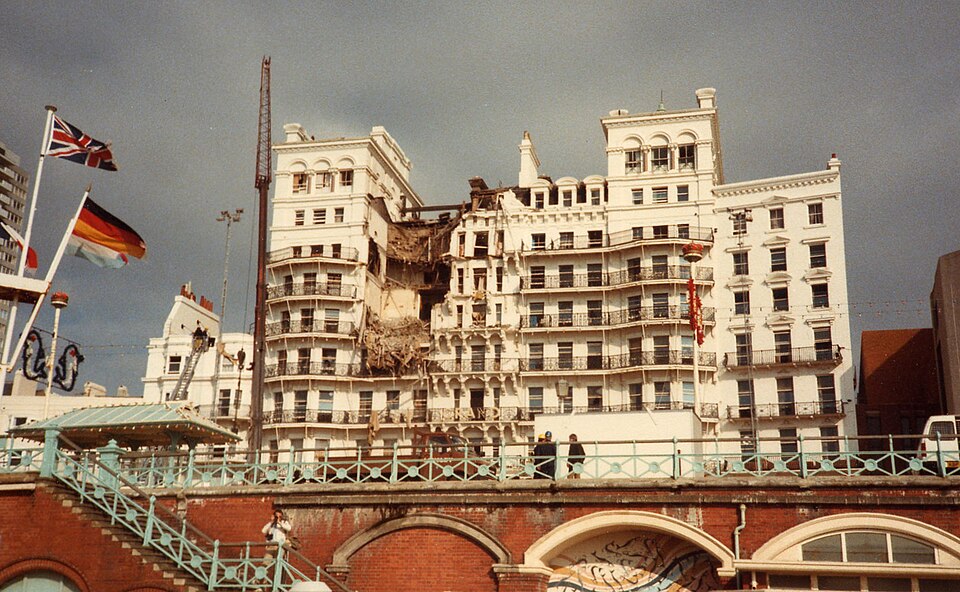

Grand Hotel, Brighton, after the bombing, 1984. Photo: D4444n / Wikimedia Commons, CC BY-SA 3.0 (creativecommons.org/licenses/by-sa/3.0/).

⬅ See all events from 12 October

Spread the word on your favourite platform!

1960: Live on Air: the Televised Assassination of a Japanese Political Leader

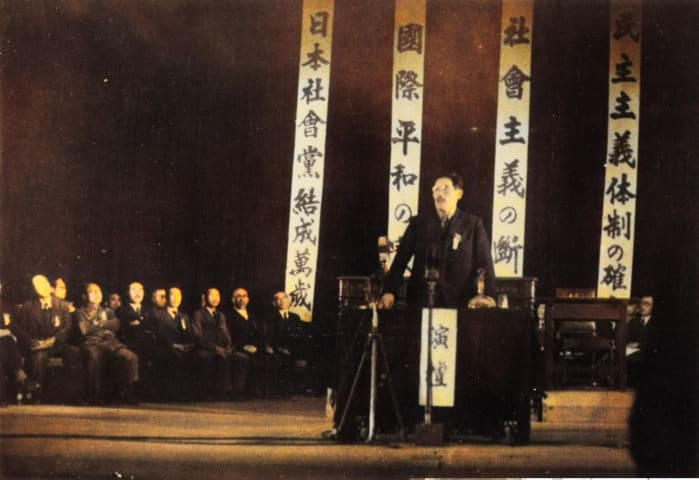
Inejiro Asanuma, leader of the Japan Socialist Party, was mid speech at a political debate in Tokyo on 12 October 1960 when a seventeen year old ultranationalist named Otoya Yamaguchi sprinted across the stage and drove a short samurai sword into his chest, twice. Cameras were rolling for a live broadcast, and the killing was captured in full, shown and reshown to a horrified nation.

Yamaguchi was no stranger to the far right; he had trained with militant nationalist groups and viewed Asanuma, who had made friendly overtures toward Communist China, as a traitor to Japan. Arrested at the scene, he spent weeks in juvenile detention before hanging himself in his cell with a bedsheet, leaving behind a message of loyalty to the emperor.

His death meant he was never tried, and the killing remains one of the most notorious political murders of postwar Japan, preserved on film as it happened.

Inejiro Asanuma founds a new political party in 1945

⬅ See all events from 12 October

Spread the word on your favourite platform!

1789: The Doctor Who Wanted Death to Be Humane: Joseph Guillotin Proposes a Single-Blow Beheading Machine

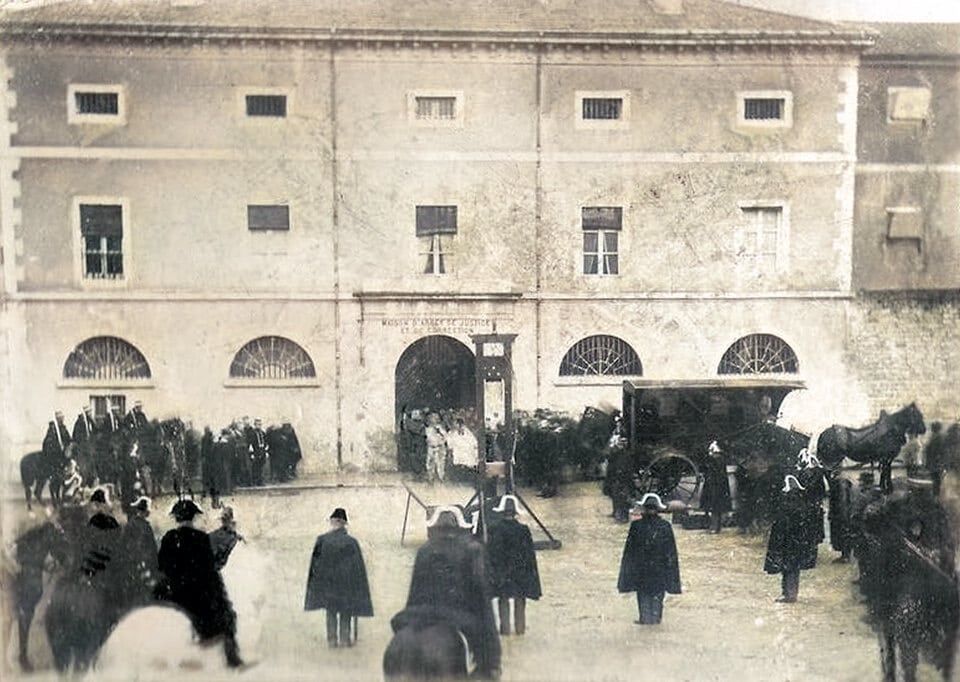
In Versailles in 1789, a physician named Joseph Guillotin stood before France’s new National Assembly and argued that execution should not be a matter of rank or suffering. He proposed that every condemned prisoner, noble or commoner, die the same way: instantly, by a single blow of a blade, rather than by the axe, the sword, or the rope, methods that often took multiple strokes or slow strangulation to finish the job.

Guillotin framed it as a mercy, a way to strip cruelty and class privilege out of state killing. He did not invent the device that would later carry his name, nor did he ever operate one, but the machine built from his proposal would go on to define the French Revolution’s Reign of Terror, and the word guillotine would forever be linked to the man who only meant to make dying less brutal.

Public guillotine execution scene 1897

⬅ See all events from 10 October

Spread the word on your favourite platform!

1891: The Mace, the Madam, and a Melbourne Scandal That Never Died

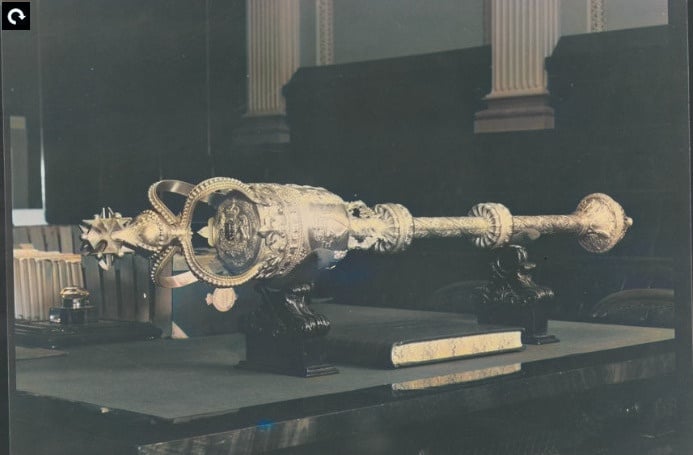
In the early hours of 9 October 1891, the ceremonial mace vanished from Parliament House in Melbourne, the silver-plated symbol of the speaker’s authority gone from a locked case. A parliamentary engineer was seen that same day running from the building with a parcel the right size and shape to be the mace; he told police it was firewood, and with no proof against him the investigation stalled.

Thirteen months later newspapers claimed the mace had turned up in the parlour of a notorious madam who catered to visiting members of parliament, a story so delicious it triggered a formal Board of Inquiry. The board cleared the brothel but settled nothing else, and popular rumour simply shifted the blame onto the new Speaker, Thomas Bent, despite his having taken office only after the theft. The mace was never seen again, and whether it was a burglary or a parliamentary prank gone wrong remains Melbourne’s favourite unsolved mystery.

Parliamentry Mace Stolen: Credit: Public Record Office Victoria, VPRS 14517/P0001/39, O884.

⬅ See all events from 9 October

Spread the word on your favourite platform!
On This Day in True Crime History
1794·The First Free Settler Murdered in the Colony: Hanged at Sydney for a Parramatta Stabbing
1826·The Gun That Misfired Twice: Three Bushrangers Hanged Outside Sydney
1873·A Tearful Confession in Custody Cracked the Case: Two Men Hanged at Perth Gaol for Eating their Victim
1889·He Called It an Accident. The Jury Called It Murder: Robert Landells Hanged at Melbourne Gaol
1907·A Doctor Fooled Twice: Martha Rendell and the Second Child to Die of Diphtheria
2002·Shot Dead in His Own Bed: A Melbourne Gangland Killing Blamed on a Friend
More Crime On This Day →

Subscribe to Dark Stories

True crime stories, dark history and tour news, straight to your inbox.