1967: Che Guevara Captured and Shot Trying to Spark a Revolution in Bolivia

Che Guevara had already helped topple one government, fighting alongside Fidel Castro in Cuba, when he slipped into Bolivia in 1966 to light the same fuse there. He spent nearly a year leading a ragged guerrilla band through the jungle, hunted by the Bolivian army with American backing, before troops cornered and captured him on 8 October 1967 in a remote ravine.

He was held overnight in a schoolhouse in a small village, then shot dead the following day on orders from the Bolivian government, which wanted him silenced rather than put on public trial. His death turned him instantly into a global revolutionary icon, his face reproduced on posters and T-shirts for decades after the jungle where he fell was forgotten.
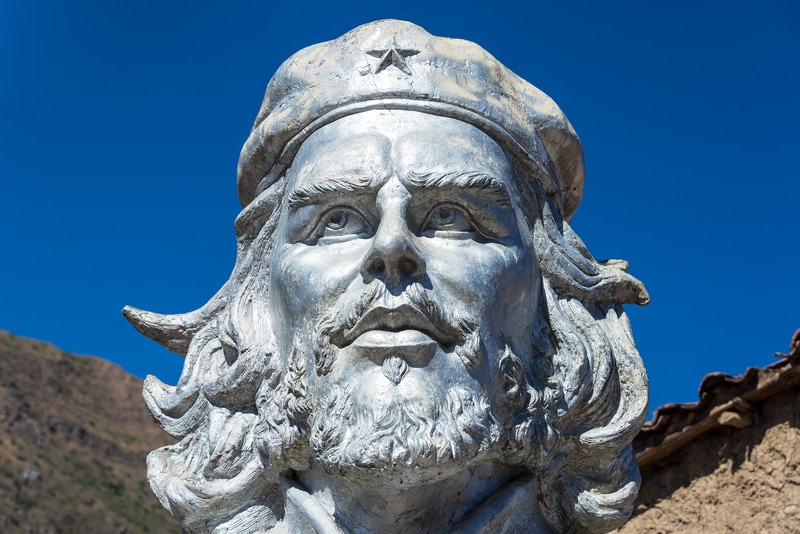

Bust of Che Guevara in La Higuera. LA HIGUERA, BOLIVIA - AUGUST 6: Monument to Che Guevara in La Higuera, Bolivia seen on August 6, 2014. Guevara was executed in La Higuera in 1967 | ID 54527187 © Jesse Kraft | Dreamstime.com
ID 54527187 © Jesse Kraft | Dreamstime.com

⬅ See all events from 9 October

Spread the word on your favourite platform!

1970: The Kidnapping That Triggered Martial Law in Peacetime Canada

In Montreal in October 1970, armed members of the Front de Liberation du Quebec forced their way into the home of British trade commissioner James Cross and seized him at gunpoint, demanding the release of jailed militants in exchange for his life.

The kidnapping tipped Quebec into what became known as the October Crisis. Days later a second cell abducted and killed a provincial cabinet minister, and the federal government responded by invoking the War Measures Act, suspending civil liberties and deploying troops onto Canadian streets for the first time in peacetime history. Cross himself was held for weeks before his captors negotiated safe passage to Cuba in return for his release.

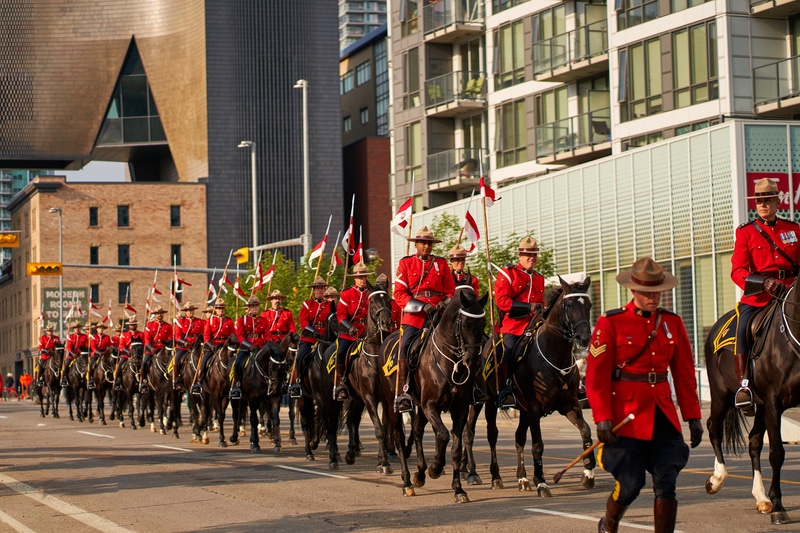
Riders on horseback wear red uniforms and carry flags as they participate in the Calgary Stampede Parade. The event showcases a vibrant display of local pride and community spirit. 07. 2023 - Calgary, Canada. | ID 460635341 © Kukotaekaterina | Dreamstime.com
ID 460635341 © Kukotaekaterina | Dreamstime.com

⬅ See all events from 5 October

Spread the word on your favourite platform!

1974: Nixon Walked Free on a Pardon While His Own Attorney General Went to Prison: the Watergate Cover-Up Trial

Five men who had run Richard Nixon’s White House and Justice Department went on trial in Washington in October 1974, charged with conspiracy, obstruction of justice and perjury for trying to smother the investigation into the break-in at the Democratic National Committee offices two years earlier.

The trial ran three months. On January 1, 1975, a jury convicted former Attorney General John Mitchell along with chief of staff H.R. Haldeman and aide John Ehrlichman on multiple felony counts; a co-defendant was acquitted. The one man missing from the dock was Nixon himself, who had resigned the previous August and been pardoned by President Gerald Ford before he could ever be charged, leaving the men who had followed his orders to serve the time he never did.

President Richard Nixon made of Wax. Wax figure Richard Nixon reading documents with american flag at desk | ID 59298060 © Lequint | Dreamstime.com
ID 59298060 © Lequint | Dreamstime.com

⬅ See all events from 1 October

Spread the word on your favourite platform!

1898: Executed as Reform Martyrs, But Were They Assassins? The Beheading of Six Gentlemen in Beijing

When Empress Dowager Cixi crushed the Hundred Days’ Reform with a palace coup in September 1898, she moved fast. Six officials and intellectuals who had championed the Guangxu Emperor’s modernisation drive, among them Tan Sitong and Kang Youwei’s younger brother Kang Guangren, were arrested, denied any trial, and beheaded the same day at the Caishikou execution ground in Beijing. For decades they were remembered simply as reform martyrs cut down by a reactionary court.

That story only cracked in the 1980s, when testimony surfaced in Japanese archives from a man who had been ordered to assassinate Cixi and fled before he could act. His account implicated four of the six in a genuine plot to kill the Empress Dowager, suggesting at least one of the condemned, Yang Rui, may have been entirely innocent, executed alongside men who really had been plotting murder.

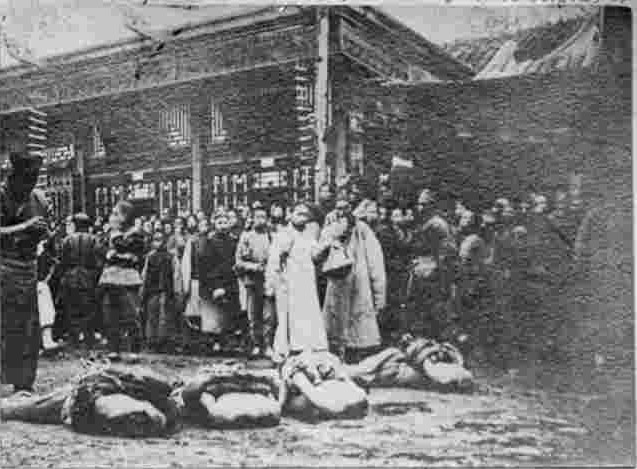
Historic photo of beheaded bodies after execution: Laneway of Caishikou crossroad, Beijing, China.

⬅ See all events from 28 September

Spread the word on your favourite platform!
On This Day in True Crime History
1794·The First Free Settler Murdered in the Colony: Hanged at Sydney for a Parramatta Stabbing
1826·The Gun That Misfired Twice: Three Bushrangers Hanged Outside Sydney
1873·A Tearful Confession in Custody Cracked the Case: Two Men Hanged at Perth Gaol for Eating their Victim
1889·He Called It an Accident. The Jury Called It Murder: Robert Landells Hanged at Melbourne Gaol
1907·A Doctor Fooled Twice: Martha Rendell and the Second Child to Die of Diphtheria
2002·Shot Dead in His Own Bed: A Melbourne Gangland Killing Blamed on a Friend
More Crime On This Day →

Subscribe to Dark Stories

True crime stories, dark history and tour news, straight to your inbox.