1873: Oscar Wallace Hanged at Ballarat for Armed Assault at Mount Beckworth

Oscar Wallace, known also by the aliases James and Hasker, had only been free for six weeks when he committed a brutal armed assault on Mary Cook at her isolated farmhouse near Mount Beckworth, outside Clunes, on 4 August 1873. Her husband was away, and Wallace, disguised with a bran bag over his head and a sack about his body, entered the property, seized a double-barrelled gun, locked the children in an adjoining room, and attacked the homeowner at knifepoint. He then fled through the district, robbing several men, firing at a Mr Prentice near Beaufort, and reportedly heading toward a hotel to settle an old score. He had served two years in Pentridge for larceny and had openly threatened the life of a witness from that trial.

Senior Constable Woods disguised himself as a digger and tracked Wallace to a store near Beaufort, where he overpowered him before Wallace could use the butcher’s knife he still carried. Wallace was tried, convicted, and hanged at Ballarat on 11 August 1873. He reportedly showed complete indifference to his fate from the moment of his capture.
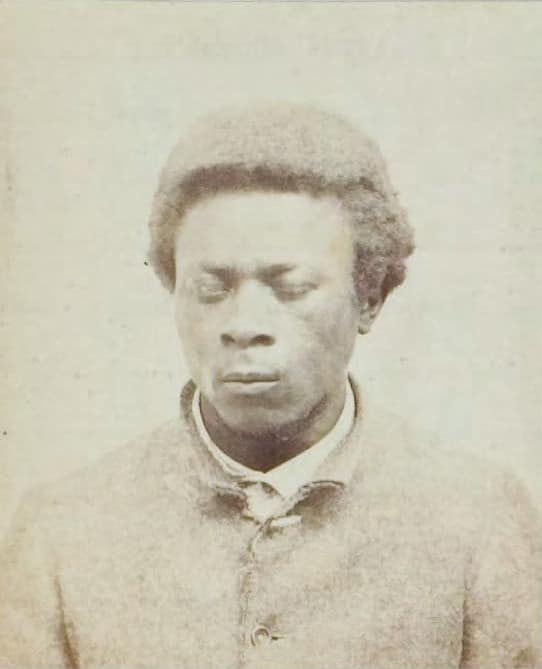

James Wallace (tried as Oscar Wallace), prisoner no. 8775. PROV, VPRS 515/P0000, Volume 13, p. 167

⬅ See all events from 11 August

Spread the word on your favourite platform!

1950: Ethel Rosenberg Arrested as the Atom Spy at the Heart of a Nuclear Secrets Scandal

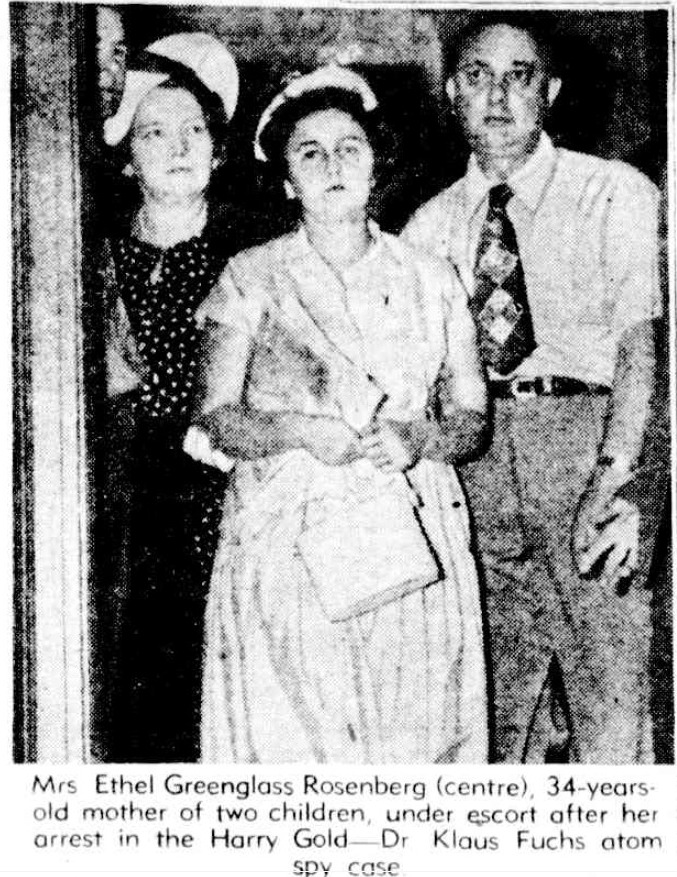
Ethel Rosenberg, a 34-year-old mother of two, was arrested in New York on 11 August 1950 in connection with the Harry Gold and Klaus Fuchs atom spy case. She and her husband Julius, both lifelong Communist sympathisers with Russian-born parents, were accused of passing atomic secrets to the Soviet Union. The trail had begun with the unravelling of a network stretching from British physicist Klaus Fuchs to the heart of the American nuclear program.

Convicted at trial in March 1951, both Rosenbergs were sentenced to death. On 19 June 1953, Julius was executed first at Sing Sing prison, followed by Ethel at 8.11 p.m. Five electric shocks were required before doctors pronounced her dead.

In her final letter to her lawyer Emanuel Bloch, Ethel wrote: ‘I am not alone, and I die with honor and dignity, knowing my husband and myself will be vindicated.’

Ethel Greenglass Rosenberg under escort after spy charge arrest

⬅ See all events from 11 August

Spread the word on your favourite platform!

1899: Chung Yeung and Lem Kai Hanged at Fannie Bay Gaol for the Yam Creek Murder

In July 1898, a Chinese man named Chee Hung vanished from Yam Creek in the Northern Territory. Days later, human bones were discovered in a neighbouring garden. Investigators found that Chee Hung had been accused of stealing gold, shot while fishing at a billabong, and then his body was cooked and dismembered with an axe to prevent identification. Lem Kai and his accomplice Chung Yeung were arrested and tried at the Circuit Court in March 1899, where circumstantial evidence was overwhelming and both men were convicted of wilful murder.

On 10 August 1899, both men were hanged in the yard of Fannie Bay Gaol in the presence of the deputy sheriff, gaol officials, and four justices of the peace. The executioner and his assistant were prisoners serving time in the gaol itself.

Both condemned men admitted their guilt to a Chinese missionary who attended them before the execution, and they met their deaths with composure.

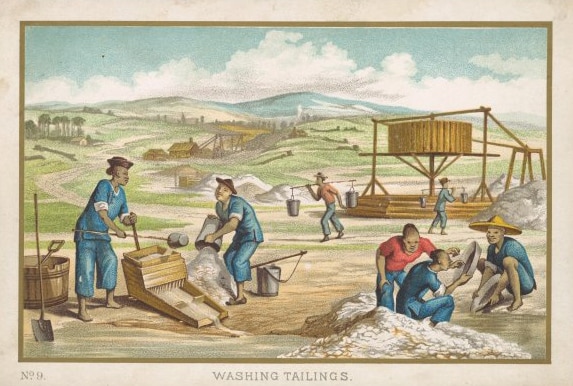
Workers washing mining tailings in the 1870s

⬅ See all events from 10 August

Spread the word on your favourite platform!

1949: The Acid Bath Murderer: John Haigh Hanged for Six Killings

John George Haigh was an English serial killer who battered or shot his victims, then dissolved their bodies in sulphuric acid to erase all evidence. He forged his victims’ signatures to sell their possessions and collect large sums of money, a scheme he had refined through years of fraud and multiple prison terms. Though convicted of six murders, Haigh claimed to have killed nine.

Born in Stamford, Lincolnshire, and raised in Yorkshire by strict Plymouth Brethren parents, Haigh drifted from fraud into murder after becoming fascinated by French killer Georges-Alexandre Sarret, who had used acid to dispose of bodies. He was arrested in 1949 after police connected him to the disappearance of a widow whose remains, including gallstones and false teeth, survived the acid and were found at his workshop in Crawley, Sussex. Haigh was convicted at Lewes Assizes and hanged at Wandsworth Prison on 10 August 1949.

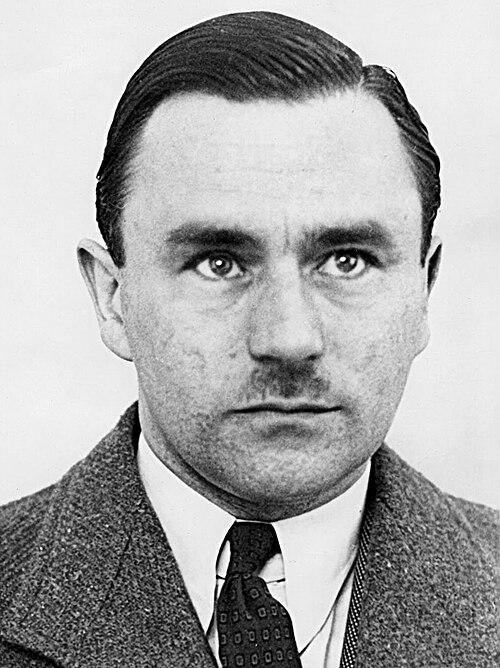
Portrait of john george haigh

⬅ See all events from 10 August

Spread the word on your favourite platform!
On This Day in True Crime History

Subscribe to Dark Stories

True crime stories, dark history and tour news, straight to your inbox.