1984: The Brighton Bomb: the IRA Attempt to Wipe Out Margaret Thatcher and Her Cabinet

The Grand Hotel in Brighton was packed with Britain’s Conservative leadership for their annual conference when a long-delay bomb, planted by the Provisional IRA weeks earlier in a guest room, tore through the building in the early hours. Margaret Thatcher was still awake working on her conference speech in the room next door and escaped with only cuts, but five people died in the rubble and 31 more were injured, some permanently maimed.

The bomber, Patrick Magee, had checked into the hotel under a false name and set the timer so far in advance that he was long gone before it detonated. The IRA’s chilling statement afterward noted that Thatcher had been lucky that day, but they would only need to be lucky once. Magee was later caught through forensic evidence left on the bomb casing and convicted for the attack.
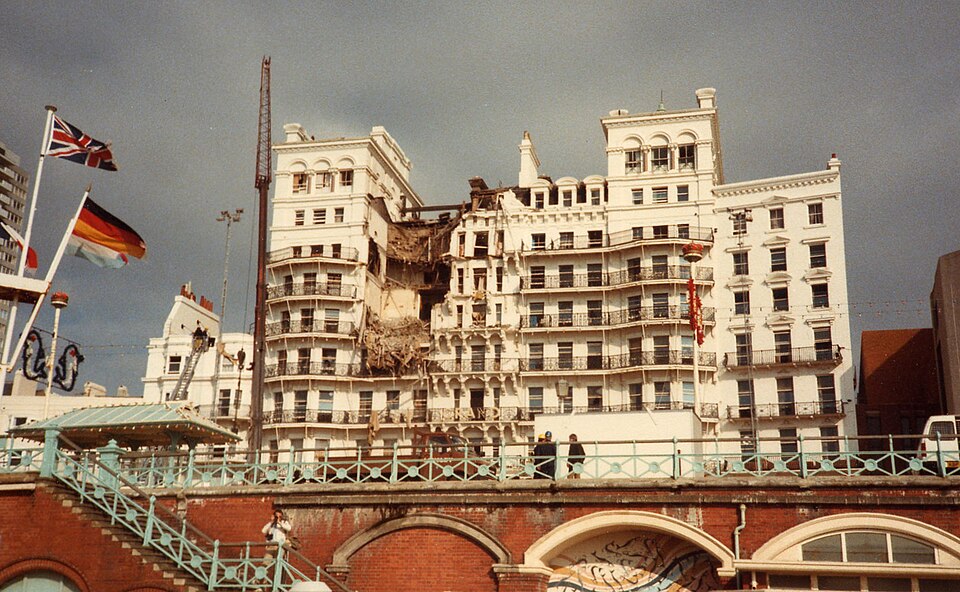

Grand Hotel, Brighton, after the bombing, 1984. Photo: D4444n / Wikimedia Commons, CC BY-SA 3.0 (creativecommons.org/licenses/by-sa/3.0/).

⬅ See all events from 12 October

Spread the word on your favourite platform!

1898: Executed as Reform Martyrs, But Were They Assassins? The Beheading of Six Gentlemen in Beijing

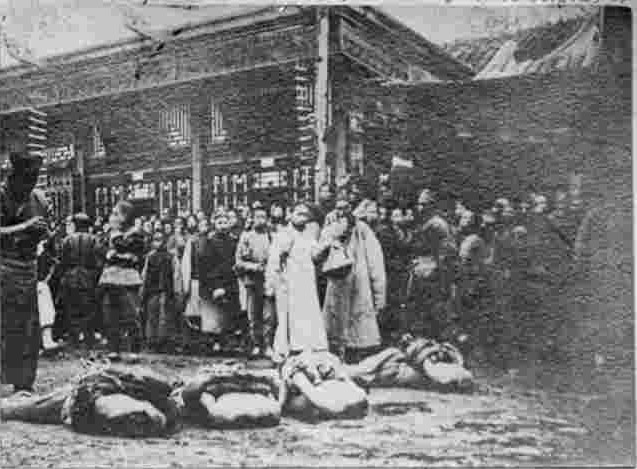
When Empress Dowager Cixi crushed the Hundred Days’ Reform with a palace coup in September 1898, she moved fast. Six officials and intellectuals who had championed the Guangxu Emperor’s modernisation drive, among them Tan Sitong and Kang Youwei’s younger brother Kang Guangren, were arrested, denied any trial, and beheaded the same day at the Caishikou execution ground in Beijing. For decades they were remembered simply as reform martyrs cut down by a reactionary court.

That story only cracked in the 1980s, when testimony surfaced in Japanese archives from a man who had been ordered to assassinate Cixi and fled before he could act. His account implicated four of the six in a genuine plot to kill the Empress Dowager, suggesting at least one of the condemned, Yang Rui, may have been entirely innocent, executed alongside men who really had been plotting murder.

Historic photo of beheaded bodies after execution: Laneway of Caishikou crossroad, Beijing, China.

⬅ See all events from 28 September

Spread the word on your favourite platform!

1964: The Warren Commission Declares Lee Harvey Oswald the Lone Gunman in the Kennedy Assassination

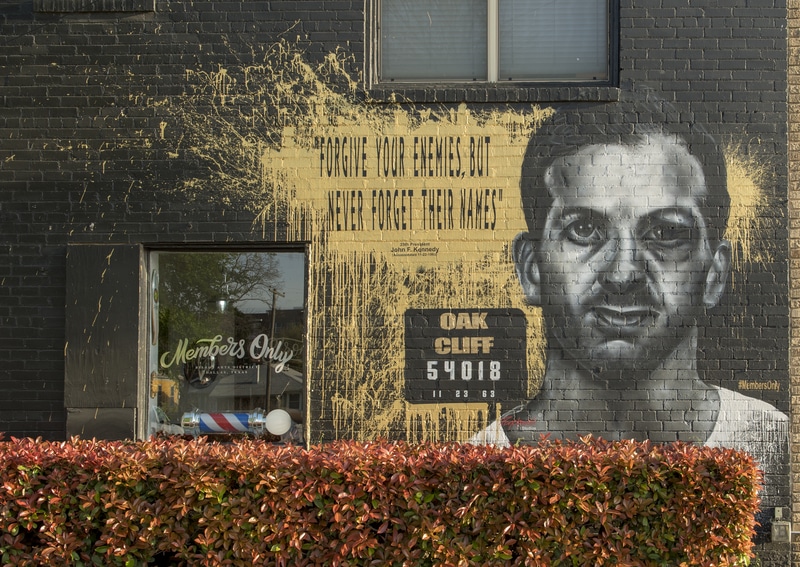
On September 27, 1964, the Warren Commission delivered its report on the assassination of President John F. Kennedy, concluding after a ten month inquiry that Lee Harvey Oswald acted alone in firing the shots that killed the president in Dallas on November 22, 1963.

The commission, chaired by Chief Justice Earl Warren and formed by executive order of President Lyndon Johnson, found no evidence of a conspiracy, foreign or domestic, and determined that Jack Ruby likewise acted alone when he shot Oswald dead two days after the assassination while Oswald was in police custody.

The report’s single bullet theory, used to explain the wounds suffered by both Kennedy and Texas Governor John Connally from one shot, became the most disputed element of the findings and fueled decades of public skepticism and rival conspiracy theories that persist to this day.

Lee Harvey Oswald Mural, Bishop Arts District, Dallas, Texas. Pictured is a mural on the side of the Members Only barber shop in the Bishop Arts District, Dallas, Texas. It features Lee Harvey Oswald, the man who assassinated president John F. Kennedy on November 22, 1963. He was arrested a short time later in the Texas Movie Theatre in Oak Cliff. It was painted by renowned Dallas muralist, Theo Ponchaveli. The Bishop Arts District is a small shopping and entertainment district in north Oak Cliff, immediately southwest of Downtown Dallas. It was originally developed as warehouses and shops in the 1920s. | ID 112938931 © David Pillow | Dreamstime.com
ID 112938931 © David Pillow | Dreamstime.com

⬅ See all events from 27 September

Spread the word on your favourite platform!

1901: President McKinley’s Killer Sentenced to Death After Jury Deliberates Barely an Hour

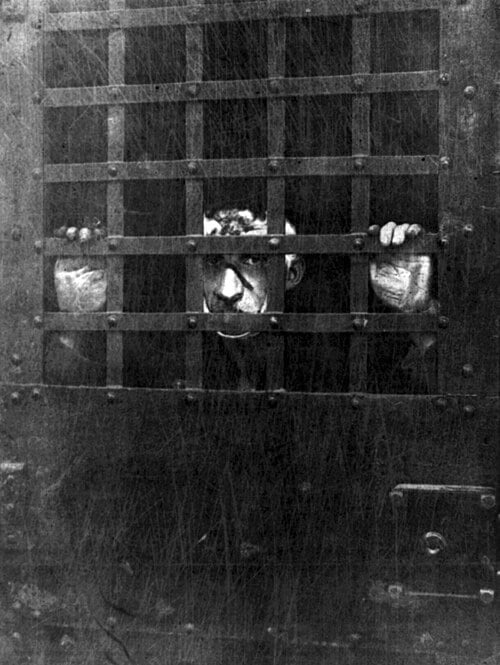
Leon Czolgosz shot President William McKinley on 6 September 1901 at the Pan-American Exposition in Buffalo, New York, firing two shots from a revolver he had concealed inside a handkerchief. McKinley lingered for eight days before dying of his wounds on 14 September.

Czolgosz’s trial opened on 23 September. The jury took less than an hour to find him guilty, and on 26 September he was sentenced to death. He was executed in the electric chair at Auburn Prison on 29 October 1901, and prison officials later poured acid into his coffin to prevent the grave becoming a shrine.

Czolgosz showed no remorse for the killing. From the scaffold he declared, “I killed the President because he was the enemy of the good people, the good working people. I am not sorry for my crime.”

Leon F Czolgosz in Jail

⬅ See all events from 26 September

Spread the word on your favourite platform!
On This Day in True Crime History

Subscribe to Dark Stories

True crime stories, dark history and tour news, straight to your inbox.