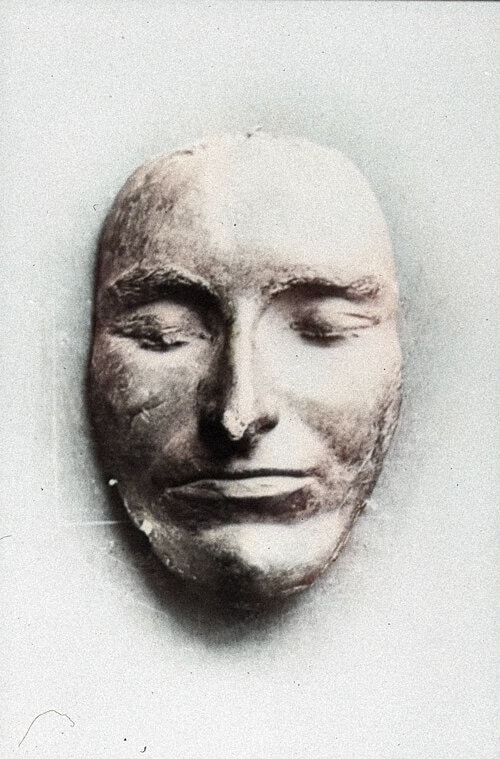
William Westwood was already notorious as Jackey Jackey, a bushranger transported twice and flogged repeatedly, when he helped lead the 1846 Cooking Pot Uprising on Norfolk Island, a desperate convict revolt sparked by brutal rations and treatment. In the chaos, three constables and an overseer were killed.
He was 26 when he was hanged on 13 October 1846, one of the largest mass executions in Australian penal history.
Death mask of William Westwood known as Jackey Jackey
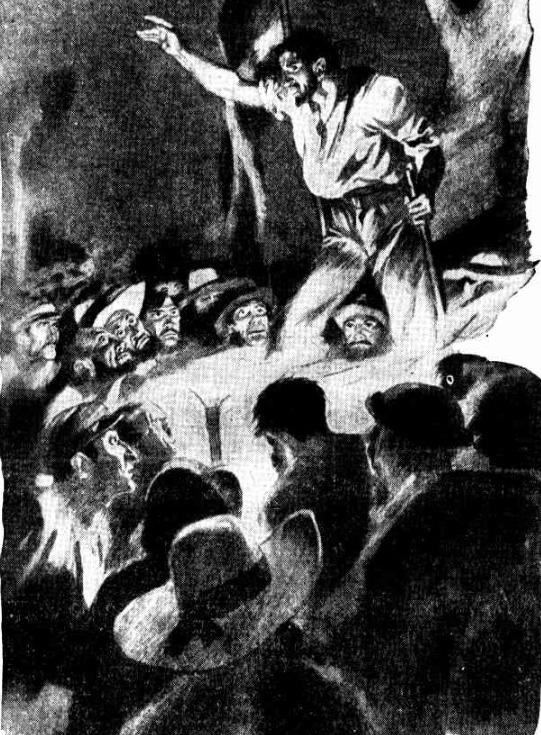
James Scobie, a Scottish gold miner, was killed outside Bentley's Hotel at Ballarat on this date after he and a companion found the pub shut and tried to get in. A hand smashed through a window to strike him, the publican's wife accused him of breaking it, and as he fled a group of men caught up with him; one blow, delivered with something Peter Martin, the only witness, described as resembling a battle-axe, killed him on the spot.
At the inquest that same afternoon, hotelkeeper James Bentley and his staff denied any involvement, and despite a strong case against them the magistrate let the matter drop. Miners furious at the whitewash burned Bentley's Hotel to the ground, and only after public outcry was a fresh trial held at Melbourne's Supreme Court, where Bentley and two others were convicted of manslaughter. The anger over Scobie's death and its botched cover-up became one of the sparks that lit the Eureka Rebellion weeks later.
On September 9, 1971, inmates at Attica Correctional Facility in New York seized control of the prison, taking dozens of guards and staff hostage in protest over brutal conditions, overcrowding, and demands for basic political and civil rights. For four days the prisoners held the yard, negotiating with officials and issuing a list of demands broadcast to the watching public.
On September 13, on the order of Governor Nelson Rockefeller, state troopers and police stormed the facility, opening fire on inmates and hostages alike. By the time the smoke cleared, 39 people were dead, including ten hostages, most killed not by prisoners but by the retaking force's own gunfire.
The riot remains one of the deadliest prison uprisings in American history and exposed the brutal conditions inside Attica, triggering decades of lawsuits, investigations, and a landmark settlement for survivors and victims' families.
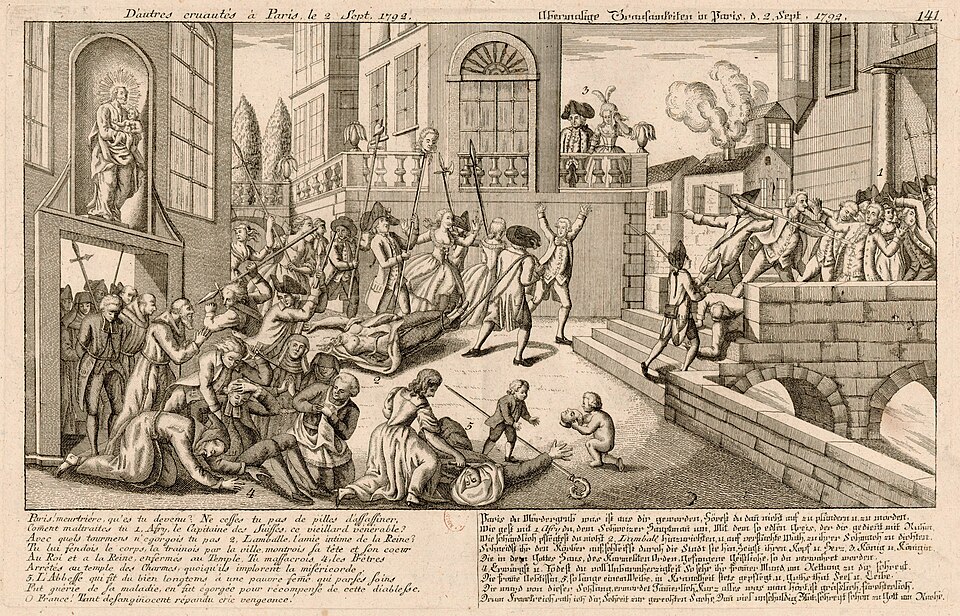
Over five days in September 1792, mobs stormed nine prisons across Paris and carried out mass summary executions of those held within. The killings were brutal in their indiscriminate reach: roughly half the prison population was slaughtered before the violence finally subsided.
An estimated three-quarters of the victims were not political prisoners at all, but common criminals, forgers, women, and children. The September Massacres remain one of the darkest episodes of the French Revolutionary period.
Engraving showing the massacre of Princess de Lamballe