Dark Stories True Crime Blog - Page 5

On This Day in True Crime History – 7th December

On this day in True Crime History, December 7th has witnessed a series of startling and somber events throughout history, marking it as a day of infamy in the annals of true crime. From notorious bank heists by legendary outlaws to chilling abductions that captivated nations, let us delve into the next batch of dark and complex tales from criminal history.

0043 BC: 📜 The Famous Roman Orator Cicero Assassinated

On this day in 43 BC, Cicero, one of the most celebrated figures in Roman history and renowned for his eloquence and oratory skills, met a tragic end. He was assassinated on the orders of Marcus Antonius, marking the conclusion of a turbulent chapter in Rome’s political landscape.

Cicero’s last months were marked by his reentry into politics, advocating for a general amnesty and attempting to use Octavian (the future emperor Augustus) as a political tool. He vehemently opposed Mark Antony’s control over Rome following Julius Caesar’s assassination.

Octavian learned of one of Cicero’s unfortunate remarks that “the young man should be given praise, distinctions—and then be disposed of.” The formation of the Second Triumvirate in October sealed Cicero’s fate. He was captured and killed near Caieta on December 7, 43 BC, with his head and hands displayed on the speakers platform at the Forum in Rome. 🌟🗡️🏛️

This Day in True Crime History

1869: 🤠 Jesse James Infamous Bank Robbery and Revenge Killing

On this day in 1869, Jesse James, and very likely his brother Frank, perpetrated a notorious bank robbery at the Daviess County Savings Association in Gallatin, Missouri.

The target of their heist yielded only a modest sum of money. However, the robbery took a violent turn as Jesse James fatally shot the cashier, Captain John Sheets, in a case of mistaken identity.

Jesse believed Sheets to be Samuel P Cox, a militia officer responsible for the death of Bloody Bill Anderson, one of the most fearsome leaders of Confederate guerrillas in Civil War Missouri, who Jesse strove to emulate.

This bank robbery and daring ride out of town from a chasing posse catapulted Jesse James into notoriety, making him one of the most infamous outlaws of the Wild West. 🤠💰🔫

This Day in True Crime History

1972: 👠 Philippine First Lady Survives Bold Assassination Attempt

On this day in 1972, a brazen assassination attempt was made on Imelda Marcos, the First Lady of the Philippines 🌺.

An assailant, concealing a bolo knife in his left coat sleeve, made a sudden and violent lunge at Mrs Marcos, striking her twice. The attacker then went on a rampage, hacking at bystanders until he was fatally shot by security 🗡️🚑.

Imelda Marcos would go on to become better known for her extraordinary collection of 3000 thousand pairs of shoes, a stark contrast to her nation’s turmoil and an enduring symbol of her lavish lifestyle. 🥿👠

Imelda Marcos

1982: 📅 The December Murders in Suriname

On this day in 1982, in Dutch-speaking Suriname, fifteen prominent young Surinamese men who had voiced criticism against the military dictatorship then ruling the country became victims of the event known as The December murders.

Thirteen individuals were forcibly taken from their homes during the early hours between 2 am and 5 am, according to accounts provided by their families. The remaining two victims already in detention due to their involvement in an attempted countercoup in March 1982.

Soldiers loyal to Dési Bouterse, who held dictatorial power in Suriname at the time, transported these individuals to a sham “trial” presided over by sergeants who had assumed the roles of judges. Following these dubious “hearings,” the victims endured brutal torture and were ultimately shot dead. The exact circumstances surrounding their deaths remain shrouded in ambiguity.

A few days later the country’s dictactor Bouterse made a national television announcement asserting that all detainees had been shot dead while purportedly attempting to flee.

The December Murders sparked international outrage, and many Surinamese civilians fled their homeland for the Netherlands in fear for their safety. 🕯️🌍

In November 2019, President Bouterse was sentenced to 20 years in prison by a military court. Bouterse, sentenced in absentia, filed an appeal which, in August 2021, which concluded in the sentence being upheld.

Suriname

1982: 💉 First Lethal Injection Execution in the U.S

On this day in 1982, Charles Brooks Jr made history by becoming the first person in the United States to be executed by lethal injection 💉.

This execution in Texas marked a shift in the methods of capital punishment, introducing lethal injection as a supposedly more humane alternative.

The condemned man’s final meal before his execution included a t-bone steak, french fries with ketchup, Worcestershire sauce, biscuits, peach cobbler, and iced tea 🥩🍟🍑🍹.

Lethal Injection

2003: 🚍 Tragic Abduction in Queensland

On this day in 2003, a heartbreaking incident shook Australia when Daniel Morcombe was abducted from under an overpass on the Sunshine Coast, Queensland while waiting for a bus. This case remained a mystery for many years, casting a shadow over the region and capturing national attention.

An extensive undercover operation led to the arrest of Brett Peter Cowan, who had been previously interviewed by police in 2006. He was charged after leading undercover detectives to Daniel’s remains in 2012, bringing a somber closure to the case. 🕵️‍♂️🔍

This Day in True Crime History

As we close the chapter on December 7th’s true crime history, let these historical events serve as solemn reminders of the past, guiding lights for the present, and cautionary tales for the future. Hope to see you on a Dark Stories True Crime Tour soon!

Spread the word on your favourite platform!

On This Day in True Crime History – 30th November

Casting a light on November 30th in True Crime History, we uncover a mosaic of human experiences where tales of justice, tragedy, and infamy intertwine.

1796: ⛓️ Francis Morgan Gibbeted on Sydney Harbour’s Pinchgut Island

On this day in 1796, In the midst of Sydney Harbour lies the picturesque Pinchgut Island, known today for its iconic Fort Denison. But in the early days of the colony, this tiny island bore witness to a macabre chapter in history, with a convict named Francis Morgan meeting a gruesome fate there. 💀

Francis Morgan’s journey to Pinchgut Island began in 1793 when he arrived in the colony of New South Wales aboard the ship Sugar Cane, surviving the attempted convict mutiny on their way to Sydney.

Morgan had a dark past, having been tried for the murder of a man in Dublin, Ireland, and was caught wearing the victim’s watch. His sentence, initially death, was commuted to transportation for life. 🚢

However, upon reaching Sydney, Morgan’s violent tendencies emerged once more. In mid-October 1796, he brutally bashed a man named Simon Raven to death on the northern shores of the harbour. This heinous act led to his second encounter with a death sentence. ⚔️

As Francis Morgan awaited his execution, he received a chilling piece of news. His body would not find peace in death; instead, it would be hung in chains on Pinchgut Island, serving as a grim warning to others as required by the Murder Act of 1751. Morgan, stoicly commented favorably on the splendid view of the harbor he would have from his eerie perch, noting its unparalleled beauty. 🌅

For at least the next four years, Francis Morgan’s lifeless body endured the elements, suspended in the middle of Sydney Harbour—a haunting reminder of the consequences of a life gone terribly wrong. ⏳

This Day in True Crime History

1796: 🔒 John Lawler and Martin McEwin Hanged for Robbing the Public Stores

On this day in 1796 in Sydney was a sombre day full of executions. The newly formed bustling streets of Sydney saw John Lawler (convict) and Martin Mcewin (soldier) faced the hangman’s noose for robbing public stores.

Despite the seemingly minor offence of stealing food, they faced the same fate as that of a murderer, Francis Morgan, whose vile act of wilful murder darkened the colony’s early history. ⚖️🔓

Both John Lawler and Martin Mcewin were executed and found their eternal rest at Sydney’s first public cemetery known as the Old Sydney Burial Ground, a site now known as Town Hall in the heart of Sydney. The burial ground remained in use until January 1820. During the 28 years the cemetery operated some 2240 burials were added. Excavations of the Town Hall basement in 2008 identified 66 remaining graves in total. 🏛️

This Day in True Crime History

1900: 💔 Oscar Wilde’s Iconic Farewell

On this day in 1900, the world lost one of its most brilliant and controversial literary figures, Oscar Wilde. The renowned Irish writer and wit, known for his sharp humor and flamboyant style, spent his final days in a Paris hotel room.

Oscar Wilde’s life had taken a tragic turn when he was imprisoned for “gross indecency” due to his homosexual relationships. After his release, he fled to France to escape the judgmental eyes of Victorian England. He found himself in a modest hotel, facing the drab wallpaper that adorned his room.

Legend has it that, in his last moments, Wilde remarked on the wallpaper, saying, “One of us had to go.” It was a poignant and ironic statement, reflecting the profound struggles and conflicts he had faced in his life.

Oscar Wilde’s death marked the end of an era and the loss of a literary genius whose works continue to be celebrated today. His wit, humor, and unique perspective on society remain celebrated in the world of literature. 📖🎭🖋️

This Day in True Crime History

1962: 🕊️ Andrews Hanged in Grim Finale

On this day in 1962, a dark chapter in history concluded as Lowell Lee Andrews, a 22-year-old college student at the University of Kansas, faced execution by hanging for the horrifying murders of his mother, father, and sister. 💔🕊️

His shocking crimes unfolded on the night of November 28, 1958, when he callously shot and killed his own parents, William and Opal Andrews, along with his 20-year-old sister, Jennie, within the walls of their Wichita, Kansas, home. The nation was left in disbelief as the gruesome details of this family tragedy emerged.

Initially, Andrews attempted to deflect suspicion by reporting the murders to the police, deceitfully claiming that an unidentified intruder had committed the heinous act. However, law enforcement swiftly turned their attention towards Andrews as their investigation uncovered a web of damning evidence.

The pieces of the puzzle fell into place as it was revealed that Andrews had taken out a substantial life insurance policy on his family shortly before their deaths, a policy that promised a substantial windfall upon their demise. Moreover, the murder weapon was traced back to him, eroding the facade he had tried to maintain.

During his trial, the chilling truth emerged. Andrews confessed to the murders, divulging that he had been motivated by two sinister factors: the lure of insurance money and a desire for emancipation from what he perceived as his family’s suffocating control.

Justice was served as Lowell Lee Andrews faced his ultimate punishment, hanging at the Kansas State Penitentiary in Lansing, Kansas. ⚖️🪓🏚️

Univesity of Kansas

1989: 🌌 Aileen’s Fateful Beginnings

On this day in 1989, a chilling chapter in the life of Aileen Wuornos, one of America’s most infamous female serial killers, began. Aileen, who had a troubled past as a victim of abuse and exploitation, found herself on a path that would lead to a series of gruesome murders.

Aileen often resorted to prostitution to make a living, and on this fateful night, her client was Richard Mallory, a convicted rapist. According to Aileen, the encounter took a horrifying turn when Mallory attempted to assault her. In what she claimed was an act of self-defence, she shot him three times, ending his life.

However, this event marked the beginning of a series of killings by Aileen Wuornos. She went on to claim the lives of six more men, raising questions about her motivations and the transformation from victim to predator. While the first murder may have been driven by self-defence, subsequent acts left even sympathetic observers sceptical of her motives.

Many were left wondering whether Aileen was a serial killer, a victim, or both. She was on death row for a number of years before being executed in 2002. 📚🔍

Aileen

2001: 🔒 Capture of the Green River Serial Killer

On this day in 2001, a significant breakthrough occurred in the pursuit of justice as Gary Ridgway, a notorious serial killer, was arrested. This arrest marked a pivotal moment in the effort to bring a remorseless murderer to justice.

Gary Ridgway, infamously known as the “Green River Killer,” eventually pleaded guilty to a staggering 49 murders. His crimes had terrorized the Pacific Northwest for years, and his capture was the result of relentless investigative work by law enforcement.

Ridgway’s journey to capture was not without its twists and turns. He had previously come to the attention of law enforcement, having been arrested in 1982 and 2001 on charges related to prostitution. It was in 1983 that he became a suspect in the Green River killings, a shadow that would follow him for years.

In 1984, Ridgway passed a polygraph test, which added a layer of complexity to the investigation. On April 7, 1987, police took hair and saliva samples from Ridgway, seeking to uncover any evidence that might link him to the string of murders.

Ridgway’s ability to pass a polygraph test was a chilling reminder of the challenges faced by law enforcement in bringing him to justice. Here are the polygraph questions and answers:

🔒 Gary, you have heard all the questions on this test, are there any you are going to lie to? NO
🔒 Regarding the deaths of prostitutes, have you told the police the complete truth about that? YES
🔒 Is your true last name Ridgway? YES
🔒 Have you ever caused the death of a prostitute? NO
🔒 Before you were 30 years old, did you ever physically injure anyone without provocation? NO
🔒 Were you born in the state of Utah? YES
🔒 Do you know of anyone who has killed a prostitute? NO
🔒 Before you were 30 years old, did you ever lie about someone to get them into serious trouble? NO
🔒 Have you taken any illegal drug or narcotic in the last 48 hours? NO

Gary Ridgway, the Green River Killer, is serving a life sentence without the possibility of parole. He entered a plea agreement in 2003 in exchange for a life sentence instead of facing the death penalty.. 📚🔍

Green River

2003: 🚴 Cyclist Ian Humphrey’s Tragic Death

On this day in 2003, a sombre event unfolded on Kapunda Road in South Australia, forever etching itself into the annals of controversy. It was the day when cyclist Ian Humphrey lost his life in a collision with a vehicle driven by Eugene McGee, an incident that would raise significant questions about justice and accountability. 😢

The Controversy Unfolds:

Hit-and-Run Drama: Eugene McGee, a prominent Adelaide lawyer, struck and killed Ian Humphrey with his vehicle. Shockingly, he did not stop at the scene of the accident and failed to render assistance to the injured cyclist. This hit-and-run aspect of the incident immediately raised concerns and garnered public attention. 🚗🏴‍☠️

Delayed Surrender: Adding to the controversy was the fact that Eugene McGee turned himself into the police more than six hours after the collision. This delay in coming forward added to the mystery and left questions about his actions and intentions during those critical hours. ⏰🤔

Alcohol Consumption: Reports indicated that McGee had consumed at least four or five glasses of wine over lunch on the day of the incident. He was not subjected to a blood alcohol test, raising concerns about whether alcohol impairment played a role in the collision. 🍷🍻

Legal Proceedings and Public Outrage:
Eugene McGee faced legal proceedings in the wake of these shocking events. However, the outcome of the trial left many deeply dissatisfied. He was found guilty of driving without due care and was fined $3,000, with his driver’s license suspended for a year. This verdict and the relatively lenient penalty fueled public outrage. ⚖️😡

Calls for Accountability:
The trial’s outcome and the perceived inadequacy of the penalty sparked widespread protests and demands for greater accountability. Hundreds of cyclists and victims’ rights groups rallied, expressing their dissatisfaction with the state’s justice system. 📢👥

A Royal Commission Investigates:
In response to the controversy and public pressure, the South Australian Government ordered a Royal Commission to investigate the incident comprehensively. 🕵️‍♂️📋

The Second Trial and Its Aftermath:
Following the Royal Commission, further charges were laid against Eugene McGee. He faced accusations of conspiring to pervert the course of justice and perverting the course of justice. However, in a series of legal developments, including stays of proceedings and a permanent stay, the charges against McGee were ultimately dismissed. This outcome further fueled debates about justice and accountability. Questions that remain unanswered to this day. ⚖️🔄

Cyclist vs Car

Reflecting on the events of November 30th in True Crime History, we are reminded of the profound impact that crime and its consequent justice have on the fabric of society. These stories serve as a chronicle of the darker aspects of human nature and human history.

Spread the word on your favourite platform!

On This Day in True Crime History – 23rd November

In our journey through True Crime History today, we spotlight November 23rd, a day steeped in intriguing occurrences. These moments encourage us to see every date as a potential story, rich with insights and waiting to be decoded.

1789: 🔒 Anne Davis, First Woman Hanged in Australia for Theft

On this day in 1789, Anne Davis met a grim fate as the first woman to be hanged in Australia.

Her tragic story began in 1786 England when she was indicted for stealing eight pairs of silk stockings valued at 8 shillings. Found guilty at the Old Bailey, she was sentenced to transportation for seven years and ultimately ended up at Sydney Cove.

In Sydney Cove, Anne Davis committed another theft, this time stealing various items from the house of convict Robert Sidaway and Mary Marshal. When she was caught with the stolen goods and found guilty, she attempted to avoid execution by claiming to be pregnant.

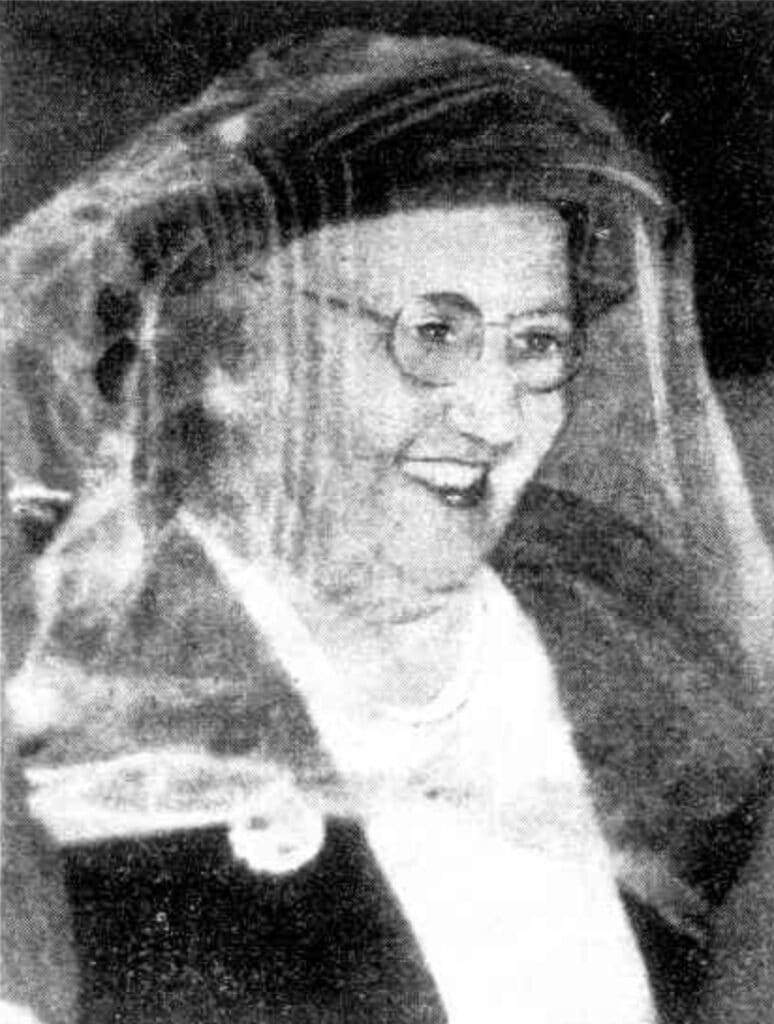
A jury of matrons was empanelled to examine her condition. An elderly matron of between sixty and seventy years old pronounced to the gentlemen of the court that the prisoner was as much with a child as herself, thus confirming the verdict would be carried out.

On November 23, 1789, Ann Davis faced the gallows, becoming the first woman in the colony to be executed. ⚖️🌏🔒

This Day in True Crime History

1859: 🤠 Birth of the Legendary Outlaw Billy the Kid

On this day in 1859, one of the Wild West’s most iconic figures, Billy the Kid, was born. Born as Henry McCarty but better known as Billy the Kid, he would go on to become an infamous outlaw and a central character in the history and folklore of the American West.

Billy the Kid’s life was marked by his involvement in the Lincoln County War, a violent conflict between rival factions in Lincoln County, New Mexico. During this time, he gained notoriety as a gunfighter and outlaw. His criminal activities, including cattle rustling and killings, made him a wanted man, and he became the focus of a manhunt.

The Kid’s elusive nature, daring escapes, and ability to evade capture only added to his legendary status. His life was cut short when he was shot and killed by Sheriff Pat Garrett in 1881 at the age of 21. Despite his short life, Billy the Kid’s story has endured through countless books, films, and works of fiction, contributing to the enduring mystique of the American Wild West. 🌵🤠🔫

This Day in True Crime History

1910: ⚖️ Last Person Executed in Sweden with a Guillotine

On this day in 1910, Sweden witnessed a historic event that marked the end of a dark era in its judicial history.

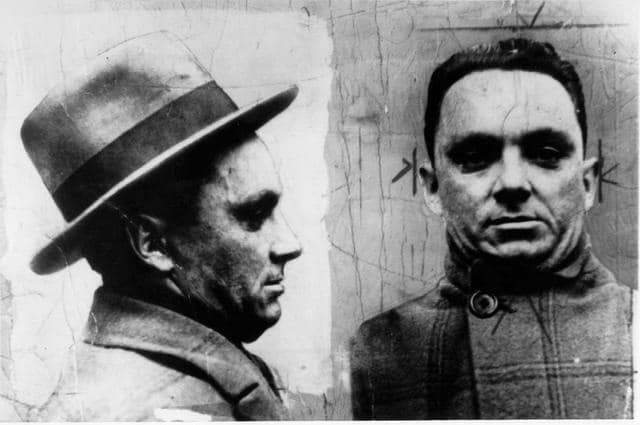
Johan Alfred Ander, convicted of the brutal murder of Victoria Hellsten during a robbery, became the last person in Sweden to face execution by guillotine. His crime had rocked the nation, as he not only committed robbery but also beat the clerk, Victoria Hellsten, to death.

In his desperate bid to escape his financial woes, Ander had targeted a Currency Exchange Agency in Stockholm, making off with a substantial sum of money to the approximate value of $50000 in today’s value.

The aftermath of the robbery led to Ander’s arrest, as he exhibited peculiar behaviour at a nearby hotel, causing suspicions among staff members. They reported his unusual actions to the police, who soon realized that he was the prime suspect in the heinous crime. When they apprehended him, they discovered damning evidence in his hotel room, including the murder victim’s wallet and most of the stolen money, stained with blood. Additionally, an oblong package found on him contained the apparent murder weapon, a steelyard balance, further implicating him.

Throughout his trial, Ander adamantly denied his involvement in the crime, claiming that an unknown foreign man had given him the stolen money during his stay at a Stockholm hotel. Despite his protests of innocence, he was sentenced to death by all court instances. Ander chose not to appeal to the King for clemency, sealing his fate as Sweden’s last guillotine-executed criminal.

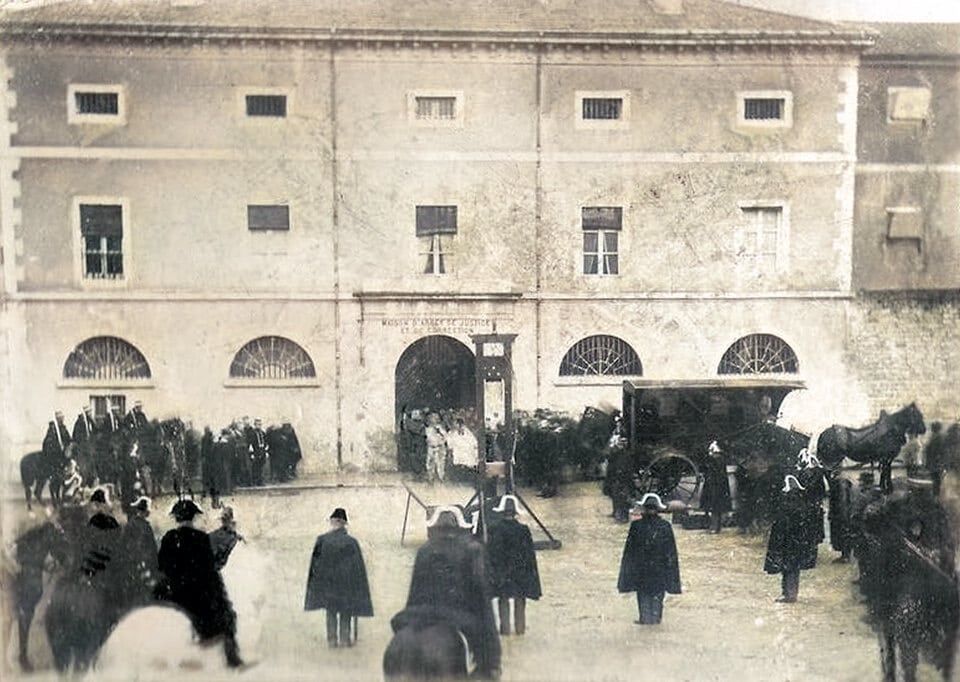
The execution occurred in Stockholm, where a guillotine imported from France was used. After his death, Ander’s body was donated to science, leading to a surprising discovery by doctors. They found evidence of tuberculosis, a disease that was almost always fatal at that time. ⚖️💀

This Day in True Crime History

1921: 🚫 Anti-Beer Bill Signed by President Warren G. Harding

On this day in 1921, President Warren G. Harding signed the Willis-Campbell Act, also known as the anti-beer bill, into law in the United States.

The anti-beer bill prohibited doctors from prescribing beer or liquor for medicinal purposes, addressing a practice that had been used by some physicians to provide patients with access to alcohol during the temperance movement.

This act was part of a broader shift towards stricter alcohol control and would eventually contribute to the temperance movement’s larger goal of nationwide prohibition, which was enacted in 1920 with the 18th Amendment to the Constitution. The Willis-Campbell Act represented an early step in the path toward Prohibition and the regulation of alcohol in the United States

The era of Prohibition, characterized by the ban on the production, sale, and transportation of alcoholic beverages, lasted until 1933. 🍺🚫🏥

This Day in True Crime History

1945: 🧟 Birth of a Serial Killer Dennis Nilsen

On this day in 1945, Dennis Nilsen, a Scottish-born serial killer was born. Nilsen’s case stands out in the annals of true crime, as there was little in his background to suggest the darkness that would later consume him.

Unlike some other notorious killers, Nilsen didn’t have a history of head injuries, childhood abuse, or cross-dressing tendencies. He appeared to be an unassuming and lonely individual. However, beneath this facade lurked a monstrous side.

Nilsen’s crimes involved the murder of multiple victims, with a chilling motive. He killed so that he could keep the corpses as companions.

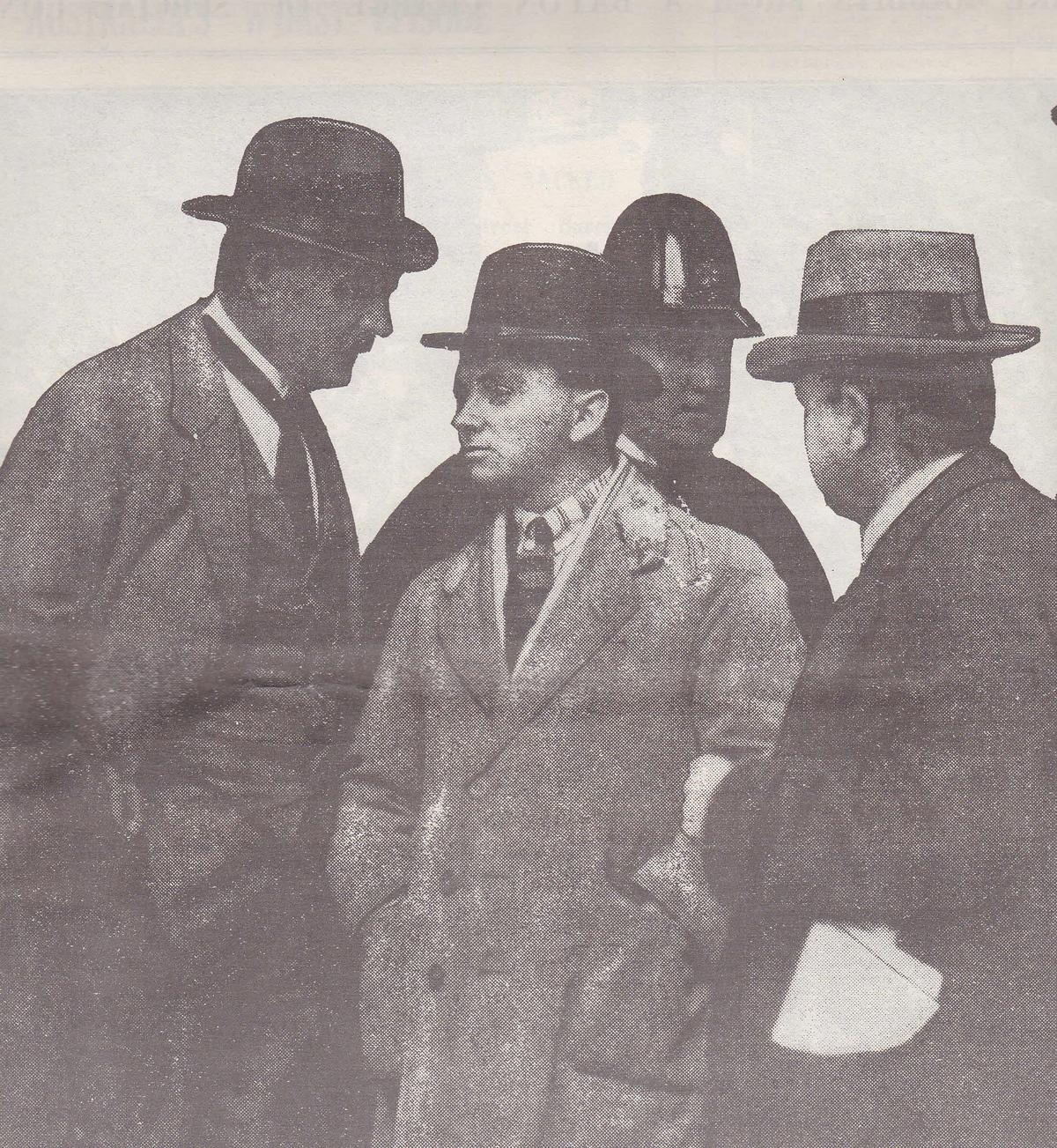
The murders were first uncovered due to a seemingly routine plumbing issue. In February 1983, a local plumber responding to complaints at Cranley Gardens where Nilsen lived made a horrifying discovery. He found a drain clogged with a substance resembling flesh and small bones of unknown origin.

Further investigation revealed the pipe connected to Nilsen’s top-floor flat. These remains appeared to be human, and a pathologist confirmed their origin. Nilsen was confronted when he returned home from work. Nilsen would be found guilty of 6 counts of murder and 2 counts of attempted murder, lifting the lid on one of the darkest chapters in the UK’s criminal history.

Plumbing Dennis Nilsen

1996: 😢 Tragic Hijacking Leads to Airliner’s Crash in the Sea

On this day in 1996, a devastating aviation tragedy occurred as Ethiopian Airlines Flight 961, a Boeing 767 aircraft, was hijacked during its journey from Addis Ababa, Ethiopia, to Nairobi, Kenya.

The hijackers, seeking political asylum in Australia, took control of the plane and demanded to be flown to their desired destination.

As the flight crew cooperated with the hijackers and changed the aircraft’s course, they soon realized that there wasn’t enough fuel to reach Australia safely. Negotiations with the hijackers failed, leading to the aircraft running out of fuel over the Indian Ocean near the Comoros Islands.

The pilots, harassed by the hijackers, struggled to control the descent, with the plane tragically crashing into the sea. This heartbreaking incident resulted in the loss of 125 lives(including the hijackers), with 50 survivors amongst the passengers and crew including, Captain Leul Abate, who retired from flying in 2019. 🙏✈️😢

Airplane Hijaacking

2009: 📰 A Dark Day in Philippine History

On this day in 2009, a horrifying and tragic event unfolded in the southern Philippines, forever etching its place in history as one of the worst attacks on journalists ever recorded. The incident shocked the world as 57 innocent citizens, including 34 journalists, were brutally killed.

The victims were en route to register voters in support of Esmael Mangudadatu’s candidacy for the upcoming gubernatorial elections in the province of Maguindanao. As they embarked on this important civic duty, their convoy was ambushed by gunmen.

In a merciless act of violence, these assailants took the lives of not only politicians and their supporters but also 34 journalists who were present to cover the event. 😢

Phillipines Election

And that wraps up our historical journey for November 23rd. Remember, the events of today might just become the stories of tomorrow. Don’t forget to reserve your spot on a Dark Stories True Crime Tour soon!

Spread the word on your favourite platform!

On This Day in True Crime History – 16th November

On this day in True Crime History, we revisit the 16th of November, a date filled with bullion heists, the Alphabet Murder Mystery, a tragic massacre in Queensland, a hanging for burglary in early Australia plus much, much more.

1795: 🔒 William Smith Hanged for Burglary in Sydney

On this day in 1795, William Smith met his fate at the gallows in Sydney. His execution followed a conviction for burglarizing the house of William Parrish at Prospect Hill.

Smith, with his accomplices, committed the crime by breaking into Parrish’s dwelling with force, stealing items valued at approximately 32 shillings, including a piece of cloth, a velvet waistcoat, three other waistcoats, two flannel jackets, and some brooches.

This would be equivalent to about $260 AUD in today’s money. 🏠⚖️🔒

This Day in True Crime History

1798: ⚓ British Seamen Kidnap and Press Gang US Sailors

On this day in 1798, British seamen boarded the U.S. frigate Baltimore and engaged in the controversial practice of impressment, often referred to as “shanghaiing.”

Thus 55 US sailors were press ganged into service (enslaved) onto a ship by compulsion, without notice, into the British Royal Navy. This contributed greatly to the tensions that eventually led to the War of 1812 between the United States and the United Kingdom. ⚓

This Day in True Crime History

1906: ⚖️ Notella Habibulla’s Arrest Unveiled by a Bolting Horse attached to a Bloodstained Buggy

On this day in 1906, Notella Habibulla faced the gallows at Adelaide Gaol, accused of murdering his wife, Edith, on Bristol Street.

The dramatic chain of events leading to his arrest began with a startling discovery by the police—an abandoned horse and buggy covered in bloodstains standing outside the residence of the victims mother. This ominous find raised immediate suspicions of a violent crime.

What made this discovery even more compelling was Habibulla’s own account. He reported to the authorities that his horse had bolted uncontrollably with the buggy. This seemingly innocuous explanation, however, only deepened the mystery. The police decided to detain him and delve further into the matter.

Their investigation took a gruesome turn when they dragged a nearby river, unearthing a bag containing the dismembered remains of a woman. This unfortunate victim was none other than his wife of 6 months Edith.

As the detectives continued their inquiry, they found damning evidence at the couple’s Bristol Street residence—a trail of marks indicating a body had been dragged and extensive bloodstains scattered across the backyard. To make matters worse for Habibulla, the victim’s blood-soaked garments were concealed beneath a bed.

The culmination of these chilling discoveries left no room for doubt. Notella Habibulla was promptly arrested and charged with the brutal murder of his wife, all uncovered owing to the powerful role played by a bolting horse. ⚖️🐎🔍

This Day in True Crime History

1911: 😢 The Ching Family Massacre

On this day in 1911, George Silva committed a heinous act that would come to be known as the Ching family massacre in the small town of Alligator Creek located 20 kilometres south of Mackay, Queensland.

George Silva, driven by malevolence, ruthlessly shot and bludgeoned to death six members of the Ching family. The victims included Agnes Ching, a 45-year-old mother, and her children Maud (15), Eddie (9), Dorrie (7), Hughie (5), and Winnie (1). This brutal act of violence shocked the community and left scars that would last for generations.

However, amidst the darkness, stories of survival and resilience emerged. Several family members managed to escape the assailant’s fury, including Charles and Agnes Ching’s three older children: Florence, Henry, and Henrietta. They had left home before the tragedy unfolded, and their absence spared them from the horrors that befell their family.

In the aftermath of the massacre, Charlie Ching, the lone survivor of the immediate family, found the strength to rebuild his life. Devastated by the loss of his wife and five children, he made the difficult decision to leave Mackay and Australia in 1915. He sought solace in Hong Kong, returning to his native village of Shataukok and seeing out his remaining years, where he remarried and welcomed another child.

The Ching family massacre of 1911 remains a haunting chapter in Mackay’s history, a somber reminder of the enduring impact of such senseless acts of violence on survivors and communities. 😢🏠⚖️

This Day in True Crime History

1971: 🕵️‍♂️ Carmen Colón, Victim of the Alphabet Murders Disappears

On this day in 1971, Carmen Colón, a 10-year-old girl, tragically disappears and becomes a victim of the Alphabet Murders.

The Alphabet murders (also known as the Double Initial murders) are an unsolved series of murders that occurred between 1971 and 1973 in Rochester, New York.

The Alphabet Murders involved a series of killings where the victims had surnames that began with the same letter as that of their first name. Each victim had been murdered in like manner before each of their bodies were discarded in or near a town or village with a name beginning with the same letter as the victim’s name. 🕵️‍♂️🔍

Alphabet Murders

1989: 💔 Salvadoran Army Death Squad’s Brutal Attack on Jesuit Priests

On this day in 1989, a horrific tragedy unfolded at Jose Simeon Canas University in El Salvador. A Salvadoran Army death squad launched a brutal attack, resulting in the deaths of six Jesuit priests and two others. 💔🕊️🙏

The Salvadoran Civil War, which lasted from 1980 to 1992, was marked by intense conflict between the government and leftist rebel groups. During this turbulent time, various factions within the military and government resorted to violence, including extrajudicial killings and human rights abuses, to suppress dissent and maintain power.

The six Jesuit priests killed in this tragic incident were known for their advocacy of peace, social justice, and human rights in El Salvador. Their deaths sent shockwaves throughout the international community and drew attention to the human rights violations occurring in the country. 🌍🕯️✝️

Jesuit Priests

2001: 💰 Brinks-Mat Bullion Heist Member Murdered

On this day in 2001, Brian Perry, a key figure linked to the infamous Brinks-Mat bullion heist, met a violent end.

The Brinks-Mat heist, a 1983 robbery at the Heathrow International Trading Estate in London, yielded approximately £26 million in gold, diamonds, and cash.

Detectives had certain clues pointing to Mickey McAvoy’s involvement in the Brinks-Mat heist. Notably, McAvoy’s two Rottweiler dogs at his newly acquired mansion were named ‘Brinks’ and ‘Mat.’ As McAvoy’s trial approached, he entrusted his share of the stolen gold to contact Brian Perry. However, Perry never returned the gold to McAvoy, and instead, he served time for handling it.

Upon Perry’s release from prison, and while returning from a shopping trip, he was ambushed and shot three times in the back of his head, resulting in his immediate death. This murder added another layer of mystery to the complex and shadowy world of the Brinks-Mat heist, leaving investigators and the public eager to uncover the truth behind his killing.

Despite extensive investigations and efforts, the whereabouts of a significant amount of the stolen bullion remain a mystery. 💼🔍🔫

Gold Bullion Heist

That’s all for the 16th of November in history. Perhaps something will happen on your 16th November that will go down in history, never to be forgotten. Have a great day! In the meantime, be sure to book in to go on a Dark Stories True Crime Tour soon!

Spread the word on your favourite platform!