William Casey: The Soldier Accused of Robbery in the Park

William Casey is barely twenty years old and already a veteran: enlisted at fifteen, shipped to Spain with Lord Cobham's expedition, and returned to do duty in the Guards. By the standards of old England, he has lived a full life before trouble finds him in a London park one night.

What happens next depends on who you believe. Casey insists a man named John Stone approached him with an indecent proposal, and the violence that followed was revulsion; Stone tells a very different story of being attacked, beaten and robbed. A grudge-bearing corporal works hard behind the scenes to seal Casey's fate, and the young soldier's quiet reputation counts for nothing against the weight of testimony.

Step into this dark corner of true crime from old England and hear William Casey's own words before they are silenced.
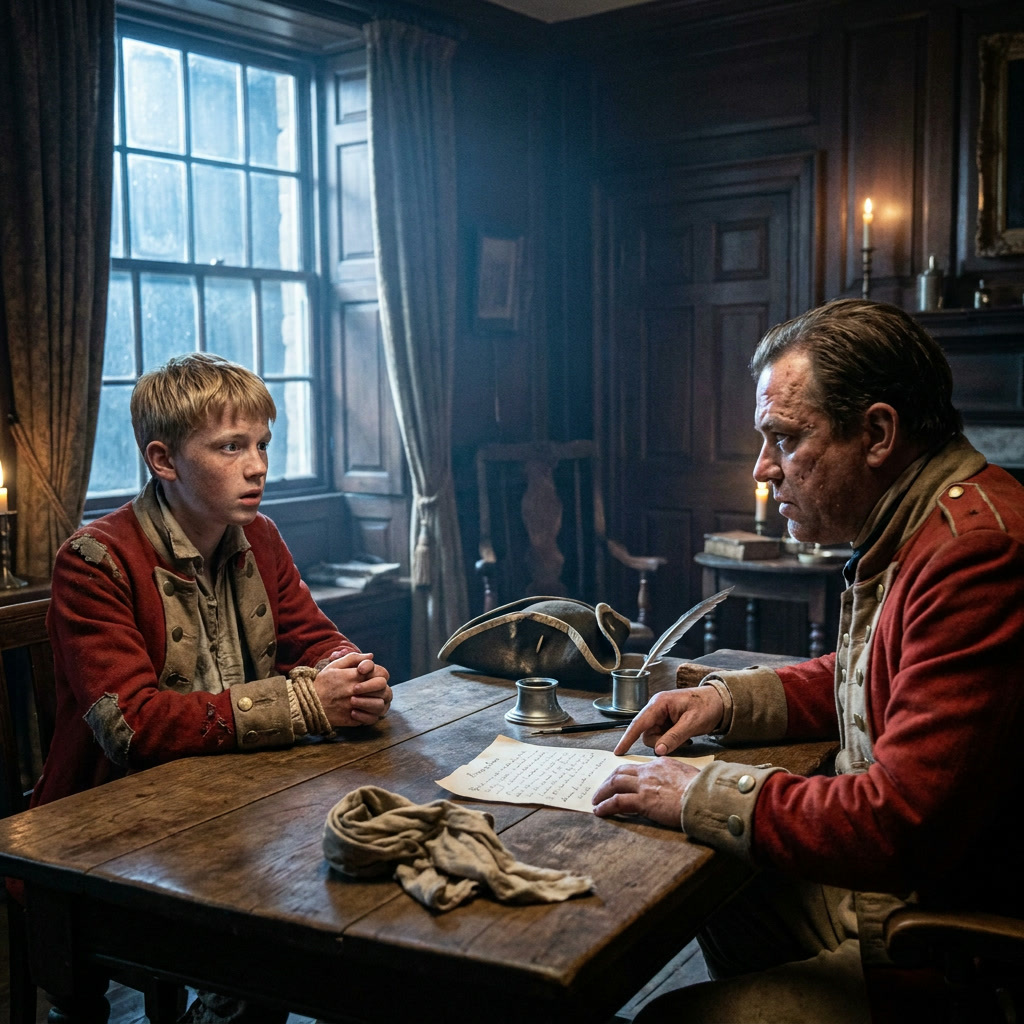
William Casey: The Soldier Accused of Robbery in the Park

Follow the podcast so you never miss an episode:

Apple PodcastsSpotifyAmazon MusicMore apps

FROM THE 1735 TEXT

his diligence proceeded not from any desire of doing justice, but from an old grudge he owed their family

CASE FILE No. 11
NAMEWilliam Casey
AGEabout 20
WHEN1721
WHERELondon, the Park, Newgate
CHARGERobbery of John Stone in the Park
FATEHanged, 11 September 1721
SOURCELives of the Most Remarkable Criminals, 1735
HANGED

Dark Lexicon: Old words. Dark meaning.

The past speaks its own dialect; here is what to listen for in this episode.

Fray: not a loose thread but a violent scuffle, a sudden eruption of blows. In old England a fray in the park after dark could end a life or begin a trial.

Prosecutor: today a prosecutor is a lawyer employed by the state, but in old England the word meant the person who brought the complaint: the victim, or whoever claimed to be one. John Stone was Casey's prosecutor simply because he was the man pressing the charge.

Neck-cloth: a strip of linen or muslin wrapped around the throat, the ancestor of the necktie. Stealing one counted as taking property, and property mattered more than bruises in the courts of old England.

Swear sodomy upon him: to threaten someone with a sodomy accusation was a weapon in itself. In old England the charge carried the death penalty, so merely threatening to 'swear it upon' a man could silence him as effectively as a blade.

Under sentence: the grim limbo between conviction and execution. In Newgate, prisoners under sentence waited days or weeks, writing letters, receiving chaplains, and hoping for a reprieve that usually never came.

Ignominious: shameful beyond ordinary shame. Casey used it in his final written statement; in old England a death described as ignominious was one meant to strip the condemned of any remaining dignity.

Church of England as by Law established: a formal phrase declaring loyalty to the state religion. Dying men in old England often stated their faith aloud or on paper, because dying outside the established church carried its own social disgrace for the family left behind.

Place of execution: typically Tyburn, the public killing ground at the western edge of London. Casey's composure there was noted; in a spectacle designed to terrify, calmness was itself a kind of protest.

About This Series

Lives of the Most Remarkable Criminals (1735) is one of the earliest works of true crime in the English language. Each week this podcast retells one of its stories for today's listener, keeping the old book's most striking lines.
Spread the word on your favourite platform!

Walter Kennedy: The Wapping Boy Who Turned Pirate

Walter Kennedy grows up at Pelican Stairs in Wapping, the son of an anchor-smith, a boy with a 'too aspiring temper' who dreams of something bigger than his father's forge. When his father dies before his apprenticeship is done, Walter follows his own roving inclinations to sea, where tales of buccaneers and pirate kingdoms fill his head with visions of power.

Serving aboard a man-of-war during Queen Anne's war with France, he listens hungrily to every story of maritime desperadoes, from Sir Henry Morgan to Captain Avery. The line between navy sailor and outlaw blurs quickly in old England's waters, and Kennedy is already leaning toward the wrong side of it.

Step aboard and hear how a Wapping boy chased sovereignty on the open ocean: press the silver oar into his story.

Walter Kennedy: The Wapping Boy Who Turned Pirate

Follow the podcast so you never miss an episode:

Apple PodcastsSpotifyAmazon MusicMore apps

FROM THE 1735 TEXT

such is the justice of Providence that few or none of us preserve enough to maintain us

CASE FILE No. 6
NAMEWalter Kennedy
AGEabout 26
WHEN1721
WHEREHigh seas, Brazil, Scotland, London
CHARGEPiracy committed on the high seas
FATEHanged at Execution Dock, 21 July 1721
SOURCELives of the Most Remarkable Criminals, 1735
HANGED

Dark Lexicon: Old words. Dark meaning.

The past speaks its own dialect; here is what to listen for in this episode.

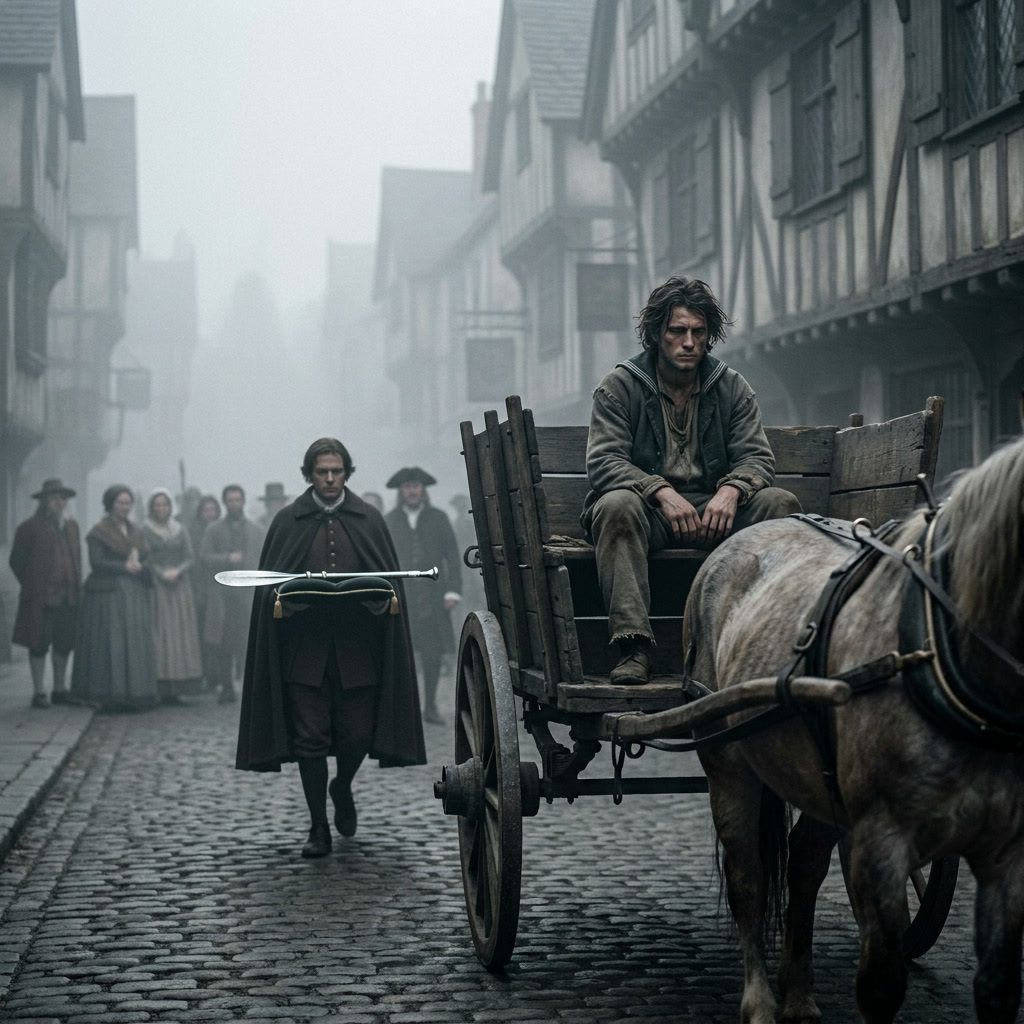
Silver oar: not a rowing implement but a ceremonial mace, the emblem of the High Court of Admiralty. In old England it was laid on the table at piracy trials and carried before the condemned on the way to execution: a glittering reminder that the sea had its own law and its own theatre of death.

Petty treason: today treason means betraying your country, but in old England petty treason was a broader, darker concept: the crime of a subordinate killing a superior, such as a wife killing her husband or a servant killing a master. Piracy was once classed alongside it because it was seen as a betrayal of the sovereign's peace on the seas.

Upon the account: sailor slang in old England for turning pirate. It sounds almost like a business arrangement, and in a way it was: pirates kept meticulous accounts of plunder and divided shares by rank.

Man-of-war: today it might conjure an image of a jellyfish, but in old England it meant a warship of the Royal Navy, armed to the teeth and crewed by men who lived somewhere between discipline and desperation.

Buccaneers: the word originally referred to French hunters on Hispaniola who smoked meat on wooden frames called boucans. By the time Kennedy heard their stories, it meant freelance pirates of the Caribbean: men who operated in a lawless grey zone between privateer and outright criminal.

Ambuscade: the old form of ambush, borrowed from French and still carrying a whiff of military formality. In old England it sounded almost elegant; what it described was anything but.

Execution Dock: not just any gallows. In old England, this stretch of Wapping waterfront was where the Admiralty hanged its pirates, their bodies left on display until three tides had washed over them: the sea reclaiming its own.

About This Series

Lives of the Most Remarkable Criminals (1735) is one of the earliest works of true crime in the English language. Each week this podcast retells one of its stories for today's listener, keeping the old book's most striking lines.

Spread the word on your favourite platform!
On This Day in True Crime History

Subscribe to Dark Stories

True crime stories, dark history and tour news, straight to your inbox.