John Winship: The Young Highwayman of Covent Garden

John Winship grows up in the parish of St. Paul's, Covent Garden, the son of parents who give him more indulgence than discipline. Apprenticed to a carpenter at fourteen, he has every chance of an honest life: but idleness has already taken root in him.

It is a girl standing in a doorway that tips the balance. At seventeen, Winship falls hard, and the expenses of courtship open a door he will never close: one that leads from honest work to the dark roads outside London.

Listen now and follow this young man from a Covent Garden doorstep to the highways where true crime stories are written in pistol smoke and stolen gold.
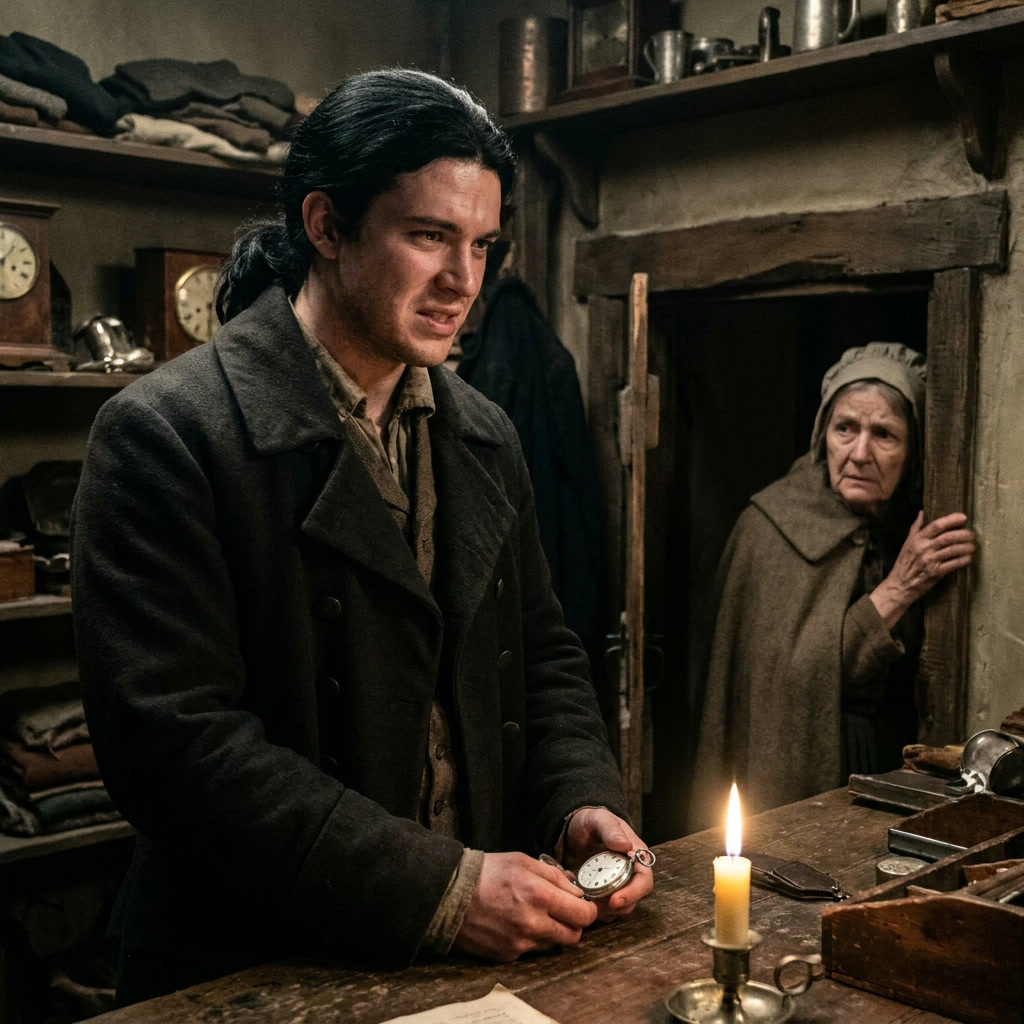
John Winship: The Young Highwayman of Covent Garden

Follow the podcast so you never miss an episode:

Apple PodcastsSpotifyAmazon MusicMore apps

FROM THE 1735 TEXT

He supposed the crime did not consist in the time or place, and as to whether he was guilty of it or no, he would tell nothing.

CASE FILE No. 8
NAMEJohn Winship
AGEabout 22
WHEN1721
WHERELondon; roads near Hampstead and Pancras
CHARGEHighway robbery
FATEHanged at Tyburn, alongside Matthew Clark, aged 22
SOURCELives of the Most Remarkable Criminals, 1735
HANGED

Dark Lexicon: Old words. Dark meaning.

The past speaks its own dialect; here is what to listen for in this episode.

Footpad: a robber who worked on foot rather than on horseback. In old England the distinction mattered: a highwayman rode and carried pistols, while a footpad lurked in lanes and alleys, often considered lower and more desperate.

Pistoles: not pistols, but gold coins, usually Spanish or French. When the text says a hundred and twenty pistoles were taken from the Frenchman, it means a staggering sum in foreign gold: the kind of haul that kept a gang fed and drinking for weeks.

Exchanged several pistols: this does not mean they swapped weapons. In old England, to 'exchange pistols' meant to fire shots back and forth: a running gunfight on a dusky road, with each side blazing away until the ammunition ran dry.

Chariot: today it conjures chariots of Rome, but in old England a chariot was a light, enclosed carriage for one or two passengers. Stopping a gentleman's chariot was the bread and butter of the mounted highwayman.

Transportation: banishment to the colonies, usually for seven or fourteen years, sometimes for life. Winship begged for it. In old England it was the mercy that sat one rung above the noose.

Ordinary: not a word meaning 'common' here, but the title of the prison chaplain at Newgate. The Ordinary visited the condemned, prayed with them, and often published their confessions afterwards for profit: part priest, part journalist.

Caressed: today it means a tender touch, but in old England it could simply mean flattered, welcomed warmly, or made much of. The gangs caressed Winship not with affection but with the respect a useful and agile accomplice commands.

About This Series

Lives of the Most Remarkable Criminals (1735) is one of the earliest works of true crime in the English language. Each week this podcast retells one of its stories for today's listener, keeping the old book's most striking lines.

Spread the word on your favourite platform!

William Barton: The Highwayman Who Could Not Stay Put

William Barton is born into comfort: his grandfather keeps a thriving eating house in Covent Garden, gentlemen press coins into the boy's hand, and a good trade awaits him. But something wild runs in the Barton blood, and no amount of kindness can hold him still.

His father has already abandoned the family for Jamaica and a mistress; now young Will follows, chasing a fortune that does not exist. What begins as restless dreaming hardens, voyage by voyage, into something far more dangerous: a man who discovers he has a taste for robbery and no talent for stopping.

This is true crime at its most human and its most reckless: listen to the story of William Barton.

William Barton: The Highwayman Who Could Not Stay Put

Follow the podcast so you never miss an episode:

Apple PodcastsSpotifyAmazon MusicMore apps

FROM THE 1735 TEXT

Content, when its basis rests not upon virtue, is incapable of continuing long.

CASE FILE No. 3
NAMEWilliam Barton
AGEabout 31
WHEN1710s-1721
WHERELondon, Jamaica, Spain, Flanders, Covent Garden
CHARGEHighway robbery and return from transportation
FATEHanged, 12 May 1721
SOURCELives of the Most Remarkable Criminals, 1735
HANGED

Dark Lexicon: Old words. Dark meaning.

The past speaks its own dialect; here is what to listen for in this episode.

Uxorious: excessively devoted to one's wife. In old England this was not a compliment; when the text calls Barton 'too uxorious,' it means his obsessive love for his wife drove him to rob rather than let her live in poverty.

Reconnoitre: to scout ahead and gather intelligence on an enemy. Barton uses the word with military precision, sending his partner forward to size up a stage coach as though it were a battlefield position: four men with blunderbusses, two ladies and a footman.

Blunderbuss: a short, wide-mouthed firearm that sprayed shot in a broad pattern, devastating at close range. Coaches in old England carried them specifically for highway defence; the fact that four passengers held them tells you how dangerous the roads had become.

Transported: sentenced to forced exile in a colonial plantation. In old England, transportation was meant as mercy compared to hanging, but returning before your term expired was a capital offence all by itself.

Planter: a colonial landowner who purchased the labour of transported convicts and enslaved people alike. Barton's master pays eighteen pounds for him: the going price for a human being with useful skills.

Brace of balls: a pair of musket balls fired in quick succession. The word 'brace' simply meant two, often of matched items; here it is a warning volley, two shots cracking over the coachman's head.

Committed to Newgate: sent to Newgate Prison, the most feared gaol in old England. To be 'committed' was not a casual booking; it meant a magistrate had formally ordered you held there, often in chains, to await trial.

Ignominious death: a death marked by public shame and disgrace. In old England, a public hanging was designed to humiliate as much as to punish; the word 'ignominious' tells you the crowd was meant to see not just a death but a lesson.

About This Series

Lives of the Most Remarkable Criminals (1735) is one of the earliest works of true crime in the English language. Each week this podcast retells one of its stories for today's listener, keeping the old book's most striking lines.

Spread the word on your favourite platform!
On This Day in True Crime History

Subscribe to Dark Stories

True crime stories, dark history and tour news, straight to your inbox.