1883: “I Have Cooked Eight”: the Whispered Confession Only the Hangman Heard

Robert Francis Burns walked out of a Melbourne courtroom in August 1882 an acquitted man, and was arrested for a different murder before he had left the building. The first charge concerned a fellow railway navvy, last seen heading off with Burns and a gallon of whiskey. A headless body was found in the bush, but the Crown could not prove whose it was.

The second charge held. Michael Quinlivan, “a quiet saving man”, had been great mates with Burns, the only two Irishmen in their work gang. In June 1880 he withdrew 15 pounds from the bank, left a roadside hotel with Burns and was never seen alive again. Weeks later his body was found in a sheep paddock with a fractured skull.

The first jury could not agree after more than six hours; the second convicted in 45 minutes. On the gallows at Ararat Gaol, before about 30 spectators, the hangman was visibly nervous, and Burns plunged into eternity without any final words. Instead, he left a written statement thanking his gaolers, his lawyers and his priest, and admitting nothing.

Afterwards the hangman swore that as he pinioned the prisoner, Burns murmured: “I have cooked eight, five in Victoria and three in Sydney, and now you are going to cook me.”
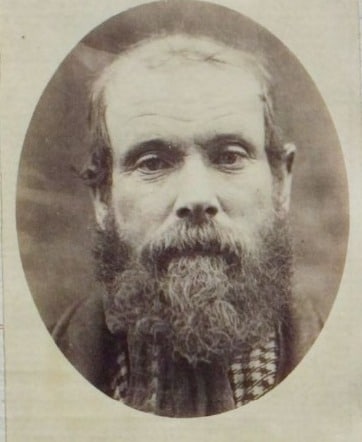

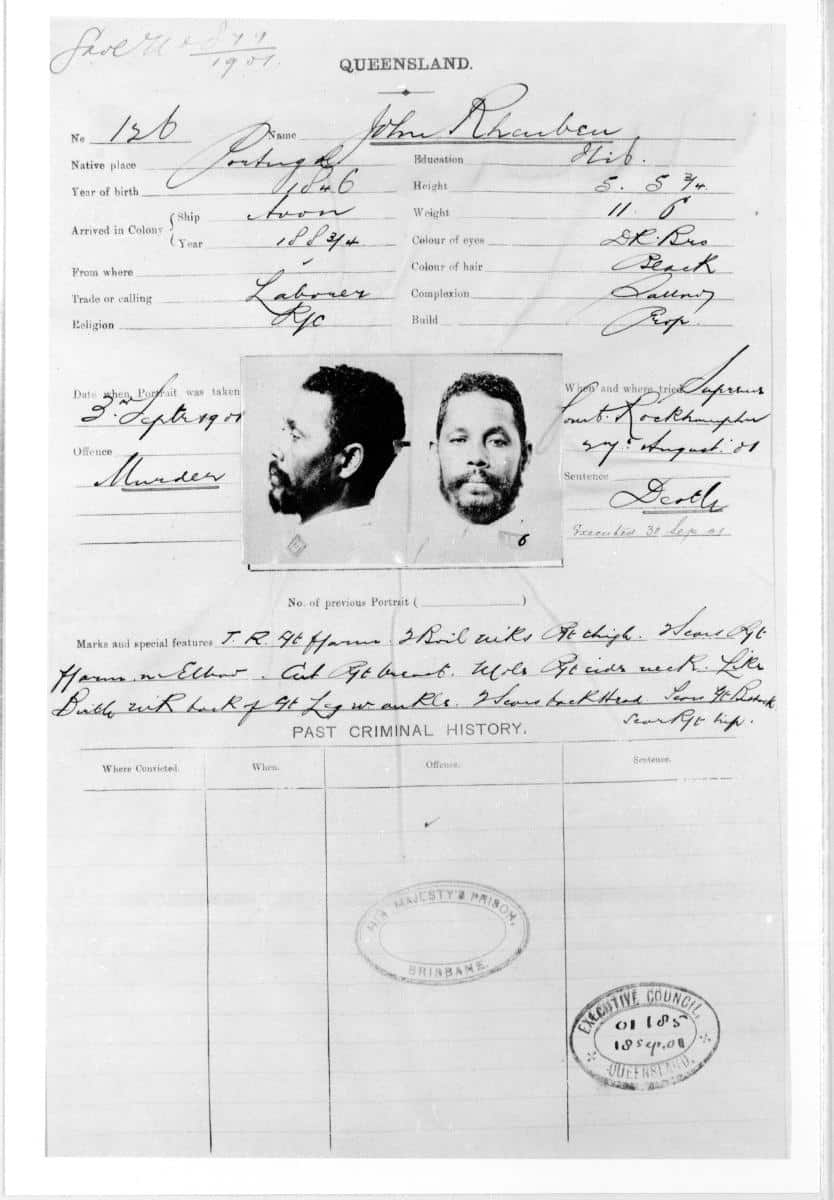
Robert Francis Burns Mugshot: VPRS 515/P0000, Central Register for Male Prisoners 19384 - 19880
Robert Francis Burns Mugshot: VPRS 515/P0000, Central Register for Male Prisoners 19384 – 19880

⬅ See all events from 25 September

Spread the word on your favourite platform!
True Crime Scene Tape

1983: The Great Escape: 38 IRA Prisoners Break Out of the Maze in Britain’s Largest Prison Breakout

On 25 September 1983, 38 IRA prisoners staged a mass breakout from the Maze Prison in County Antrim, Northern Ireland, the largest prison escape in British history. The men overpowered guards inside H-Block 7, some using smuggled handguns, and seized control of the wing before storming the front gate disguised in stolen prison officer uniforms.

In the chaos one prison officer was stabbed to death and twenty others were injured during the breakout. Several escapees hijacked a delivery lorry to get beyond the perimeter fences, and while a number were recaptured within days, others evaded capture for years, some fleeing abroad before eventually being caught or negotiating their return.

The escape became known among Irish republicans as the Great Escape, a name that stuck for decades and turned the breakout into one of the defining episodes of the Troubles.

A Great Escape
A Great Escape

⬅ See all events from 25 September

Spread the word on your favourite platform!
True Crime Scene Tape

1860: Flogged as a Soldier, Broken on Norfolk Island, Hanged at Hobart: the Ruin of a Convict

Moments after the bolt was drawn at the Campbell Street Gaol in Hobart, the chaplain stepped forward and read aloud a letter the dead man had written the day before in the condemned cell. It was addressed “To all men at Port Arthur”, and Martin Lydon had begged that it be made public.

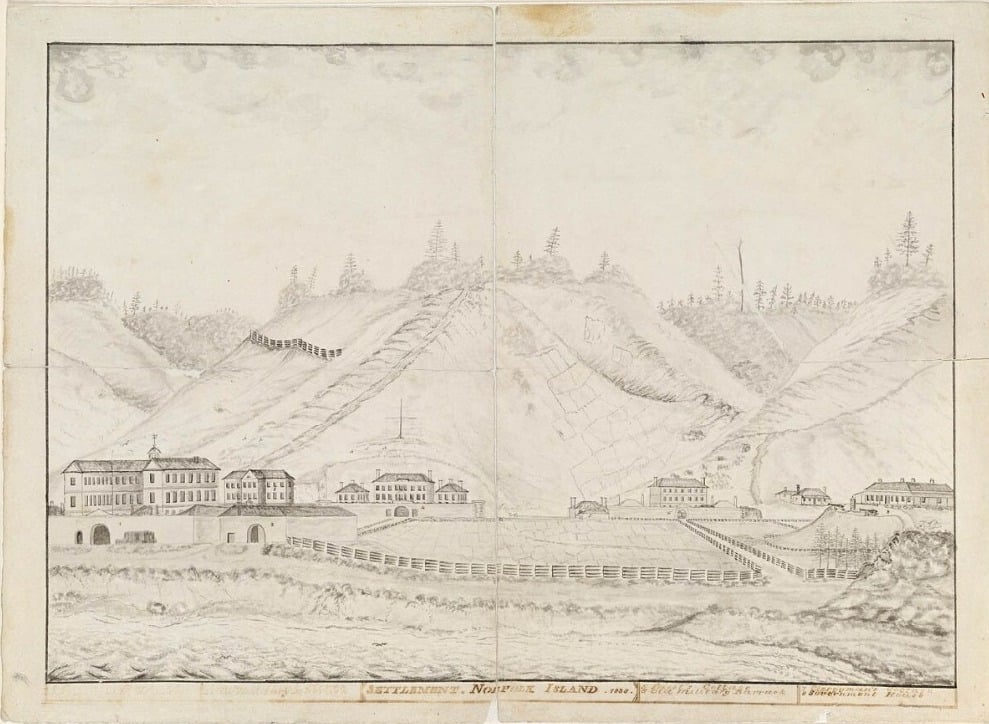
It was the story of a ruined life in a few lines. Disobedient at ten, a soldier at 16, Lydon struck an officer of his company in a moment of anger and was flogged: “this ruined me”. He came to hate the army and took to drink, and further violence saw him transported. “The vileness of Norfolk Island turned me into an animal,” he wrote. Only three weeks earlier, in H division, he had boasted that he did not care about being hanged. Now he called that his “wicked flashiness”: “Every man about to die must fear the judgment of God.”

Lydon had been capitally convicted in the Supreme Court of a felonious assault at Port Cygnet, south of Hobart, committed while drunk, a crime that then carried the death penalty. Lydon disputed part of the evidence given at his trial, but he did not dispute the sentence: what he had done in his drunkenness, he wrote, deserved death. “May the drunkenness that brought on me this misery be a warning to all of you.”

Norfolk Island settlement, 1838. Ink and wash drawing, artist unknown. State Library of New South Wales, SV8/Norf I/5.

⬅ See all events from 25 September

Spread the word on your favourite platform!
True Crime Scene Tape

2009: Manson Family Cult Member Dies in Prison

Susan Atkins, one of the most notorious members of Charles Manson’s cult and a participant in the infamous 1969 Tate-LaBianca murders, died in custody at California’s Central California Women’s Facility while serving a life sentence.

Atkins had spent nearly four decades behind bars, repeatedly denied parole despite being terminally ill with brain cancer in her final years. Her role in the killing of actress Sharon Tate and others made her one of the most infamous figures to emerge from the Manson Family’s 1969 murder spree.

Evil glare
Evil glare

⬅ See all events from 24 September

Spread the word on your favourite platform!
True Crime Scene Tape
On This Day in True Crime History

Subscribe to Dark Stories

True crime stories, dark history and tour news, straight to your inbox.