Two days after shooting cabdriver Paul Stine dead in San Francisco, the Zodiac Killer sent the San Francisco Chronicle a taunting letter dated October 13, 1969. Inside was a torn piece of Stine’s bloodstained shirt, offered as proof the killer was the same man terrorising the Bay Area, not a copycat.

The letter mocked police for failing to catch him despite patrols flooding the area that night, and promised more killings to come. It remains one of several pieces of physical evidence tied to an identity that, more than fifty years on, has never been conclusively proven.


Symbolism
Symbolism

⬅ See all events from 13 October

Spread the word on your favourite platform!

The trouble began with cooking pots. When the commandant of the Norfolk Island penal settlement ordered all private kettles and saucepans confiscated in June 1846, tightening an already brutal regime, convicts erupted in fury the next morning. A mob armed with axes and wooden billets killed a convict constable at the lumber-yard gate, beat an overseer to death with a carving fork and billets, then struck down two more sleeping constables before soldiers finally restored order.

Fourteen men were tried months later before a military jury; twelve were convicted and hanged in two batches of six on the same morning in October 1846, their bodies buried outside consecrated ground in a spot still known as Murderers’ Mound. A thirteenth man was hanged six days after for the same overseer’s killing.

Before his execution, the ringleader declared that four of the twelve condemned men were innocent, insisting he had not even spoken to one of them on the morning of the riot and that the others had played no part in the killings, but it was to no avail.

Murderers mound on Norfolk Island circa 1900

⬅ See all events from 13 October

Spread the word on your favourite platform!

Carl Williams was 29 and already dealing drugs when Jason Moran shot him in the stomach on this day at Gladstone Park, in Melbourne, over an $80,000 debt tied to a failed amphetamine batch. Jason and his brother Mark Moran were both present. Williams survived.

He did not forget it. The shooting became the spark for a bloody tit-for-tat campaign that grew into the Melbourne gangland war, a decade of killings across the city’s underworld that would eventually claim both Moran brothers among dozens of others, and send Williams himself to prison before his own murder behind bars.

Gangland: more than a dictionary definition in Melbourne, 1998–2010.

⬅ See all events from 13 October

Spread the word on your favourite platform!

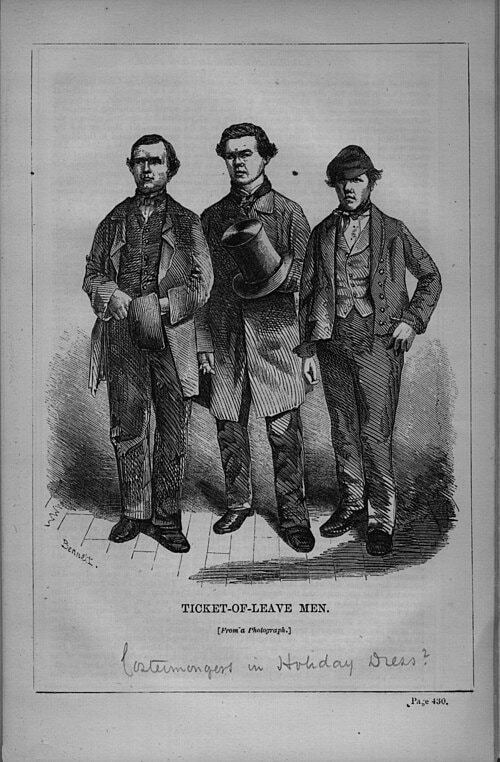
Thomas Airey had spent most of his adult life behind bars in England before he was transported to Western Australia aboard the Nile, arriving at Fremantle in December 1857 to serve a 15 year sentence for burglary. In June 1860 he was granted a ticket of leave, a conditional release that let convicts who had shown good behaviour work and live within a set district without constant supervision, a step short of full freedom but a clear sign the colony had judged him trustworthy.

That trust lasted barely four months. By October 1860 Airey stood before the Supreme Court in Perth convicted of a serious assault and sentenced to death. He was hanged at Perth Gaol on 13 October 1860, aged 29, and buried the following day at East Perth Cemetery.

Ticket of leave men historical photograph

⬅ See all events from 13 October

Spread the word on your favourite platform!
On This Day in True Crime History

Subscribe to Dark Stories

True crime stories, dark history and tour news, straight to your inbox.