In Montreal in October 1970, armed members of the Front de Liberation du Quebec forced their way into the home of British trade commissioner James Cross and seized him at gunpoint, demanding the release of jailed militants in exchange for his life.

The kidnapping tipped Quebec into what became known as the October Crisis. Days later a second cell abducted and killed a provincial cabinet minister, and the federal government responded by invoking the War Measures Act, suspending civil liberties and deploying troops onto Canadian streets for the first time in peacetime history. Cross himself was held for weeks before his captors negotiated safe passage to Cuba in return for his release.


Riders on horseback wear red uniforms and carry flags as they participate in the Calgary Stampede Parade. The event showcases a vibrant display of local pride and community spirit. 07. 2023 - Calgary, Canada. | ID 460635341 © Kukotaekaterina | Dreamstime.com
ID 460635341 © Kukotaekaterina | Dreamstime.com

⬅ See all events from 5 October

Spread the word on your favourite platform!

Thursday, October 4, 1582, went to bed as normal. The next morning, by papal decree, it was Friday, October 15. Pope Gregory XIII had just deleted ten days from the lives of everyone in the lands that adopted his new calendar, not through war or plague but with a stroke of the pen.

The old Julian calendar, running since Julius Caesar set it up in 45 BCE, drifted by about a day every century, slowly dragging the spring equinox out of place. Gregory’s fix was elegant on paper and bewildering in practice: landlords demanded a full month’s rent for a fortnight no one had lived through, wages fell short, and in some towns crowds accused the Church of stealing their days outright. The new rule that century years are only leap years if divisible by 400 quietly corrected the error for good, and the dates we live by today are still Gregory’s.

The Time Thief
The Time Thief

⬅ See all events from 5 October

Spread the word on your favourite platform!

Harold Shipman was a trusted family doctor in Hyde, England, who killed his patients with lethal injections of diamorphine and then falsified their medical records to make the deaths look natural. He often urged grieving families toward cremation, quietly destroying the evidence a post-mortem might have found.

What he did not understand was his own surgery computer. The practice software secretly time stamped every entry, and when investigators compared those hidden timestamps to the dates on his altered files, the lie was obvious: he had been rewriting patient histories after his victims were already dead. He went on trial in 1999 charged with just 15 murders, though he is believed to have killed close to 250 patients over more than two decades, making him Britain’s most prolific serial killer.

Shipman never confessed and maintained his innocence throughout the trial. He was convicted on all counts and later took his own life in prison.

A Serial Killers Computer Log tracked everything.

⬅ See all events from 5 October

Spread the word on your favourite platform!

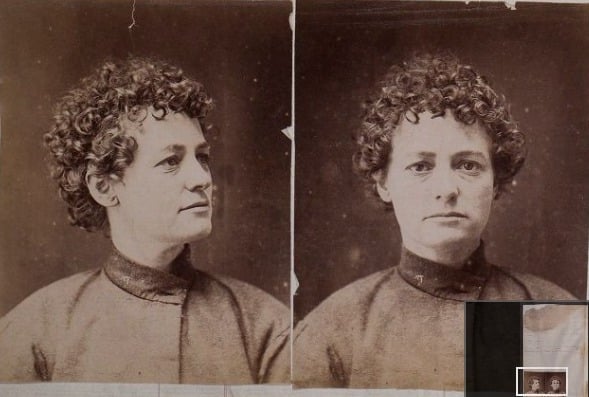
Henry Needle was a robust carpenter until 1889, when he began suffering violent, unexplained vomiting at the family home in Richmond, near Melbourne. His doctor once found untouched broth and jelly by his bed, and noted Henry had grown strangely wary of food prepared by his wife, Martha. He died on 4 October 1889; his death was recorded as hepatitis, no post-mortem was ordered, and no suspicion touched the devoted nurse at his side.

The truth emerged five years later, after police caught Martha handing a laced cup of tea to another man and Henry’s body was exhumed and found packed with arsenic, along with the bodies of the couple’s three young children, all of whom had died in her care under equally mysterious circumstances. Martha Needle was hanged at Melbourne Gaol in October 1894 for the poisoning of her fiance’s brother, the last of at least five family members she is believed to have killed.

Martha Needle: Public Record Office Victoria, VPRS 516/P0000, Central Register of Female Prisoners, register nos. 5926–6415 (1891–1896).

⬅ See all events from 4 October

Spread the word on your favourite platform!
On This Day in True Crime History

Subscribe to Dark Stories

True crime stories, dark history and tour news, straight to your inbox.