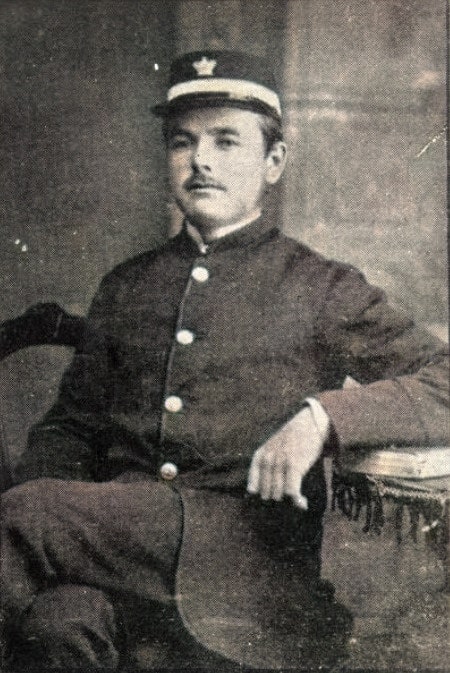
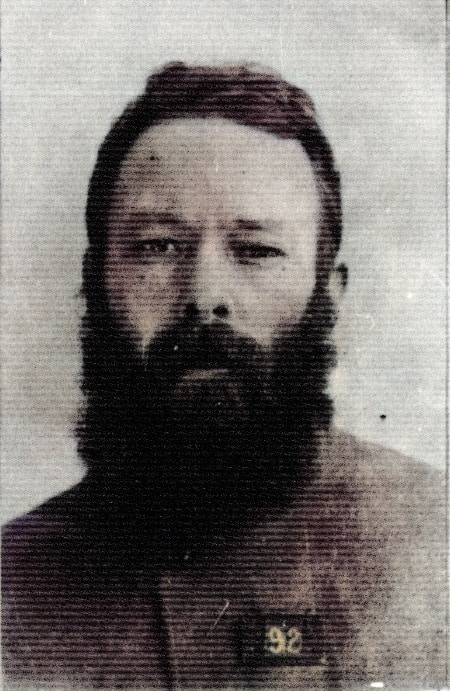
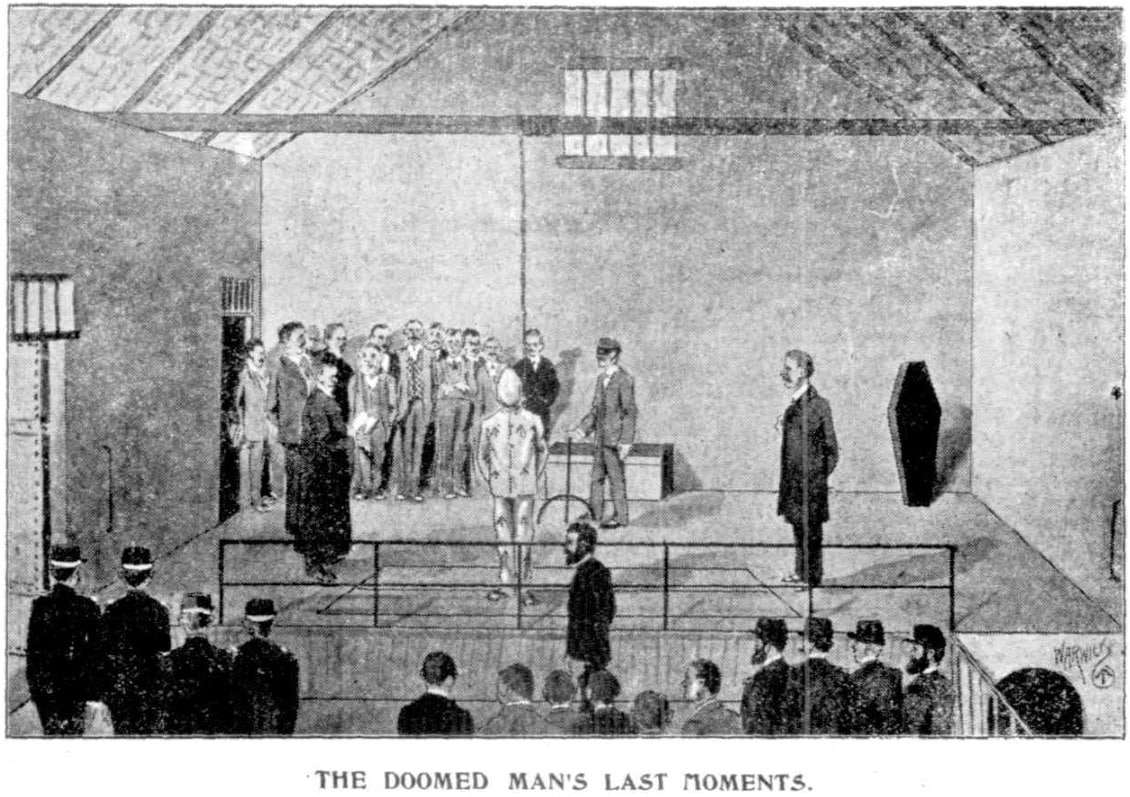
Thomas Bushell, an Imperial convict working in the bake-house at the Convict Establishment in Fremantle, took a 12-inch dough-knife from the bake-house on Sunday 9 July 1865. During the muster of prisoners for church service on C and D landing, he struck warder George Hollis on the head, then stabbed him in the back as Hollis passed, prompting Hollis to cry out, “Secure Bushell, for he has stabbed me.”

At his trial before Chief Justice Burt on 6 September 1865, the wounded warder himself testified that he did not believe Bushell had meant to kill him. The jury convicted him anyway of maliciously wounding with intent to murder, and he was sentenced to death and hanged just days after the verdict.


Bread Knife
Bread Knife

⬅ See all events from 12 September

Spread the word on your favourite platform!

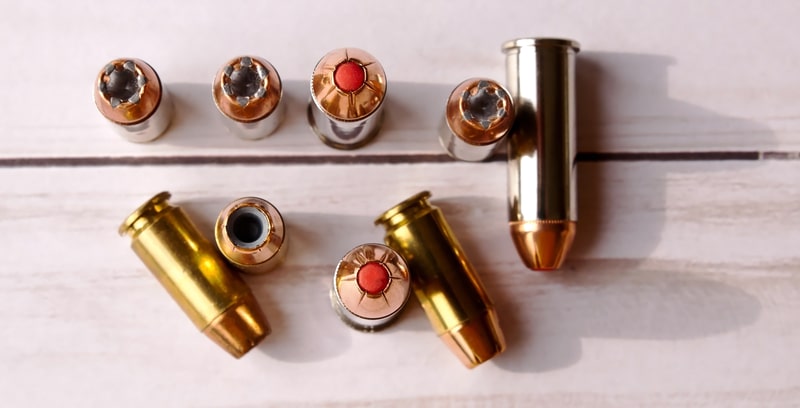
Aileen Wuornos had already established a deadly pattern along Florida’s highways, targeting men she encountered while working as a sex worker and hitchhiking around the state. Her fifth known victim was a 56-year-old retired police chief. After disappearing, his body was found on September 12 in an isolated area of Marion County. He had been shot seven times in the head and torso with Wuornos’s .22-calibre revolver.

By this stage, Wuornos’s killings had moved well beyond the disputed circumstances surrounding her first victim, Richard Mallory, whose death she maintained had been in self-defence. This latest killing formed part of an escalating pattern that would claim one more victim before police arrested her in January 1991, bringing to an end one of America’s most notorious female serial killing sprees.

Prisoner handcuffed during lethal injection with syringe and vial

⬅ See all events from 12 September

Spread the word on your favourite platform!

Bulgarian dissident Georgi Markov was waiting for a bus on Waterloo Bridge in London when he felt a sudden sharp pain in his leg. He turned to see a man pick up a dropped umbrella and hurry away, offering a mumbled apology. Markov thought little of it until a small red mark and fever set in over the following days.

The umbrella had been rigged to fire a tiny pellet packed with ricin, a poison for which there was and is no antidote. Markov died four days later, on 11 September 1978, from the resulting blood poisoning, becoming one of the most infamous casualties of Cold War espionage.

His killer would not be identified for almost three decades. It was not until 2005 that leaked files named the assassin as Francesco Gullino, an agent working for the Bulgarian secret service, though he was never extradited or tried for the murder.

Umbrella gun.
Umbrella gun.

⬅ See all events from 11 September

Spread the word on your favourite platform!

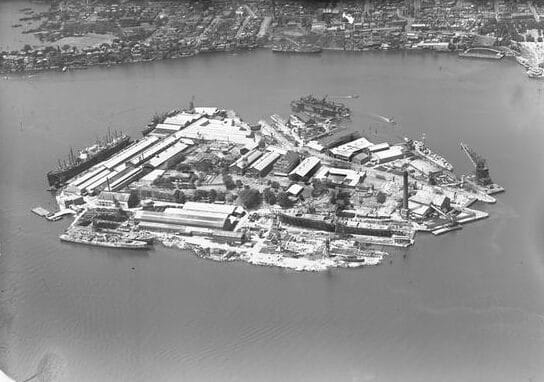
Frederick Wordsworth Ward, the bushranger known as Captain Thunderbolt, was serving time on Sydney‘s Cockatoo Island, a prison ringed by harbour currents and sheer sandstone cliffs and widely declared impossible to escape. On the night of 11 September 1863, Ward slipped his cell and plunged into the water, swimming through the cold, shark infested harbour to the mainland shore.

The breakout humiliated colonial authorities and turned Ward into a folk figure almost overnight. He spent the next seven years roaming the bush of northern New South Wales, robbing coaches, inns and travellers as one of the colony’s most enduring and elusive bushrangers before he was finally shot dead by police near Uralla in 1870.

Cockatoo Island, Sydney, 1951. Photograph by Frank Hurley. National Library of Australia, PIC FH/7951. Out of copyright.

⬅ See all events from 11 September

Spread the word on your favourite platform!
On This Day in True Crime History

Subscribe to Dark Stories

True crime stories, dark history and tour news, straight to your inbox.