Archives: Dark Stories: On This Day In True Crime History - Page 44
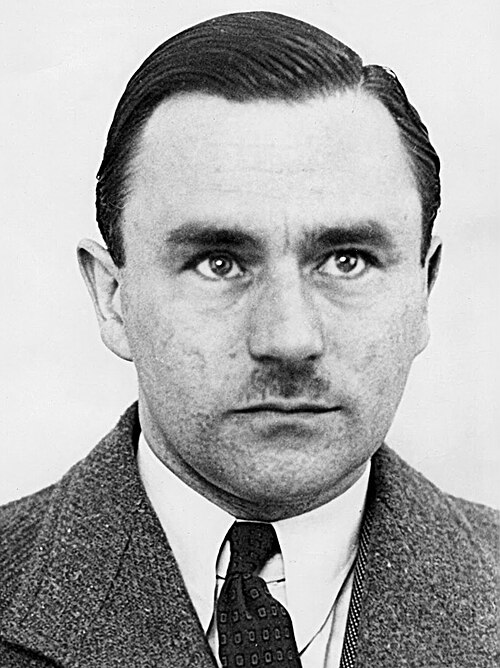
John Haigh, a convicted fraudster, murdered his former employer William ‘Mac’ McSwan and dissolved his body in a barrel of sulphuric acid. Haigh later claimed the killing was driven by a compulsion he called blood lust, but McSwan had money and property, and the murder looks less like madness than a calculated escalation of Haigh’s earlier fraud schemes.
Tellingly, whatever ‘compulsion’ Haigh described did not resurface until the cash from the McSwan killing had run out, suggesting the acid barrel was less about bloodlust and more about a ruthless, practical solution to funding his lifestyle.
Portrait of john george haigh – acid bath murderer. Public Domain.
On September 9, 1971, inmates at Attica Correctional Facility in New York seized control of the prison, taking dozens of guards and staff hostage in protest over brutal conditions, overcrowding, and demands for basic political and civil rights. For four days the prisoners held the yard, negotiating with officials and issuing a list of demands broadcast to the watching public.
On September 13, on the order of Governor Nelson Rockefeller, state troopers and police stormed the facility, opening fire on inmates and hostages alike. By the time the smoke cleared, 39 people were dead, including ten hostages, most killed not by prisoners but by the retaking force’s own gunfire.
The riot remains one of the deadliest prison uprisings in American history and exposed the brutal conditions inside Attica, triggering decades of lawsuits, investigations, and a landmark settlement for survivors and victims’ families.
John Wayne Glover, 72, was found hanging from a shower rail in his cell at Lithgow prison in New South Wales. He had been serving life without parole for the murder of six elderly women on Sydney‘s North Shore between 1989 and 1990. The mayor of Mosman described his death as the end of a terrible era.
No evidence has ever surfaced that Glover killed before 1989, when he was 56 and had already been married for 20 years with children; his wife had no idea of the violence in his past. He only admitted to the murders once confronted with the police evidence against him.
Glover denied responsibility for other crimes in which he was a prime suspect. Years after his conviction, he admitted he never worried about who his victims were or why he killed them; he said he wanted to stop but could not, and simply returned to his normal life after each murder.
John Thomas, a convict known as prisoner number 7279, escaped from a work party at Sutherland’s Bay in June 1863, taking a blanket, a carpenter’s axe and other items. He made his way to Peninsula Farm near Perth, where he entered the cottage of 70-year-old servant Duncan Urquhart and began helping himself to clothing.
When Urquhart returned and discovered the intruder, Thomas fled through a window armed with Urquhart’s own axe. He pursued the elderly man outside and struck him repeatedly, fracturing his skull. Despite his terrible injuries, Urquhart managed to make his way more than half a mile towards the farmhouse on his hands and knees, covered in blood.
Around noon, farmhouse owner Joseph Hardey stepped outside and saw a stranger walking up the cart road, coatless and carrying a bundle over his shoulder. The man calmly asked Hardey for directions to a property several miles further inland, apparently unconcerned that the man he had just attacked lay gravely injured nearby. Hardey later identified the stranger as Thomas.
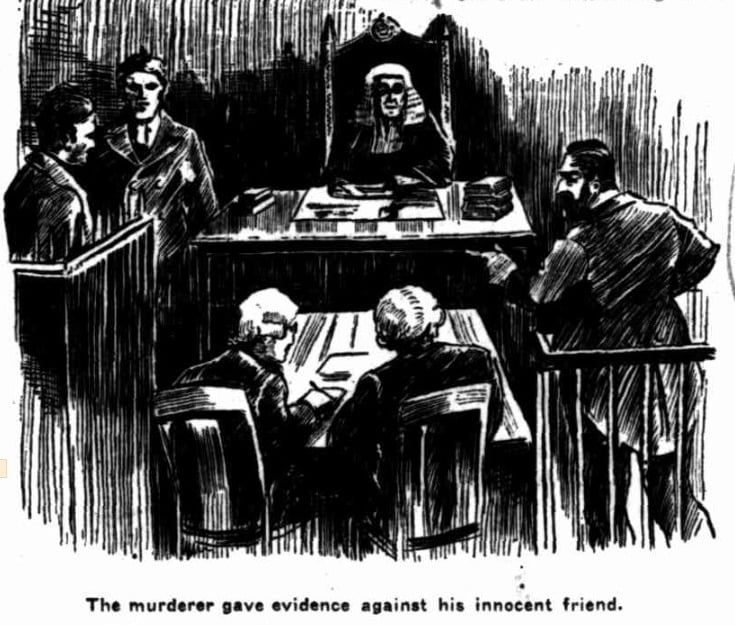
Urquhart survived for more than two months, but died in the Colonial Hospital on 24 August 1863 from his injuries. Thomas was tried before Chief Justice Burt at the Supreme Court on 2 September and convicted of wilful murder. He was hanged in front of Perth Prison on 8 September 1863.