In Versailles in 1789, a physician named Joseph Guillotin stood before France’s new National Assembly and argued that execution should not be a matter of rank or suffering. He proposed that every condemned prisoner, noble or commoner, die the same way: instantly, by a single blow of a blade, rather than by the axe, the sword, or the rope, methods that often took multiple strokes or slow strangulation to finish the job.

Guillotin framed it as a mercy, a way to strip cruelty and class privilege out of state killing. He did not invent the device that would later carry his name, nor did he ever operate one, but the machine built from his proposal would go on to define the French Revolution’s Reign of Terror, and the word guillotine would forever be linked to the man who only meant to make dying less brutal.
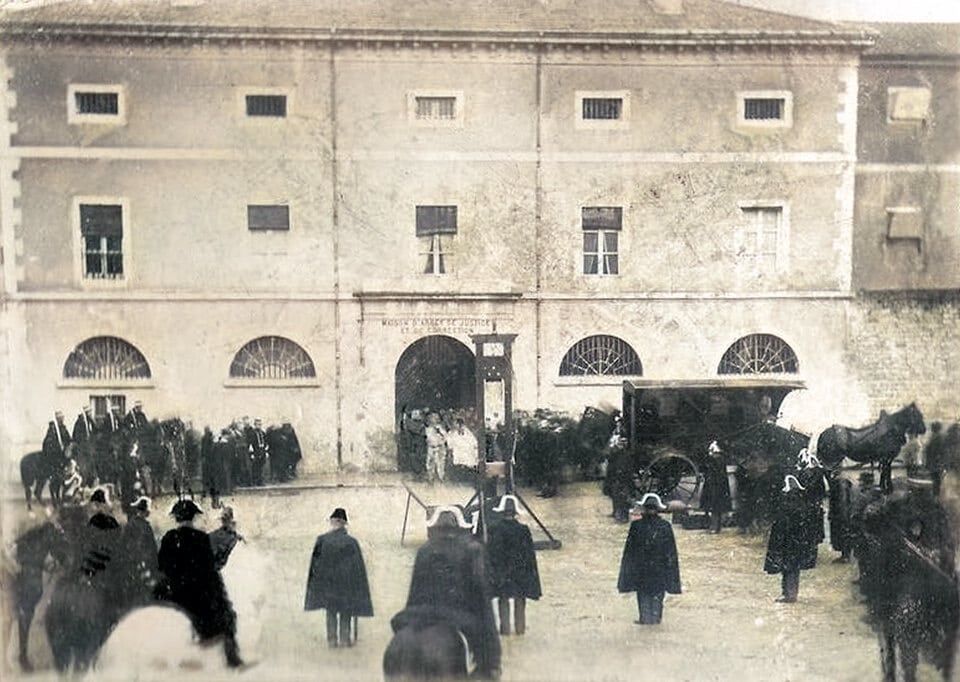

Public guillotine execution scene 1897

⬅ See all events from 10 October

Spread the word on your favourite platform!

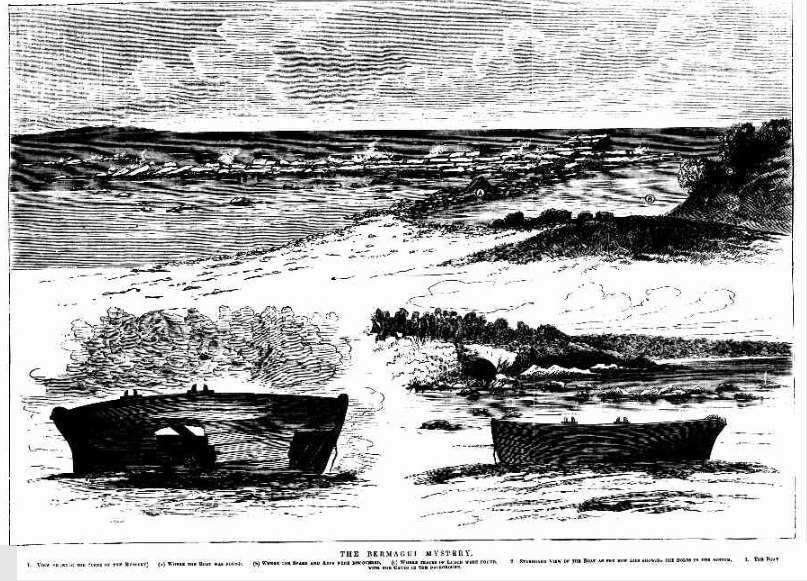
Geological surveyor Lamont Young, his assistant and three boatmen set out from Bermagui, New South Wales by night and would be last seen on this date, searching the coast for gold. Their boat would be found drifting empty near what would become known as Mystery Bay, its sail and anchor gone, loaded with heavy rocks, and a bullet hole through the hull.

What unsettled investigators most was not what was missing but what remained. A pair of spectacles sat neatly folded on a seat, none of the cargo was wet, and the holes in the planking had been punched outward from inside the boat, not in. No bodies, no weapon, and no sign of struggle were ever found, despite rewards, government inquiries and headlines across the British Empire. The five men were never seen again, and the mystery remains unsolved to this day.

Scene of the Bermagui Mystery

⬅ See all events from 10 October

Spread the word on your favourite platform!

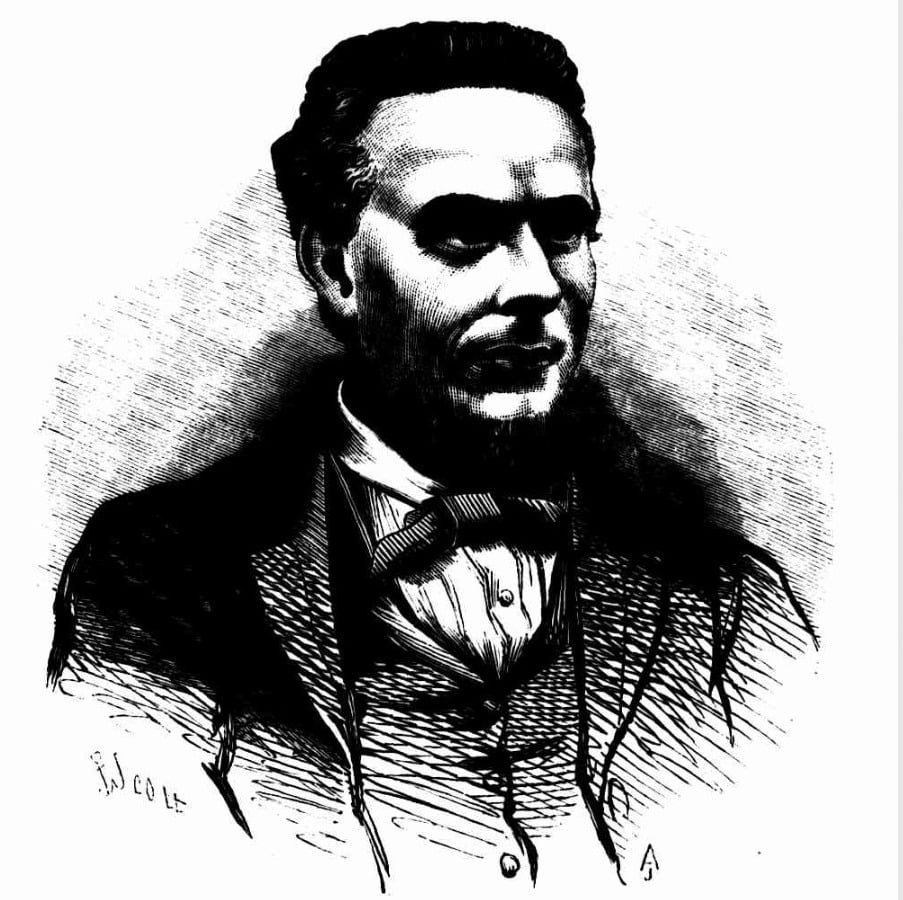
William Henry Scott, a butcher working in Sydney, was arrested on 10 October 1866 after police traced a bloodstained axe and a scrap of twilled calico he had left in storage with his former landlady, Mrs Janet Orr. The cloth matched a fragment found wrapped around the charred, headless remains of a woman dug up weeks earlier on waste ground off Sussex Street.

The breakthrough led detectives to Scott’s former workmates, who recalled his offhand confession in the days after the killing: that he had “done away with the Kangaroo”, their nickname for the woman who used to wait outside the shop for him each evening. Tried and convicted despite his furious denials, Scott was hanged at Darlinghurst Gaol in March 1867.

On the scaffold he still insisted, “I’ve never murdered man, woman or child in my life”, before forgiving the witnesses he blamed for his conviction.

William Henry Scott under sentence of death 1867

⬅ See all events from 10 October

Spread the word on your favourite platform!

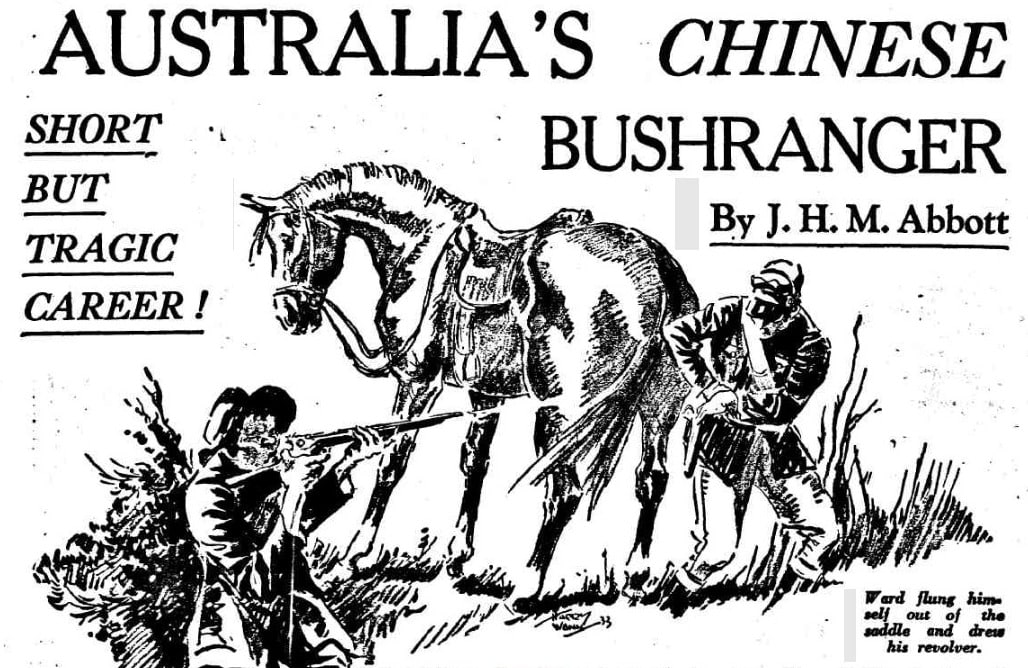
Sam Poo was an itinerant Chinese bushranger who spent ten days terrorising stockmen and settlers near Talbragar before shooting Senior Constable John Ward in February 1865. Tried at Bathurst that October, Poo took no part in his own defence; the court’s Chinese interpreter could not understand his dialect, and he sat through the entire proceedings in silence while witnesses and the dying constable’s own written statement were read against him.

The jury convicted him largely on that statement, in which Ward, certain he was dying, described being chased and shot by a “short, little, cranky old man” armed with a gun and pistol. The judge, visibly moved as he spoke the final words of the sentence, ordered Poo hanged, calling him a man who had terrified unarmed men, women and children before the killing.

Australias only Chinese bushranger.

⬅ See all events from 10 October

Spread the word on your favourite platform!
On This Day in True Crime History

Subscribe to Dark Stories

True crime stories, dark history and tour news, straight to your inbox.