At the Central Criminal Court in Sydney, 30-year-old Yvonne Gladys Fletcher of Newtown was sentenced to death after a seven-day trial for the 1948 murder of her first husband, Desmond George Butler, who died after months of wasting illness caused by thallium poisoning. Asked if she had anything to say before sentence was passed, she replied simply, “No, your Honor,” but moments later a prayer book she had carried through every day of the trial crashed to the floor and she collapsed in the dock, sobbing, as police lifted her out.

Mr Justice Kinsella told the court the crime was “horrible” because the poison had been “secretly administered within the family circle” to an unsuspecting victim, destroying him “mentally and physically while permitting him to linger for months in wretched agony.” Fletcher was the first person in Australian criminal history convicted of murder by thallium poisoning, and the jury recommended that the sale of the poison to the public be banned outright.

What the sentencing did not reveal to onlookers was already known to the court: Fletcher had also been committed for trial over the death of her second husband, who had died from the same poison at Newtown only months earlier. The Crown Prosecutor noted the chilling parallel between the two cases, telling the jury, “There is no question that both Butler and Fletcher died from thallium poisoning… the same matrimonial discord, the same hatred towards each man, the same sudden illness, and the same dreadful symptoms.” The judge himself observed that had this conviction concerned her second husband, evidence of his cruelty toward her might have offered some mitigation, but no such excuse existed for the killing of her first.
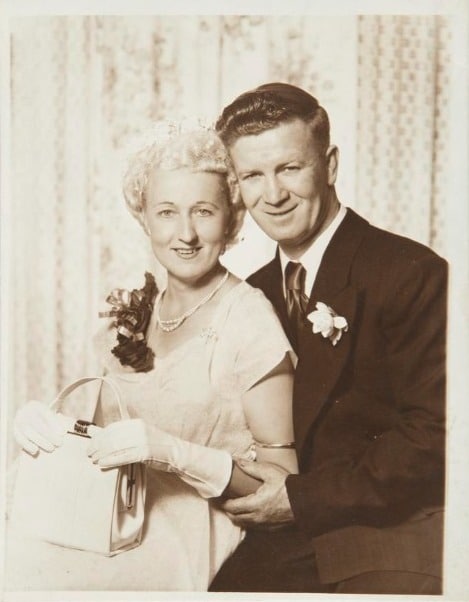

Yvonne Fletcher and Second Husband: Photograph by Robert Haswell. Gift, 2006. Justice & Police Museum Collection, Museums of History New South Wales, JP2006/1.

⬅ See all events from 23 September

Spread the word on your favourite platform!

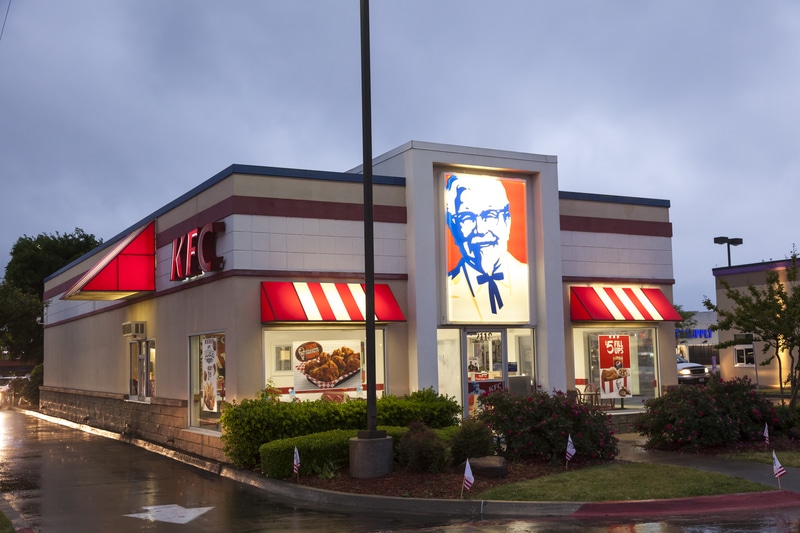
On the night of September 23, 1983, armed robbers held up a Kentucky Fried Chicken restaurant in Kilgore, Texas, just before closing. Five people inside, three employees and two friends waiting for one of them, were abducted and driven to a field on County Road 232, where each was shot in the back of the head and torso. The victims were identified as David Maxwell, 20, Joey Johnson, 20, Monty Landers, 19, Mary Tyler, 37, and Opie Hughes, 39.

The case went unsolved for over two decades. A torn fingernail found on one body once led investigators to arrest James Earl Mankins Jr., the son of a state representative, but DNA testing proved the fingernail was not his and he was released before trial.

In November 2005, cousins Darnell Hartsfield and Romeo Pinkerton, both already imprisoned on other charges, were arrested and charged with capital murder. DNA evidence pointed to a third, then-unidentified man involved in the killings and the rape of Hughes. Pinkerton denied any involvement, yet that October he pleaded guilty to five lesser counts of murder and received five concurrent life sentences.

The mystery of the third perpetrator was not resolved until decades later: in 2023 the Texas Rangers reopened the case, and DNA testing in 2025 finally identified him as Devan Riggs, a man who had died in 2010 without ever facing charges.

Kentucky Fried Chicken Restaurant at night. DALLAS, Tx, USA - APR 17, 2016: Exterior of a Kentucky Fried Chicken (KFC) fast food restaurant illuminated at night. Dallas, Texas, United States | ID 73870204 © Typhoonski | Dreamstime.com
ID 73870204 © Typhoonski | Dreamstime.com

⬅ See all events from 23 September

Spread the word on your favourite platform!

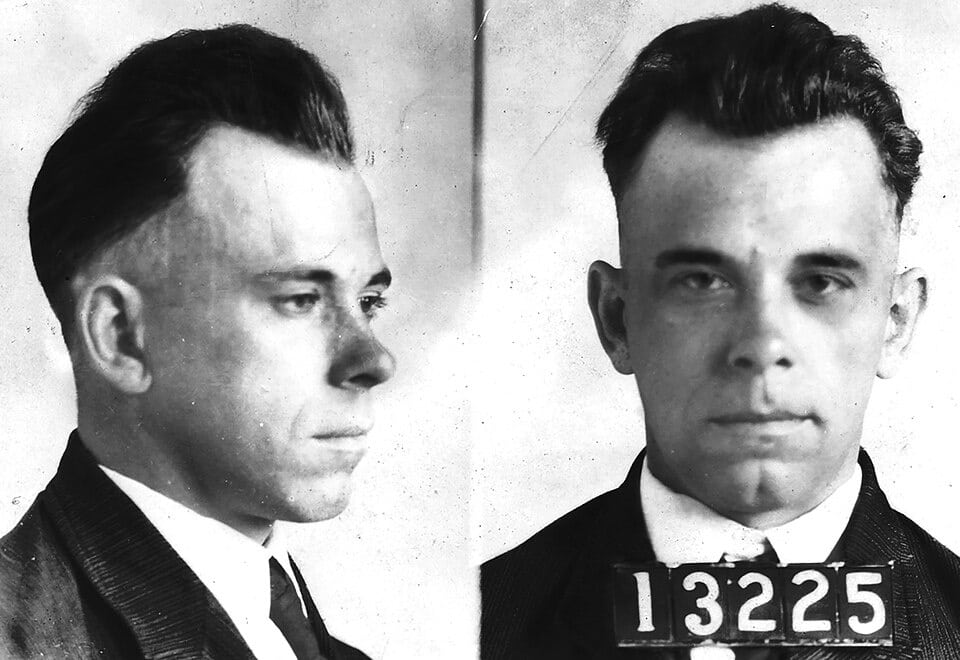
On September 22, 1933, ten prisoners broke out of the Indiana State Prison at Michigan City in a violent escape that killed two guards. The breakout was planned from inside by seasoned bank robber Harry Pierpont, with handguns smuggled to the crew by John Dillinger, freshly paroled after nine years behind bars, using arrangements made by Pierpont’s girlfriend.

In a strange twist, Dillinger himself was not among the men who walked free that day. Just days earlier he had been arrested and jailed in Dayton, Ohio, meaning his former cellmates had to turn around and break him out shortly after springing themselves. The escapees would go on to form the core of the notorious Dillinger gang, launching a violent crime spree across the American Midwest.

A Government agent later wrote that Dillinger’s career “graphically illustrates the inadequacies of our system,” noting that nine years in prison had done nothing to rehabilitate a man determined to become a professional bank robber.

John Dillinger 1924 mugshot

⬅ See all events from 22 September

Spread the word on your favourite platform!

Just seventeen days after Lynette Fromme aimed a pistol at Gerald Ford in Sacramento, a second attempt on the president’s life unfolded outside a hotel in San Francisco on September 22, 1975. Sarah Jane Moore, a 45-year-old activist and FBI informant, fired a single shot from a .38 revolver at Ford as he left the St. Francis Hotel, missing him by only a few feet.

The shot went wide largely because of a bystander, former Marine Oliver Sipple, who was standing nearby and grabbed Moore’s arm as she fired, deflecting her aim. Moore was wrestled to the ground and arrested at the scene.

She pleaded guilty to attempted assassination of a president and was sentenced to life in prison. Moore later expressed regret over the attempt, and she was eventually paroled in 2007 after more than three decades behind bars.

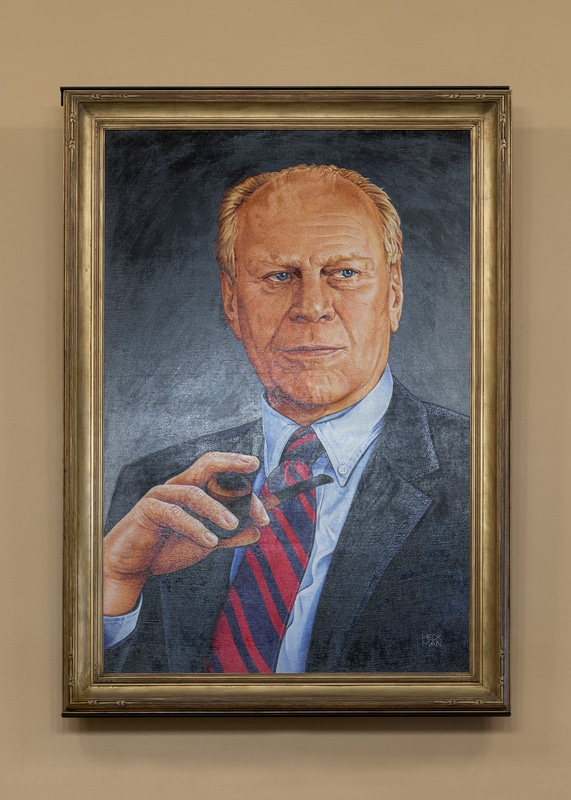
Gerald Ford portrait in the Michigan State Capitol at 100 N Capitol Avenue in Lansing, Michigan | ID 103716497 © Glenn Nagel | Dreamstime.com
ID 103716497 © Glenn Nagel | Dreamstime.com

⬅ See all events from 22 September

Spread the word on your favourite platform!
On This Day in True Crime History
1891·The Mace, the Madam, and a Melbourne Scandal That Never Died
1959·Through a Chapel Ventilator: the Sydney Jailbreak That Triggered Australia's Biggest Manhunt
More Crime On This Day →

Subscribe to Dark Stories

True crime stories, dark history and tour news, straight to your inbox.