1935: The Sydney Shark Arm Murder Case Collapses on Judge Orders

The case began in the most macabre way imaginable: on April 25, 1935, a captured shark on display at an Aquarium in Sydney vomited up a human arm. Tattoos identified the limb as belonging to James Smith, who had vanished after leaving home on April 8 with the stated intention of going on a fishing trip.

Police investigations focused on Patrick Brady, an associate of Smith who had been with him around the time of his disappearance. Another central figure was businessman Reginald Holmes, who was in a position to give direct evidence about Smith’s killing and Brady’s alleged involvement.

But before Holmes could give that evidence, the case took another extraordinary turn. In the early hours of June 12, just hours before he was due to appear at the inquest, Holmes was found shot dead in his car at Dawes Point. With the Crown’s key witness gone, the murder case against Brady was left largely dependent on circumstantial evidence.

Despite what Chief Justice Sir Frederick Jordan acknowledged was plenty of cause for suspicion, the prosecution now faced two fundamental problems: its key witness was dead, and there was no body to prove that Smith himself was dead. A person could, after all, survive the loss of an arm. On September 10, 1935, Jordan ruled that the evidence was insufficient to sustain a conviction and directed the jury to acquit Brady, bringing to an abrupt end what was described at the time as a case “without parallel in the annals of Australian criminal history.”

Brady’s freedom was short-lived. As soon as he stepped outside the court, detectives arrested him on an unrelated Tasmanian forgery charge. No one was ever convicted over Smith’s death or Holmes’s killing, and the infamous Shark Arm case remains unsolved.
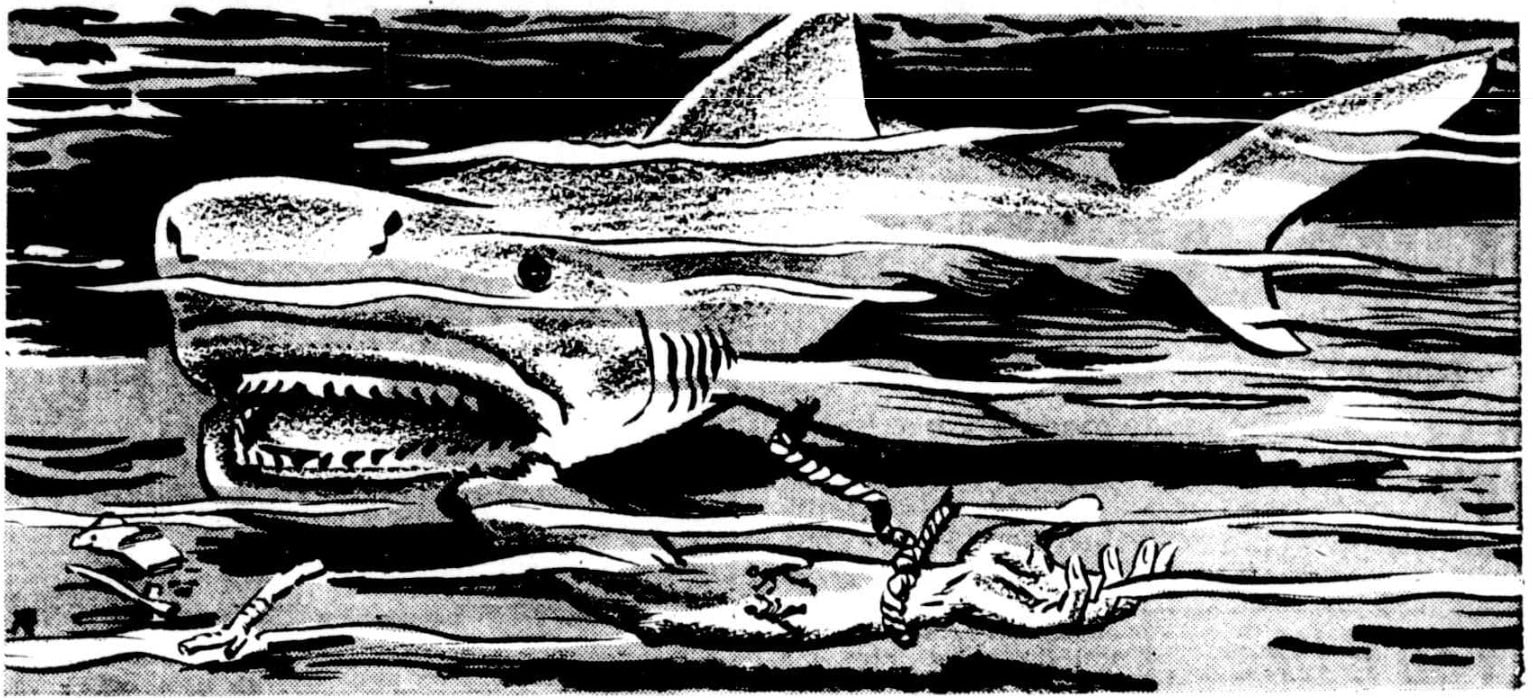

Shark Arm Murdery Mystery - Sydney
Shark Arm Murdery Mystery – Sydney

⬅ See all events from 10 September

Spread the word on your favourite platform!
True Crime Scene Tape

1931: Stabbed Like His Hero Julius Caesar: the Assassination of a Mafia Boss

Salvatore Maranzano, nicknamed Little Caesar for his fascination with Julius Caesar and the Roman Empire, had built a criminal empire in Brooklyn behind the front of a real estate brokerage, running bootlegging, prostitution and narcotics rackets. Born in Castellammare del Golfo, Sicily, and married to Elisabetta Minore, he was sent to New York to seize control of Mafia operations for his Sicilian backers.

In 1930, he went to war with rival boss Joe Masseria, sparking the Castellammarese War. Maranzano secretly convinced Masseria’s own lieutenant, Lucky Luciano, to betray him, and after a lunch at a Coney Island restaurant on April 15, 1931, Masseria was gunned down.

Maranzano emerged as capo di tutti capi, the boss of all bosses, and reorganised New York’s underworld into the Five Families. His triumph lasted only five months. After plotting to have Luciano killed, Maranzano discovered too late that Luciano had moved first. On September 10, 1931, four gunmen posing as government agents entered Maranzano’s Manhattan office and shot and stabbed him to death, dying in a manner fittingly similar to the fate of his idol, Julius Caesar.

Angry mobsters firing a submachine gun near an antique car

⬅ See all events from 10 September

Spread the word on your favourite platform!
True Crime Scene Tape

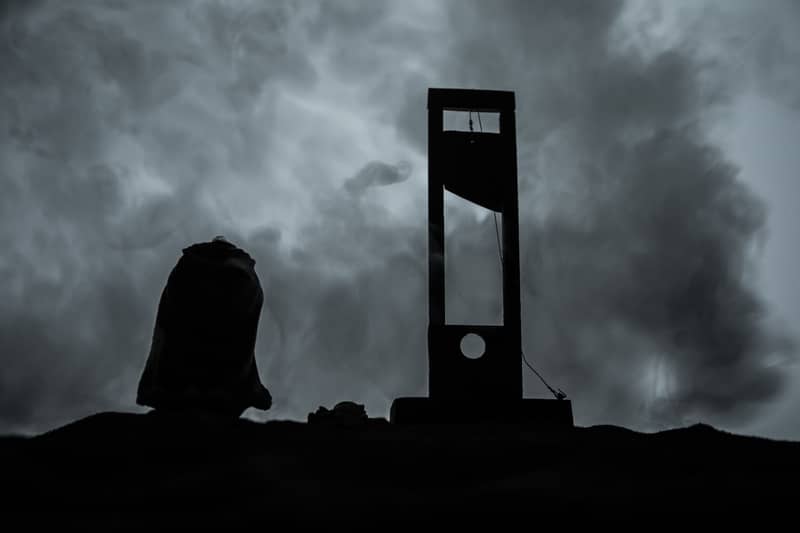
1977: The Last Blade Falls: the Final Guillotine Execution in France

Hamida Djandoubi went to the guillotine in France on this day in 1977, the last person ever executed by the device and the last person executed in France at all. He had been convicted of the murder of 21-year-old Elisabeth Bousquet, a crime that closed out nearly two centuries of the guillotine’s use as the instrument of French justice.

His execution marked a quiet historical hinge: within a few years France would abolish capital punishment altogether, in 1981, making Djandoubi’s death the final chapter of a punishment first adopted during the French Revolution.

Close-up of a guillotine in dark foggy setting execution concept

⬅ See all events from 10 September

Spread the word on your favourite platform!
True Crime Scene Tape

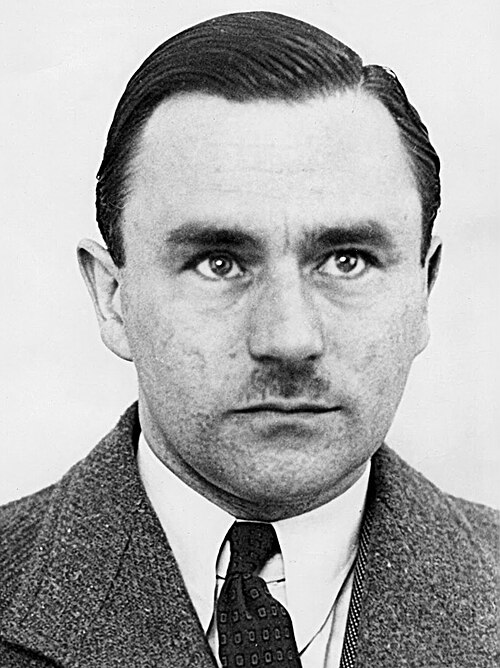
1944: The Acid Bath Murderer: John Haigh Dissolves His Former Boss in a Barrel of Sulphuric Acid

John Haigh, a convicted fraudster, murdered his former employer William ‘Mac’ McSwan and dissolved his body in a barrel of sulphuric acid. Haigh later claimed the killing was driven by a compulsion he called blood lust, but McSwan had money and property, and the murder looks less like madness than a calculated escalation of Haigh’s earlier fraud schemes.

Tellingly, whatever ‘compulsion’ Haigh described did not resurface until the cash from the McSwan killing had run out, suggesting the acid barrel was less about bloodlust and more about a ruthless, practical solution to funding his lifestyle.

Portrait of john george haigh - acid bath murderer. Public Domain.
Portrait of john george haigh – acid bath murderer. Public Domain.

⬅ See all events from 9 September

Spread the word on your favourite platform!
True Crime Scene Tape
On This Day in True Crime History

Subscribe to Dark Stories

True crime stories, dark history and tour news, straight to your inbox.