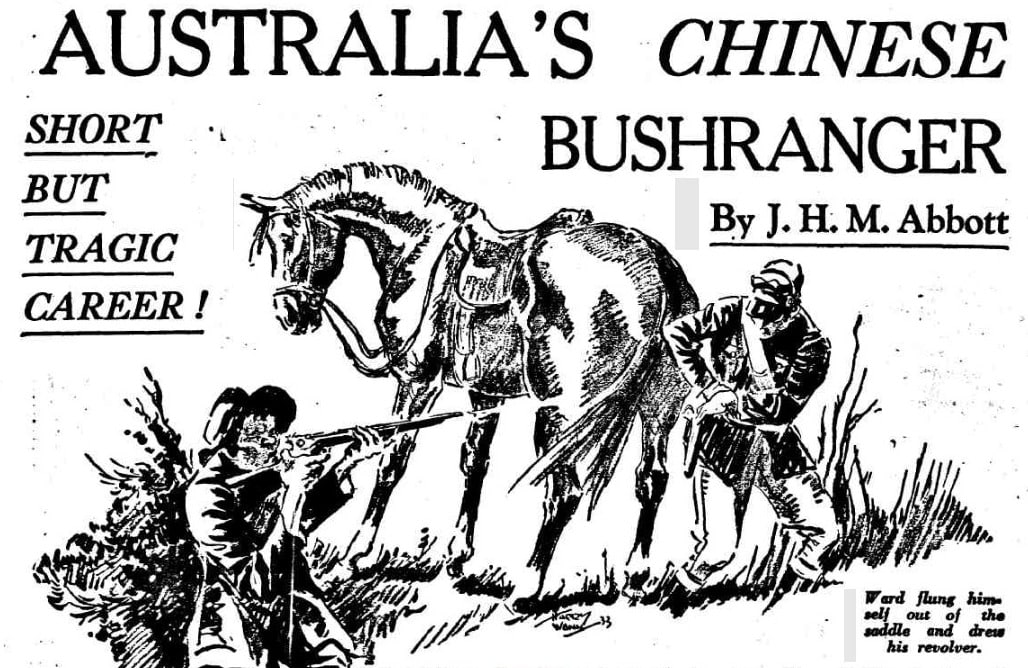
On Warland’s Range near Murrurundi in April 1863, a masked rider named Henry Wilson held up a party of drovers and stripped young Peter Clarke of his watch and chain. When Clarke lunged at him, Wilson shot him three times; Clarke was dead within minutes. So furious was the crowd that gathered at the scene that police had to physically stop them from hanging Wilson on the nearest tree.

He was tried instead at Maitland Circuit Court, where his counsel argued the fatal shot had gone off accidentally in the struggle. The jury took ten minutes to convict him, and he was hanged at East Maitland Gaol on 2 October 1863. Clarke’s bravery was later honoured with a public monument erected on the spot where he fell.

Wilson admitted firing the shots but denied meaning to kill, blaming drink and panic in the scuffle; still, he told his priest he accepted the justice of his sentence and deserved to die.
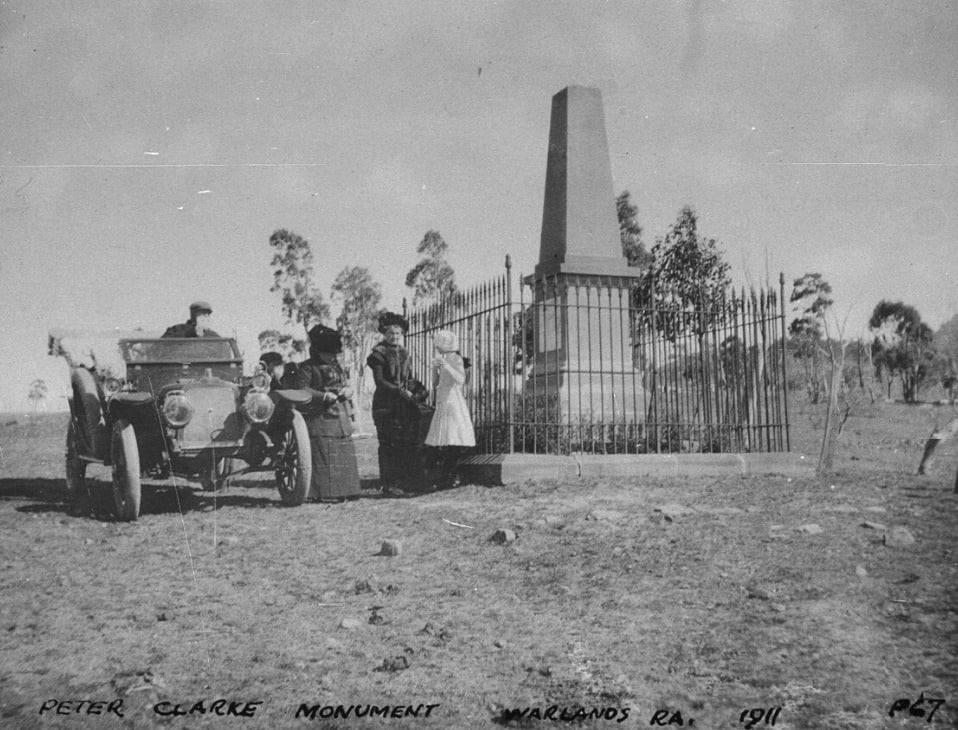

Peter Clarke monument, Warland’s Range, near Blandford, NSW. Mitchell Library, State Library of New South Wales, At Work and Play - 05492.
Peter Clarke monument, Warland’s Range, near Blandford, NSW. Mitchell Library, State Library of New South Wales, At Work and Play – 05492.

⬅ See all events from 2 October

Spread the word on your favourite platform!

Peter Sutcliffe hammered 20 year old Jean Jordan to death near a cemetery in Manchester, then realised the brand new £5 note he had just paid her was traceable straight back to his wage packet. Nine days later he returned in the dark to retrieve it, could not find it, and instead mutilated her body and attempted to cut off her head.

The note had been lying just outside the police search area the whole time, in her handbag under a fence. Detectives traced it to a Bradford pay run and interviewed thousands of workers, including Sutcliffe himself, twice. His alibi held, the inquiry stalled, and the man holding the incriminating fiver walked free for years before he was finally caught as the Yorkshire Ripper.

Piggy bank and new banknotes. Woman holding a piggy bank and new UK five pound notes | ID 82241351 © Peter Titmuss | Dreamstime.com
ID 82241351 © Peter Titmuss | Dreamstime.com

⬅ See all events from 1 October

Spread the word on your favourite platform!

Annie Birkett married Harry Crawford in Sydney in 1913 not knowing that Crawford had been born Eugenia Falleni and had lived as a man for twenty years. A neighbour told her in 1917. That October the pair went picnicking at Chatswood and Annie never came home; a charred body was found in scrub off Mowbray Road the next morning, still alive when the fire was lit, the doctor said. It lay unidentified for three years. Falleni told her son she had run off with another man.

The boy remembered other things. Days after his mother vanished his stepfather took him to The Gap and tried to coax him to the cliff edge; a week later he led him into scrub at night, told him to dig a hole, then threw the shovel away and took him home. In 1920 the son went to police. The body was matched through its false teeth, and among its effects he knew his mother’s shoes, one sole mended by his stepfather. Tried at Darlinghurst in what the papers called the “Man-Woman case”, put into the dock first in a suit and then in a dress, Falleni was convicted in two hours.

Sentenced to death, later commuted to life, Falleni told the judge: “I am not guilty, your Honor. I know nothing whatsoever of this charge.”

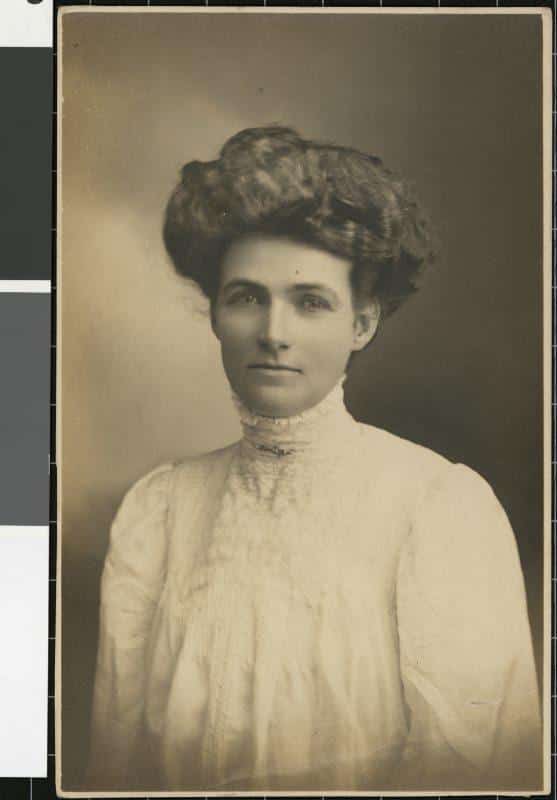
Portrait of Annie Birkett, circa 1910. Justice & Police Museum Collection, Museums of History NSW. Gift of Linda Slinger, 2011. Accession no. JP2011/1-2.

⬅ See all events from 1 October

Spread the word on your favourite platform!

Patrick Kennedy was a shepherd at an out-station near Penshurst in Victoria, sharing a hut with his wife and two other men. After a night of drinking, he turned on her the next afternoon without any clear provocation, kicking her so violently that the pattern of his boot nails was later found bruised into her body.

He was convicted at the Supreme Court and hanged at Melbourne Gaol on 1 October 1851. The drop failed to kill him instantly, and he struggled for nearly three minutes, prompting the hangman to boast to bystanders that he had predicted exactly how long it would take.

In his final days Kennedy revealed a chilling belief in fatalism, insisting he was merely an instrument of forces beyond his control. He recalled that his small son used to prattle a rhyme, “mammy dead and dady gone,” which he took as a dark omen; when the boy died in custody during his imprisonment, Kennedy said plainly that he was glad.

He showed no remorse for the killing, telling gaolers only, “Drink did it all, but if it had not been done by drink, something else would have done it, as it was decreed to be done.”

Skull and vintage hourglass on wooden background in beam of light

⬅ See all events from 1 October

Spread the word on your favourite platform!
On This Day in True Crime History

Subscribe to Dark Stories

True crime stories, dark history and tour news, straight to your inbox.