1904: “She Was Always Kind and Good to Me”: Employee Hanged at Melbourne Gaol for Murdering His Employer’s Wife

On the morning of 10 July 1904, Mrs Veitch, wife of baker A. C. T. Veitch, was found dead in the passage of the family’s bakery on O’Grady Street, Clifton Hill, a suburb of Melbourne. She still clutched a buggy whip in her hand, and a deep gash on one hand suggested she had fought desperately for her life. Whoever attacked her had locked the back doors, the front gate and the shop door beforehand, and had even tried to silence the family’s terrier tied up in the yard, evidence of careful planning rather than a chance intrusion.

The body was discovered by James Coleman Augustus Williams, an employee of the bakery who had been out on his delivery round. He raised the alarm after a boy came to buy bread and got no answer. Williams was soon charged with the murder, and at trial evidence pointed to a robbery gone wrong at the nearby office, though nothing suggested any personal grievance against the victim.

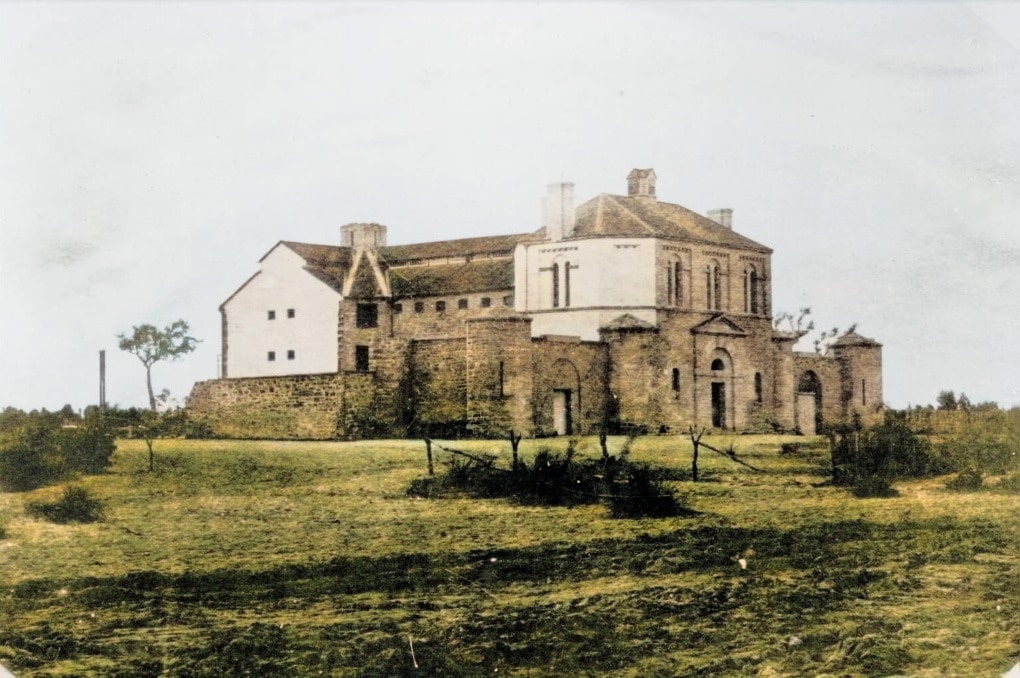
Williams was hanged at Melbourne Gaol on 8 September 1904.

The night before his execution, Williams wrote out a formal confession, insisting the killing was not for gain or lust but committed “in a fit of passion”, and that Mrs Veitch “was always kind and good to me”. He asked that the public not judge his family for what he had done and thanked the gaol’s governor and chaplains for their kindness to him in his final days.


Vintage bakery storefront on a sunny day

⬅ See all events from 8 September

Spread the word on your favourite platform!

2025: Mushroom Murderer Erin Patterson Sentenced to Life, Could Walk Free at 82

Supreme Court Justice Christopher Beale handed Erin Patterson three life sentences for murder and 25 years for attempted murder, setting a non-parole period of 33 years. That means Patterson, who poisoned relatives with a beef Wellington laced with death cap mushrooms, cannot be considered for release until 2056, when she would be 82 years old.

The judge described the crime as an ‘enormous betrayal’ marked by substantial premeditation, and noted that Patterson had shown no remorse for the deaths she caused.

Poisonous death cap mushrooms

⬅ See all events from 8 September

Spread the word on your favourite platform!

1842: Man Hanged at Melbourne for the Killing of an Overseer at Mount Rouse

On 5 September 1842, a man known as Figara Alkapareet was hanged in the Port Phillip District for his alleged part in the killing of an overseer named Codd at Mount Rouse two years earlier. Witnesses placed Figara among a group of men who attacked Codd, although questions surrounded his identification and Figara maintained that it was his brother who had been at Mount Rouse while he was elsewhere washing sheep.    After a jury found him guilty, Figara was sentenced to death. Contemporary accounts described him as meeting his fate with a sense of “natural resignation,” apparently accepting his approaching death without outward resistance.    His execution provoked criticism in the newspapers, which questioned the justice and usefulness of the punishment amid the violent conflict and dispossession of the period. Even at the time, Figara’s death prompted debate over whether the law was being applied justly.

View from Mount Rouse summit over Southern Grampians plain

⬅ See all events from 5 September

Spread the word on your favourite platform!

1857: Two Men Hanged at Melbourne Gaol for the Brutal Murder of a Brothel Madam

On a wet, cloudy night in 1857, Chong Sigh and Hing Tzan entered the brothel of Sophia Lewis on Exhibition Street, in Melbourne, intending to rob and murder her.

Chong Sigh cut the sleeping woman’s throat, but the first wound was not fatal. Hing Tzan held her down while a second, deeper cut was made. When Lewis moved again, Hing Tzan returned to her and, according to the men’s later confession, almost severed her head from her body.

The pair then plundered the room and slipped away into the night, narrowly avoiding a constable on his beat before eventually scattering to Geelong and Ballarat.

Both men were arrested, confessed and were convicted of murder. Their statements confirmed that Chong Sigh had conceived the plot, with robbery as the motive, while Hing Tzan carried out the final fatal attack.

At Melbourne Gaol, the two men presented a striking contrast on the scaffold. Chong Sigh was overcome with emotion and cried loudly, while Hing Tzan remained comparatively composed and appeared to chant a prayer. Hing Tzan briefly resisted when the execution cap was placed over his head, apparently fearing that his hair was about to be cut, but quickly became calm. Both men were hanged on 3 September 1857.

Hooded man holding a glowing lantern in a dark forest

⬅ See all events from 3 September

Spread the word on your favourite platform!
On This Day in True Crime History
1867·Hanged at Perth Gaol, His Final Words a Shout for the Irish Republic
1908·The Slowest Death: a Perth Stepmother's Acid Poisoning Spree Claims a Third Child
1923·Squizzy Taylor Walked Free While a Man Who Never Fired a Shot Hanged for a Melbourne Bank Murder
More Crime On This Day →

Subscribe to Dark Stories

True crime stories, dark history and tour news, straight to your inbox.