1989: The Same Calendar Date, Six Years Apart: Harold Shipman Killed Two Elderly Patients in Hyde

Serial killer Dr Harold Shipman had a chilling habit of striking on the same date across different years. On 26 September 1989, he killed 82 year old Elizabeth Mary Burke in Hyde, the Greater Manchester town where his medical practice was based.

Exactly six years later, on the same date in 1995, he killed 87 year old Dora Elizabeth Ashton, another patient from Hyde. Despite the eerie coincidence, Shipman was never charged with either woman's death; he was only later convicted for a separate group of murders, though he is suspected of killing far more patients over his career as a trusted family doctor.

Injection to patient’s arm.

⬅ See all events from 26 September

Spread the word on your favourite platform!

1764: Born to Mutiny: Fletcher Christian, the Man Who Cast Captain Bligh Adrift

Fletcher Christian was born on 25 September 1764 in Cumberland, England, decades before he would become one of history's most infamous mutineers. In April 1789, as master's mate aboard HMS Bounty, he led a revolt against Captain William Bligh, seizing the ship in the South Pacific after months of tension during the vessel's breadfruit-collecting voyage.

Rather than kill Bligh, Christian set him adrift in a small open boat with eighteen loyal crew members and minimal supplies. Bligh went on to complete an extraordinary 3,618-mile voyage to safety in Timor, a feat of navigation still studied today.

Christian and his fellow mutineers eventually settled on remote Pitcairn Island with a group of Tahitian men and women, burning the Bounty to avoid detection. The fate of the settlement descended into violence within years, and the exact circumstances of Christian's own death remain disputed, with some accounts claiming he was killed by fellow settlers and others suggesting he secretly returned to England.

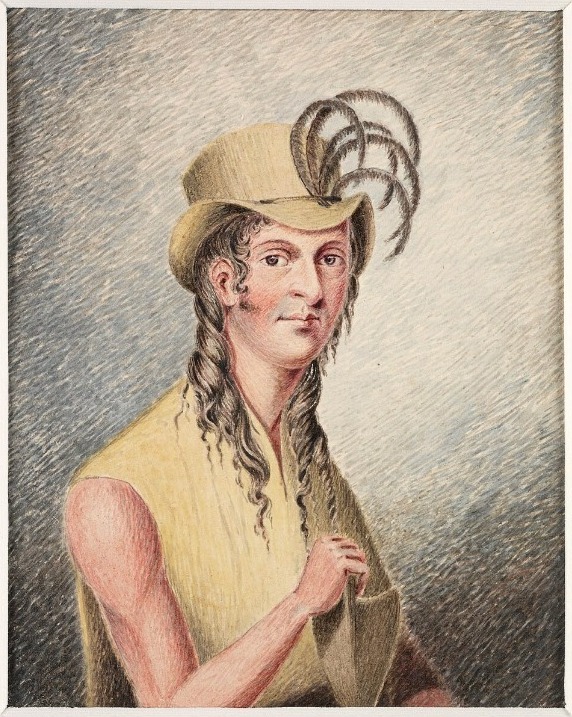
Portrait of Friday Fletcher October Christian son of Bounty mutineer Christian Fletcher 1814 by John Shillibeer

⬅ See all events from 25 September

Spread the word on your favourite platform!

1983: The Great Escape: 38 IRA Prisoners Break Out of the Maze in Britain's Largest Prison Breakout

On 25 September 1983, 38 IRA prisoners staged a mass breakout from the Maze Prison in County Antrim, Northern Ireland, the largest prison escape in British history. The men overpowered guards inside H-Block 7, some using smuggled handguns, and seized control of the wing before storming the front gate disguised in stolen prison officer uniforms.

In the chaos one prison officer was stabbed to death and twenty others were injured during the breakout. Several escapees hijacked a delivery lorry to get beyond the perimeter fences, and while a number were recaptured within days, others evaded capture for years, some fleeing abroad before eventually being caught or negotiating their return.

The escape became known among Irish republicans as the Great Escape, a name that stuck for decades and turned the breakout into one of the defining episodes of the Troubles.

A Great Escape
A Great Escape

⬅ See all events from 25 September

Spread the word on your favourite platform!

William Colthouse: The Highwayman Who Hid in a Hollow Tree

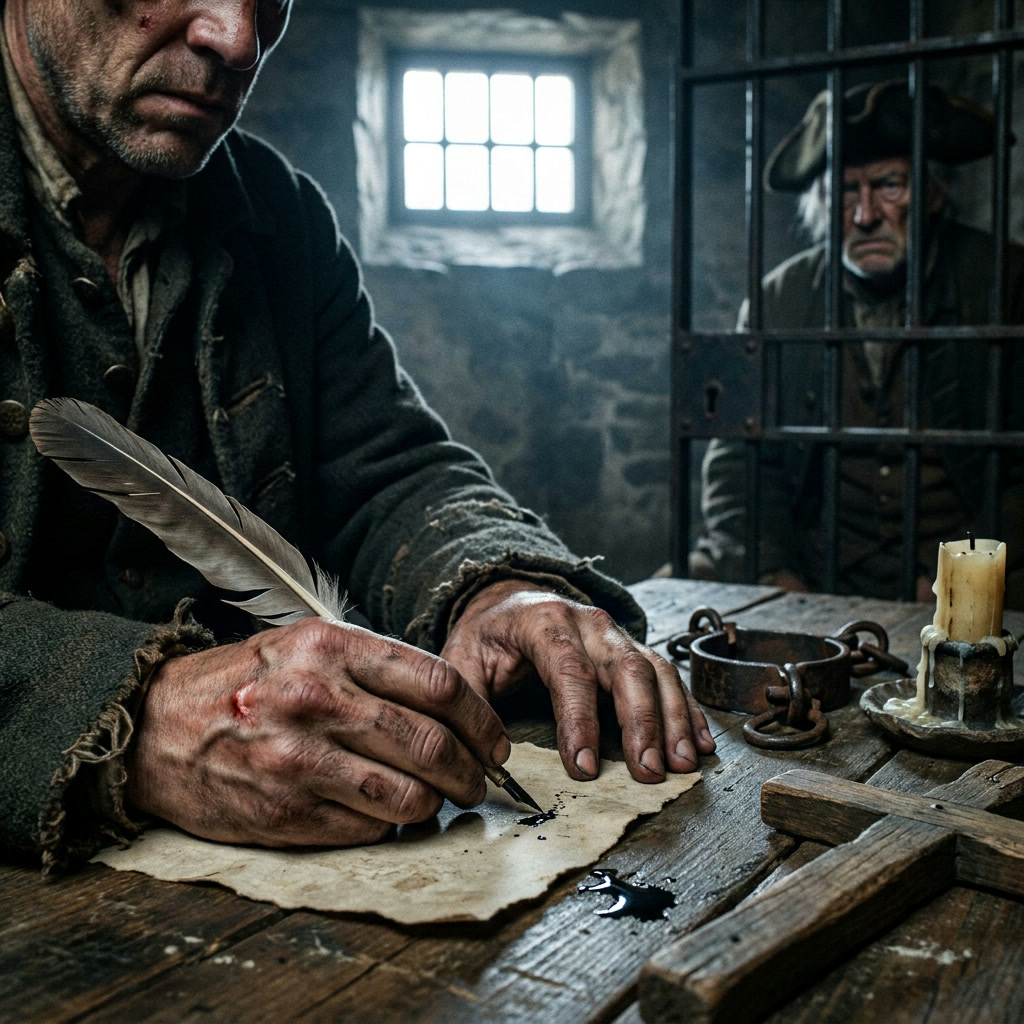
William Colthouse grows up in Yorkshire with a solid education and strong religious principles, but his head is full of dangerous politics: he is a fierce believer in hereditary right, and in the early days of King George the First's reign, his loud mouth lands him inside Newgate Prison.

It is there, among thieves and schemers, that Colthouse learns a new trade; within the walls of old England's most notorious gaol, a man who entered for seditious words comes out ready for the highway.

His is a true crime story of politics, family ruin and the road: listen now and follow it to the end.

William Colthouse: The Highwayman Who Hid in a Hollow Tree

Follow the podcast so you never miss an episode:

Apple PodcastsSpotifyAmazon MusicMore apps

FROM THE 1735 TEXT

William narrowly escaped by creeping into a hollow tree

CASE FILE No. 19
NAMEWilliam Colthouse
AGEabout 34
WHEN1722
WHERELondon, Hounslow Heath, Oxford
CHARGEHighway robbery and involvement in a prison escape plot
FATEHanged at Tyburn, 8 February 1722
SOURCELives of the Most Remarkable Criminals, 1735
HANGED

Dark Lexicon: Old words. Dark meaning.

The past speaks its own dialect; here is what to listen for in this episode.

Seditious words: in old England, simply speaking against the king or the government could get you locked up. It did not take a plot or a weapon: the wrong sentence in the wrong alehouse was enough to see you dragged to Newgate.

Jacobite: a supporter of the exiled Stuart line, who believed the throne had been stolen. In old England, calling someone a Jacobite was not a compliment; it marked them as a threat to the ruling order and a potential traitor.

Journeyman: today we use it loosely to mean someone competent but unremarkable. In old England it meant a skilled tradesman who had completed his apprenticeship but did not yet own his own shop; he worked for daily wages, and the word comes from the French 'journee,' meaning a day.

Hounslow Heath: the stretch of open land west of London that was practically synonymous with highway robbery. Travellers crossing it knew the risks; highwaymen knew the rewards.

Lay under condemnation: to wait in prison after being sentenced to death. In old England, the condemned sometimes lingered for weeks, receiving visitors, writing letters, and facing the slow approach of the gallows.

Forcing the prison: an escape attempt that involved breaking out by violence. It was a serious additional offence in old England and could seal a prisoner's fate even if the original charge was in doubt.

Suffered: in old England's legal language, to 'suffer' meant to undergo execution. It carried a note of religious endurance, as if the gallows were a kind of passion the condemned was made to bear.

About This Series

Lives of the Most Remarkable Criminals (1735) is one of the earliest works of true crime in the English language. Each week this podcast retells one of its stories for today's listener, keeping the old book's most striking lines.

Spread the word on your favourite platform!

On This Day in True Crime History
1858·The Rope Broke, So They Hanged Him Again: Samuel Gibbs Executed in Melbourne for the Murder of His Wife
1858·He Named Four Innocent Men as the Killers: Hanged in Melbourne for a Ballarat Murder
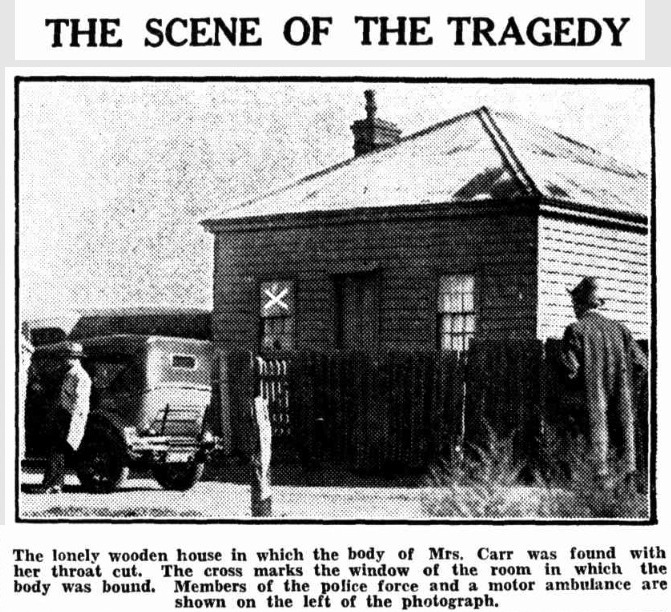
1929·She Asked for a Kiss, Then Bled to Death: Frederick Carr Hanged in Adelaide for Murdering His Wife
1963·The Royal Commission That Cleared Brisbane Police, Then Unravelled as a Cover-up
More Crime On This Day →

Subscribe to Dark Stories

True crime stories, dark history and tour news, straight to your inbox.