Serial killer Dr Harold Shipman had a chilling habit of striking on the same date across different years. On 26 September 1989, he killed 82 year old Elizabeth Mary Burke in Hyde, the Greater Manchester town where his medical practice was based.
Exactly six years later, on the same date in 1995, he killed 87 year old Dora Elizabeth Ashton, another patient from Hyde. Despite the eerie coincidence, Shipman was never charged with either woman’s death; he was only later convicted for a separate group of murders, though he is suspected of killing far more patients over his career as a trusted family doctor.
John Hughes told the jurors who convicted him that they were “shopkeepers tired of waiting, and anxious to get home for their dinner”. They had taken ten minutes. Days later he was hanged behind Melbourne Gaol for the murder of Abraham Marcus, a traveller whose only mistake was chasing the men who stole his best horse.
In December 1852 Marcus was bound for the Ovens goldfields with his wife and nine-year-old son when their dray broke down at Yackandandah Creek. Four horsemen stopped, accepted a meal and even helped with the repairs. Hughes turned down four pounds for his tired horse and saddle, remarking that he would not go much further before he had another. When the riders had gone, so had the best of the Marcus horses, with the worn-out mount left in its place.
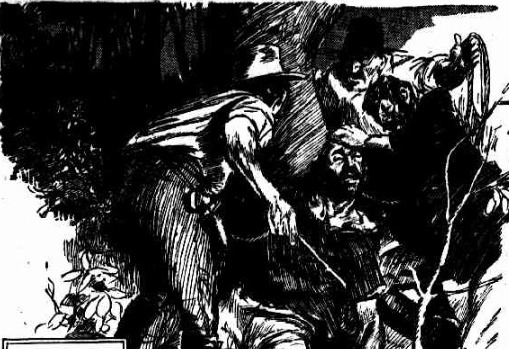
Marcus rode after them and seized the bridle. The gang kept him talking until a passing bullock dray was out of sight, then drew pistols, marched him into the bush and tied him to a tree, where he was later found dead. His whole party recognised the rope: it had hung around the neck of the horse Hughes rode. That same evening, by his own later account, the gang robbed a young Sydney man named Stone on his way home from the diggings; he broke free, was run down and killed, and his body was sunk in a creek, weighted with stones and a saddle.
A reward of 200 pounds was offered, but it was 1854 before the widow picked Hughes out of a line of 21 identically dressed prisoners in the yard of Darlinghurst Gaol. He made a long confession naming three accomplices, then asked to be sent to Melbourne quickly, since enough had been proved to hang him. At trial he called the jurors “new chums”, to laughter from the gallery. The judge replied that an innocent man would never have dared to browbeat a jury so, and that the clear evidence of the dead man’s young son had settled the matter.
From the dock Hughes withdrew his confession as false and swore the men he had named were innocent too: “I now say, and will on the day of my death, that I am an innocent man.” He went to the scaffold pale but composed, and made no further revelations.
Robert Francis Burns walked out of a Melbourne courtroom in August 1882 an acquitted man, and was arrested for a different murder before he had left the building. The first charge concerned a fellow railway navvy, last seen heading off with Burns and a gallon of whiskey. A headless body was found in the bush, but the Crown could not prove whose it was.
The second charge held. Michael Quinlivan, “a quiet saving man”, had been great mates with Burns, the only two Irishmen in their work gang. In June 1880 he withdrew 15 pounds from the bank, left a roadside hotel with Burns and was never seen alive again. Weeks later his body was found in a sheep paddock with a fractured skull.
The first jury could not agree after more than six hours; the second convicted in 45 minutes. On the gallows at Ararat Gaol, before about 30 spectators, the hangman was visibly nervous, and Burns plunged into eternity without any final words. Instead, he left a written statement thanking his gaolers, his lawyers and his priest, and admitting nothing.
Afterwards the hangman swore that as he pinioned the prisoner, Burns murmured: “I have cooked eight, five in Victoria and three in Sydney, and now you are going to cook me.”
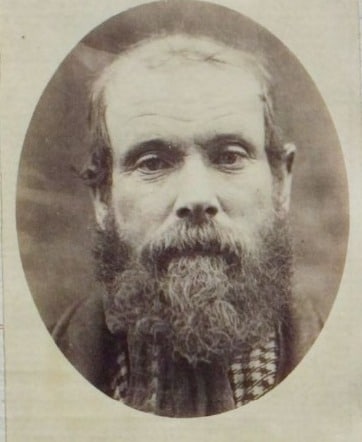
Robert Francis Burns Mugshot: VPRS 515/P0000, Central Register for Male Prisoners 19384 – 19880
The Want Ad Killer,Harvey Carignan, was arrested in Minnesota on 24 September 1974, at the end of a ten-day rampage. A woman he had left for dead in a field survived and raised the alarm, two others escaped when he stopped for petrol, and an 18-year-old was found dead in a cornfield just four days before police caught up with him.
He should have been hanged in 1949. A soldier stationed in Alaska, he was sentenced to death for murdering a woman, but the conviction collapsed because an officer had promised he would not be executed if he confessed. With the confession thrown out, the murder charge was dismissed. He served time for a separate assault instead, part of it in Alcatraz, and was paroled in 1960.
By the early 1970s he was the prime suspect in two killings in Washington state, one of them a teenager who had answered his “help wanted” ad for a job at his service station. He was never charged, and moved on to Minnesota. After his arrest, his plea that God had ordered him to kill failed; he was convicted of two murders and died in prison in 2023, aged 95.