1629: The Batavia Massacre: First European Executions on Australian Soil

When the Dutch East India Company ship Batavia wrecked on a reef off Western Australia in 1629, disgraced merchant Jeronimus Cornelisz seized control of the survivors stranded on the barren Houtman Abrolhos islands. Fearing his crimes would be exposed once rescue came, he set his followers to killing anyone who might oppose him or drain the group’s meagre food and water. Over the following weeks his men murdered at least 125 men, women and children, drowning some and butchering others, while a small band of soldiers under Wiebbe Hayes held out against them on a nearby island.

When commander Francisco Pelsaert finally returned with a rescue ship, Cornelisz had already been captured. He and six of his men were hanged on Long Island in the Houtman Abrolhos on 2 October 1629, the first Europeans executed on Australian soil; Cornelisz had both hands amputated before he was strung up. Two lesser offenders were marooned on the mainland instead, becoming the first Europeans known to live in Australia.

Confessions were extracted from several of the mutineers under torture before the executions were carried out.
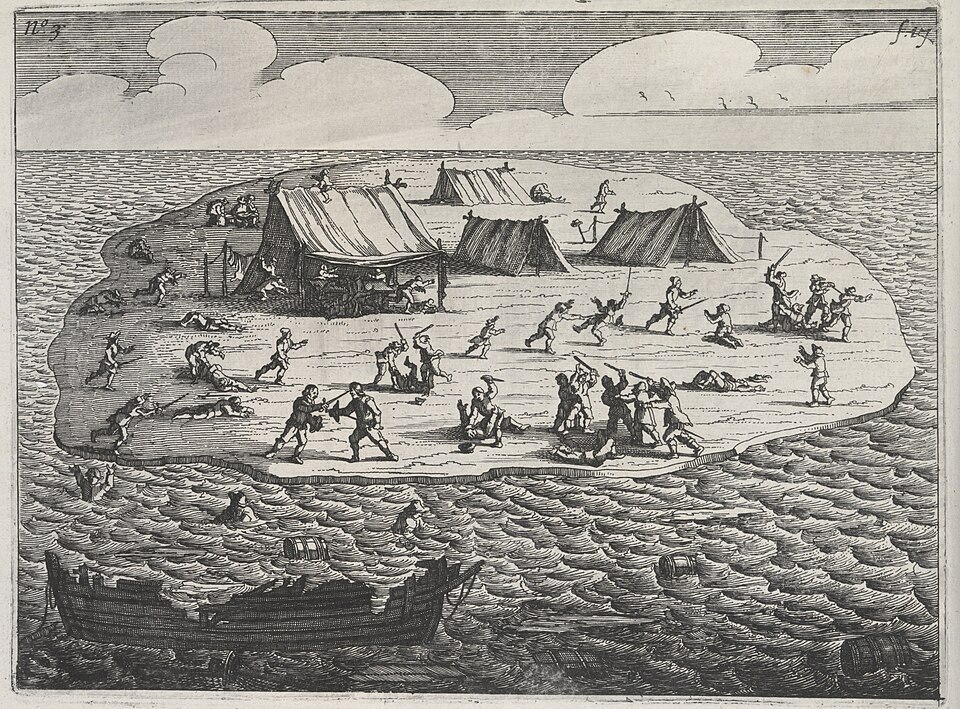

From Shipwreck to Massacre on Beacon Island

⬅ See all events from 2 October

Spread the word on your favourite platform!

1792: Five Days of Mob Killing End as the September Massacres Claim Half of Paris Prisons

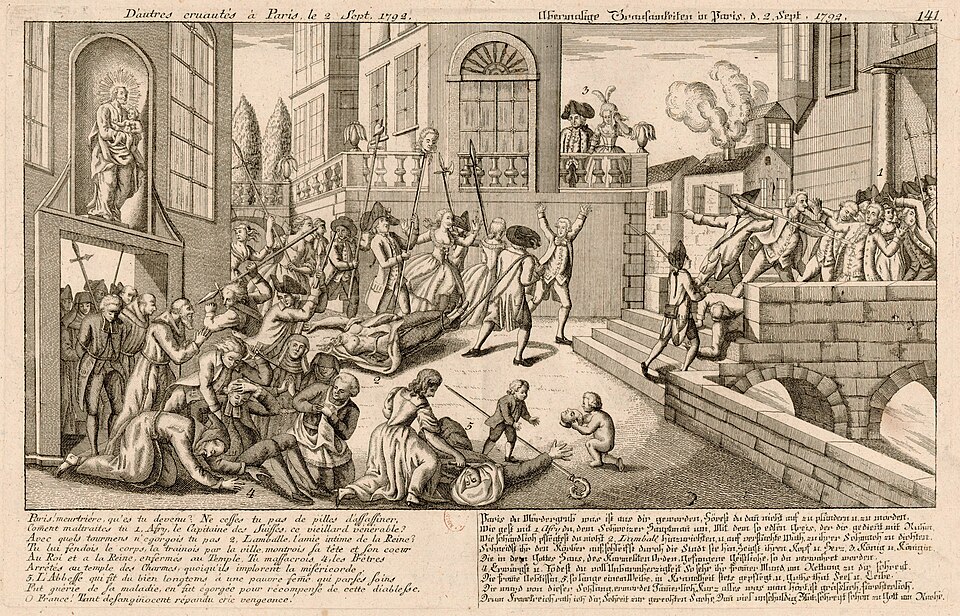
Over five days in September 1792, mobs stormed nine prisons across Paris and carried out mass summary executions of those held within. The killings were brutal in their indiscriminate reach: roughly half the prison population was slaughtered before the violence finally subsided.

An estimated three-quarters of the victims were not political prisoners at all, but common criminals, forgers, women, and children. The September Massacres remain one of the darkest episodes of the French Revolutionary period.

Engraving showing the massacre of Princess de Lamballe

⬅ See all events from 6 September

Spread the word on your favourite platform!

1971: Man Commits Mass Murder: Freed Eight Years Later to Start a New Life

On the night of 6 September 1971, dairy farmer Clifford Bartholomew murdered ten members of his family at their Hope Forest property south of Adelaide, including his wife, seven children aged between four and 19, his sister-in-law and his infant nephew. When police arrived, Bartholomew was sitting calmly at the kitchen table drinking beer; one detective later described him as “cool, calm and collected.”

Bartholomew admitted the killings and was sentenced to death, but his sentence was later commuted to life imprisonment. Despite the scale of the crime, he was released on parole in 1979 after serving just eight years.

Under the new identity Clifford Palmer, he rebuilt his life, remarried and became stepfather to seven children. He lived quietly until his death in 2002. Years later, his second family learned the full extent of his past and discovered that the man they had known as “Poppy Cliff” had been responsible for one of Australia’s worst family massacres.

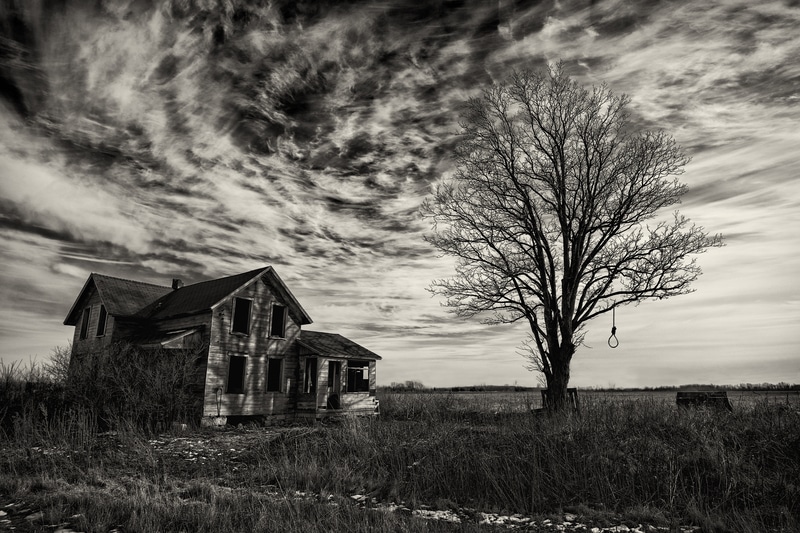
Abandoned farmhouse with hangmans noose under dark sky

⬅ See all events from 6 September

Spread the word on your favourite platform!

1792: The September Massacres begin in Paris

During the September Massacres of 1792, revolutionary crowds swept through Paris prisons and religious institutions, killing prisoners and others regarded as enemies of the Revolution.

At the Carmelite Convent, Roman Catholic clergy imprisoned for refusing to swear allegiance to the Civil Constitution of the Clergy were brought out and killed, among them several bishops.

The violence formed part of a broader wave of extrajudicial executions that engulfed Paris over several days, as fears of counter-revolution and foreign invasion fed a climate of panic and vengeance.

Those killed at the convent were later recognised by the Catholic Church as the Martyrs of September and were beatified in 1926.

Engraving showing the massacre of Princess de Lamballe

⬅ See all events from 2 September

Spread the word on your favourite platform!
On This Day in True Crime History
1794·The First Free Settler Murdered in the Colony: Hanged at Sydney for a Parramatta Stabbing
1826·The Gun That Misfired Twice: Three Bushrangers Hanged Outside Sydney
1873·A Tearful Confession in Custody Cracked the Case: Two Men Hanged at Perth Gaol for Eating their Victim
1889·He Called It an Accident. The Jury Called It Murder: Robert Landells Hanged at Melbourne Gaol
1907·A Doctor Fooled Twice: Martha Rendell and the Second Child to Die of Diphtheria
2002·Shot Dead in His Own Bed: A Melbourne Gangland Killing Blamed on a Friend
More Crime On This Day →

Subscribe to Dark Stories

True crime stories, dark history and tour news, straight to your inbox.