1854: Being Drunk Was No Excuse: A Husband Hanged at Maitland for Beating His Wife to Death

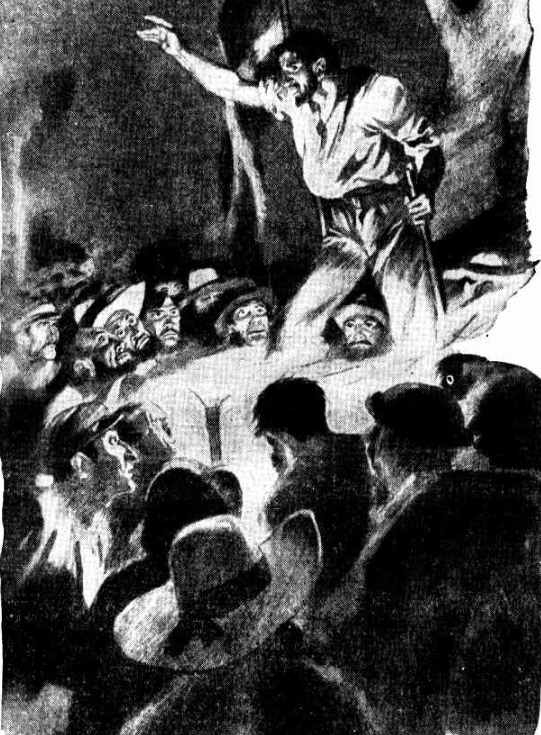
Neighbours near Lydney Park on the Hunter River heard Mary Walsh begging “to spare her life” as the blows fell, then heard her husband Christopher Walsh order her to leave the house. She said she could not. By morning she lay dead on the floor, covered in bruises, a gun and blood-stained trousers found nearby.

At his trial, his own counsel argued that jealousy and drink should reduce the killing to manslaughter. The jury was not persuaded, convicting him of wilful murder after less than two hours. He was hanged at Maitland gaol before a crowd of some four hundred, including women and children.

On the scaffold he had a message read out: he claimed he had come home sober, only for suspicion of his wife’s infidelity to work him into a rage that drink then inflamed. He said he now believed her faithful, regretted his violence, and held no animosity.


Empty bottle on wooden background symbolizing alcoholism

⬅ See all events from 28 September

Spread the word on your favourite platform!

1803: Bribery Couldn’t Save Them: Two Men Hanged at Castle Hill for a Hawkesbury Robbery

On 27 September 1803, John Lynch and James Tracey were hanged at Castle Hill for a violent robbery at the Hawkesbury home of Samuel and Elizabeth Phelps. Five men had entered the house on the evening of 24 July, knocked Samuel down and bound both husband and wife before stealing money, watches, clothing and other property. Before leaving, they stripped two gold rings from Elizabeth’s fingers.

The following morning, Lynch gave a labourer a bundle of stolen papers to hold, warning him not to show anyone. When he delayed returning them, he was offered silver teaspoons and then a watch. He accepted the items but kept the papers, eventually informing the authorities and producing evidence that linked Lynch to the robbery.

Both men were convicted and sentenced to death. At the Castle Hill gallows in Sydney, Lynch admitted his guilt and urged the spectators to take warning from his fate. Tracey continued to deny involvement and interrupted Lynch’s final address before the two were hanged.

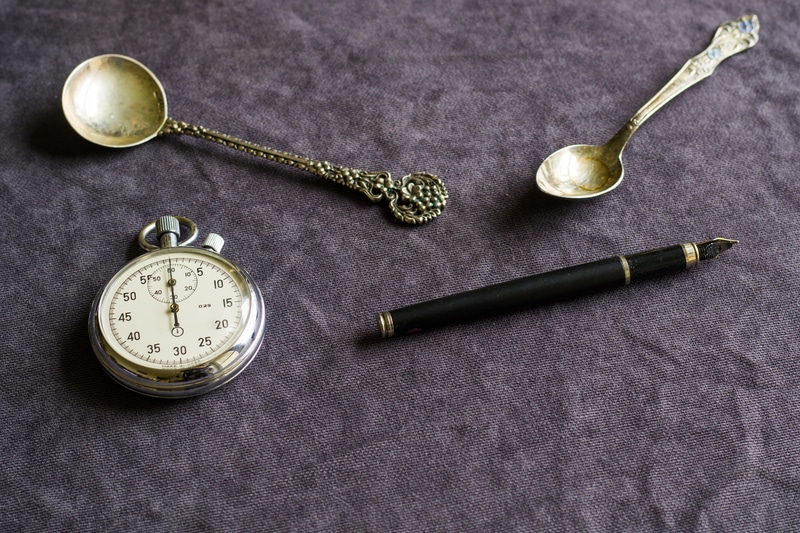
Vintage pocket watch, fountain pen and spoons on a table

⬅ See all events from 27 September

Spread the word on your favourite platform!

1803: The Man They Could Not Hang: Joseph Samuel Survives Three Executions at Sydney

Joseph Samuel was condemned to hang in 1803 for a robbery tied to the murder of Constable Luker in Sydney. On the scaffold, the rope snapped clean in the middle the instant the cart was drawn away, dropping him unconscious to the ground.

Officials dragged his limp body back onto the cart and fitted a second rope, only for it to unravel entirely, lowering him so slowly that his legs trailed on the ground while he half hung there. The assembled crowd was horrified by the spectacle as a third rope was rigged and this one snapped again, close against his neck, as the body was lowered.

With the crowd unnerved and three ropes failed in a row, Governor King, took the repeated failures as a sign of divine intervention and granted Samuel a reprieve. His sentence was commuted to life imprisonment, and he was nursed back to health and eventually to sanity.

After his reprieve, Samuel remained a convict. In April 1806, he made an escape attempt from Newcastle with seven other convicts in a small boat. All were presumed drowned in a storm, less than three years after he had survived three attempts to hang him.

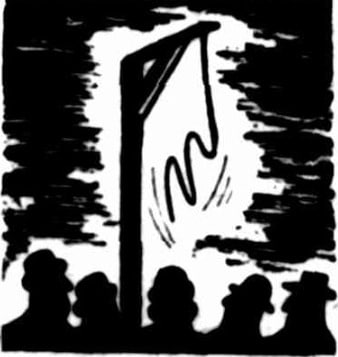
Joseph Samuels hanging attempt rope snaps three times in 1803 Sydney

⬅ See all events from 26 September

Spread the word on your favourite platform!

1892: He Stood at the Roadside as the Body Went By: a Brisbane Teenager Hanged for Murder

Frank Horrocks was barely 17, the son of a senior Queensland civil servant and only a year out of grammar school in Brisbane, when he was charged with murder. As police carted the body of his victim to the morgue, Horrocks was reportedly standing at a road junction, watching it pass.    Rudolph Weissmuller, 20, was a newly arrived immigrant looking for bush work, and Horrocks was the only fellow lodger he confided in. In April 1892 the pair left their boarding house together; only Horrocks came back, and he slipped away that night without paying his board. The body was found in the bush beside a small tomahawk, the twin of one Horrocks had bought the day before. He gave a false name when arrested, which proved useless: the detective sent to collect him had known him since he was a little boy.    Pleas for mercy on the grounds of his youth and unsound mind were refused. Several hundred people, some with infants in their arms, gathered outside the gaol on the morning of the execution. Horrocks had slept soundly and eaten a hearty breakfast, stood “steady as a rock” on the scaffold and never spoke.    On his arrest he had insisted “I did not kill him”, but before the end he sent a confession to the Governor, admitting the deed and the justice of his sentence.

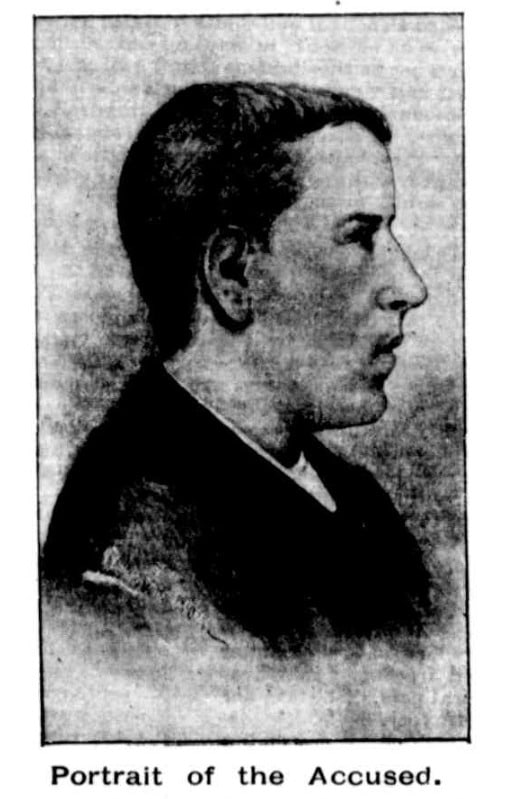
Frank Horrocks Unmoved

⬅ See all events from 26 September

Spread the word on your favourite platform!
On This Day in True Crime History

Subscribe to Dark Stories

True crime stories, dark history and tour news, straight to your inbox.