1798: Boarded and Press-Ganged: the Kidnapping of 55 American Sailors That Nearly Sparked a War

Impressment was the Royal Navy's practice of forcibly seizing men from other vessels to crew its own warships, a kind of state-sanctioned kidnapping that Britain justified by claiming the right to reclaim its own citizens wherever it found them. Off Havana, Cuba, a British squadron led by a seventy four gun warship stopped the American frigate USS Baltimore as it escorted a merchant convoy. Outgunned, Captain Isaac Phillips let British officers board and muster his crew, and on 16 November 1798 they marched off 55 men they claimed lacked proof of American citizenship.

Five were kept as British subjects; the rest were eventually handed back, but the damage was done. Phillips was dismissed from the US Navy without a court martial for surrendering without a fight, and Washington issued new orders forbidding any American commander from ever again letting a foreign warship search a US naval vessel.

The grudge festered for nine years until a US frigate, obeying those very orders, was fired on for refusing a search in the Chesapeake-Leopard affair. Impressment remained the rawest wound between the two nations, cited by President James Madison among his reasons for declaring the War of 1812.
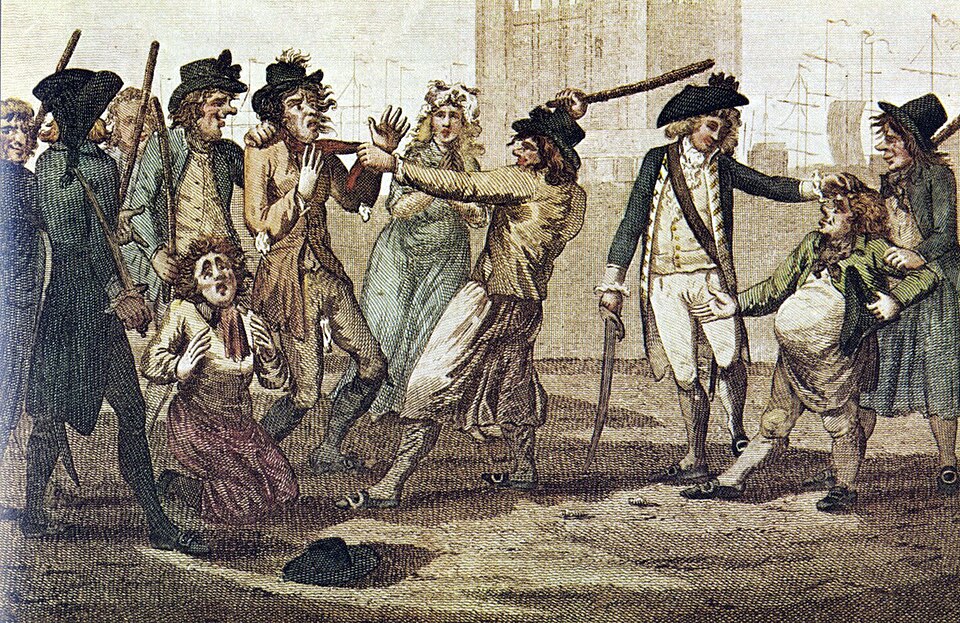

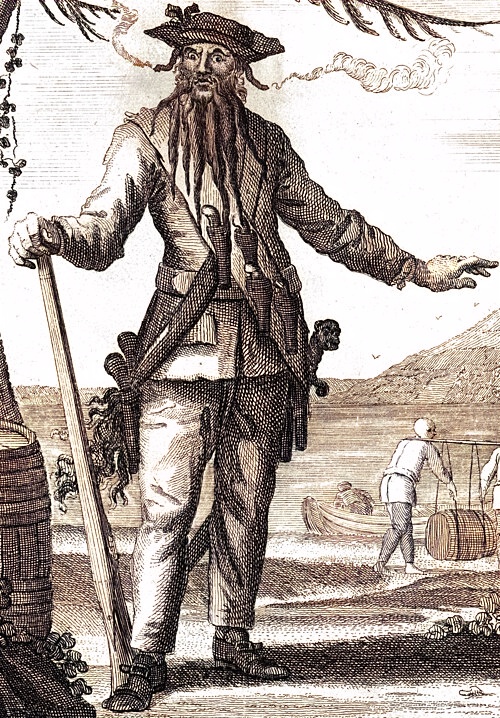
1780 caricature of a press gang

⬅ See all events from 16 November

Spread the word on your favourite platform!

1957: The Real-Life Horror Behind Psycho: Ed Gein Arrested After a House Built From Human Remains

Bernice Worden, who ran the hardware store in Plainfield, Wisconsin, vanished from behind her own counter on the morning of 16 November 1957, the till left open and blood pooled on the floor. Her last customer the evening before had been a quiet local farmhand named Ed Gein, due back that morning for a gallon of antifreeze. Police arrested him that night, and in a shed on his property found Worden's decapitated body strung upside down by the ankles, gutted like a deer carcass.

What they found inside his farmhouse was worse. Chairs upholstered in human skin, bowls carved from skulls, masks peeled from women's faces, and a crudely stitched bodysuit Gein had made so he could, in his words, become his dead mother. He confessed to decades of nighttime grave robbing and to shooting tavern owner Mary Hogan three years earlier, her skull found wrapped in his house alongside Worden's.

Declared unfit for trial, Gein spent over a decade in a mental hospital before finally facing court in 1968. He was found guilty of Worden's murder but legally insane, and was committed for the rest of his life.

At trial Gein insisted the killing was an accident, claiming the rifle discharged while he examined it in the store and that he had no memory of the moments after.

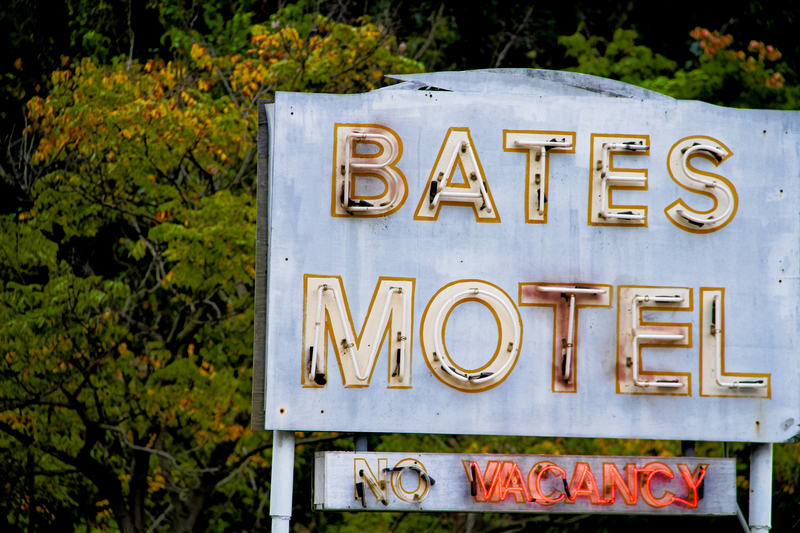
Gein's crimes, and the farmhouse full of human remains, became the direct inspiration for Robert Bloch's 1959 novel Psycho and Alfred Hitchcock's 1960 film of the same name, turning a quiet Wisconsin farmhand into the template for Norman Bates and a generation of fictional killers that followed.

LOS ANGELES,CALIFORNIA,USA - Universal studios Hollywood - Bates Motel Sign from famous Hitchcock movie `PSYCHO` | ID 82085786 © Usataro | Dreamstime.com
ID 82085786 © Usataro | Dreamstime.com

⬅ See all events from 16 November

Spread the word on your favourite platform!

1966: Acquitted at Retrial: The Murder Case Hollywood Insisted Had Nothing to Do With The Fugitive

Sam Sheppard had already served ten years in prison for the 1954 bludgeoning murder of his pregnant wife, Marilyn, when his conviction was thrown out over what reviewers called a circus-like trial. At his 1966 retrial, defence lawyer F. Lee Bailey tore into the prosecution witnesses, dismissing their case as "ten pounds of hogwash in a five-pound bag." On this day in 1966, after a sequestered jury deliberated for 12 hours, Sheppard walked free.

The case outlived the verdict. The television series The Fugitive, and the 1993 film that followed it, were long rumoured to be drawn from Sheppard's ordeal: a doctor wrongly convicted of killing his wife, hunting the real intruder himself. Its creator always and firmly denied any connection to the case.

Yet the denial has never mattered. Whatever the truth of the resemblance, Sheppard's story and The Fugitive remain fused in the public mind, one of those rare cases where the culture has simply decided the link is real, and no amount of official disavowal has ever managed to pull them apart.

The Fugitive TV and Film Show: Related or Not to this Case

⬅ See all events from 16 November

Spread the word on your favourite platform!

1971: The Unsolved Alphabet Murders That Still Haunt Rochester, New York

Another victim of the Alphabet Murderer vanished while running a short errand in Rochester, New York, on this day in 1971, the first of three unsolved killings that became known as the Alphabet Murders. Each victim shared matching first and last initials, and each body was later found near a town or village beginning with that same letter, a detail that turned a local tragedy into a chilling unsolved puzzle.

Investigators questioned more than eight hundred suspects over the following years, including a local firefighter, an ice cream vendor who later became notorious for killings committed in California, and a travelling man eventually convicted of unrelated murders on the other side of the country. Reward money climbed past six thousand dollars, billboards appealed to the public across the city, and a police hotline logged hundreds of calls, yet no one was ever charged.

The case remains open. Decades later, the mother of the first victim said that finding out who was responsible was the only thing she wanted before she died.

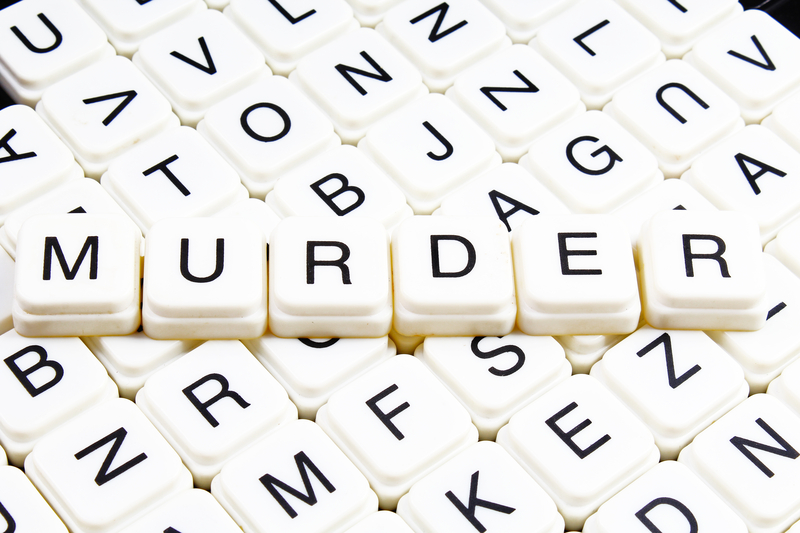
The Alphabet Spells Murder

⬅ See all events from 16 November

Spread the word on your favourite platform!
On This Day in True Crime History

Subscribe to Dark Stories

True crime stories, dark history and tour news, straight to your inbox.