1829: The Birth of Scotland Yard: London Gets Its First Modern Police Force

Before 1829, London had no unified police, just a patchwork of parish constables and private watchmen who could barely keep pace with a city rife with theft, riot and violence. Home Secretary Robert Peel changed that, pushing through the Metropolitan Police Act and creating a single force answerable to the Crown rather than local vestries.

Its headquarters took its name from the street behind it, a quiet lane called Great Scotland Yard, and the name stuck long after the force outgrew the building. The new constables, soon nicknamed bobbies and peelers after their founder, were unarmed, uniformed and deeply distrusted at first by a public wary of state surveillance. Within decades Scotland Yard would become the model for modern policing worldwide, and its name a byword for criminal investigation itself.
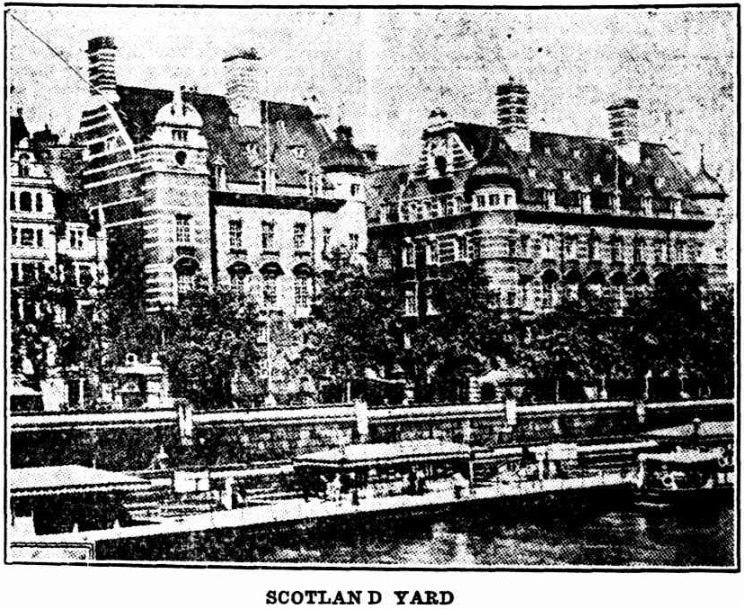

Scotland Yard headquarters in London police force: 1929 centenary celebration

⬅ See all events from 29 September

Spread the word on your favourite platform!

1989: The Same Calendar Date, Six Years Apart: Harold Shipman Killed Two Elderly Patients in Hyde

Serial killer Dr Harold Shipman had a chilling habit of striking on the same date across different years. On 26 September 1989, he killed 82 year old Elizabeth Mary Burke in Hyde, the Greater Manchester town where his medical practice was based.

Exactly six years later, on the same date in 1995, he killed 87 year old Dora Elizabeth Ashton, another patient from Hyde. Despite the eerie coincidence, Shipman was never charged with either woman’s death; he was only later convicted for a separate group of murders, though he is suspected of killing far more patients over his career as a trusted family doctor.

Injection to patient’s arm.

⬅ See all events from 26 September

Spread the word on your favourite platform!

1764: Born to Mutiny: Fletcher Christian, the Man Who Cast Captain Bligh Adrift

Fletcher Christian was born on 25 September 1764 in Cumberland, England, decades before he would become one of history’s most infamous mutineers. In April 1789, as master’s mate aboard HMS Bounty, he led a revolt against Captain William Bligh, seizing the ship in the South Pacific after months of tension during the vessel’s breadfruit-collecting voyage.

Rather than kill Bligh, Christian set him adrift in a small open boat with eighteen loyal crew members and minimal supplies. Bligh went on to complete an extraordinary 3,618-mile voyage to safety in Timor, a feat of navigation still studied today.

Christian and his fellow mutineers eventually settled on remote Pitcairn Island with a group of Tahitian men and women, burning the Bounty to avoid detection. The fate of the settlement descended into violence within years, and the exact circumstances of Christian’s own death remain disputed, with some accounts claiming he was killed by fellow settlers and others suggesting he secretly returned to England.

Portrait of Friday Fletcher October Christian son of Bounty mutineer Christian Fletcher 1814 by John Shillibeer

⬅ See all events from 25 September

Spread the word on your favourite platform!

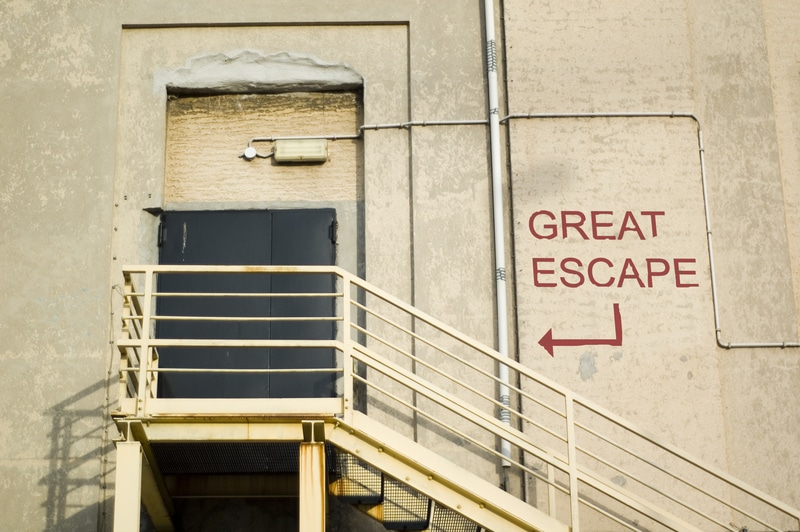
1983: The Great Escape: 38 IRA Prisoners Break Out of the Maze in Britain’s Largest Prison Breakout

On 25 September 1983, 38 IRA prisoners staged a mass breakout from the Maze Prison in County Antrim, Northern Ireland, the largest prison escape in British history. The men overpowered guards inside H-Block 7, some using smuggled handguns, and seized control of the wing before storming the front gate disguised in stolen prison officer uniforms.

In the chaos one prison officer was stabbed to death and twenty others were injured during the breakout. Several escapees hijacked a delivery lorry to get beyond the perimeter fences, and while a number were recaptured within days, others evaded capture for years, some fleeing abroad before eventually being caught or negotiating their return.

The escape became known among Irish republicans as the Great Escape, a name that stuck for decades and turned the breakout into one of the defining episodes of the Troubles.

A Great Escape
A Great Escape

⬅ See all events from 25 September

Spread the word on your favourite platform!
On This Day in True Crime History
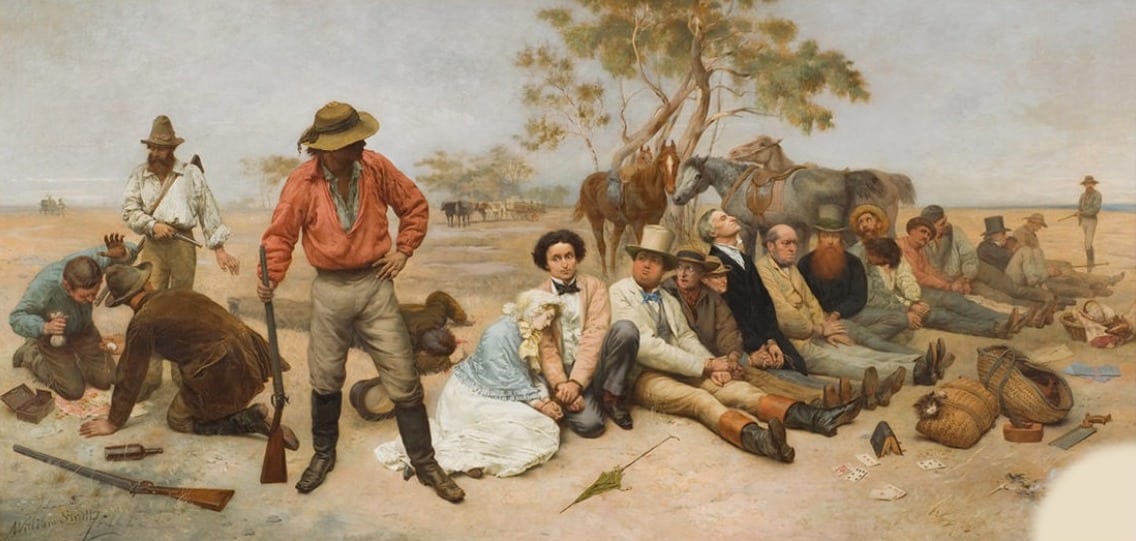
1853·"Thank You, My Lord, I Am Very Glad of That Sentence": Bushrangers Hanged in Melbourne
1884·He Swore to Shoot Whoever Bought His Farm, and Kept His Word: Hanged in Melbourne
1892·"The Only Man on the Station That I Liked": Hanged in Brisbane for a Torres Strait Murder
1892·A Mutilated Body in a Trunk: Sailor Hanged in Brisbane for Murder at Sea
1895·George Dean, Pardoned for Poisoning His Wife, Convicted of Perjury in Sydney
More Crime On This Day →

Subscribe to Dark Stories

True crime stories, dark history and tour news, straight to your inbox.