1853: “Thank You, My Lord, I Am Very Glad of That Sentence”: Bushrangers Hanged in Melbourne

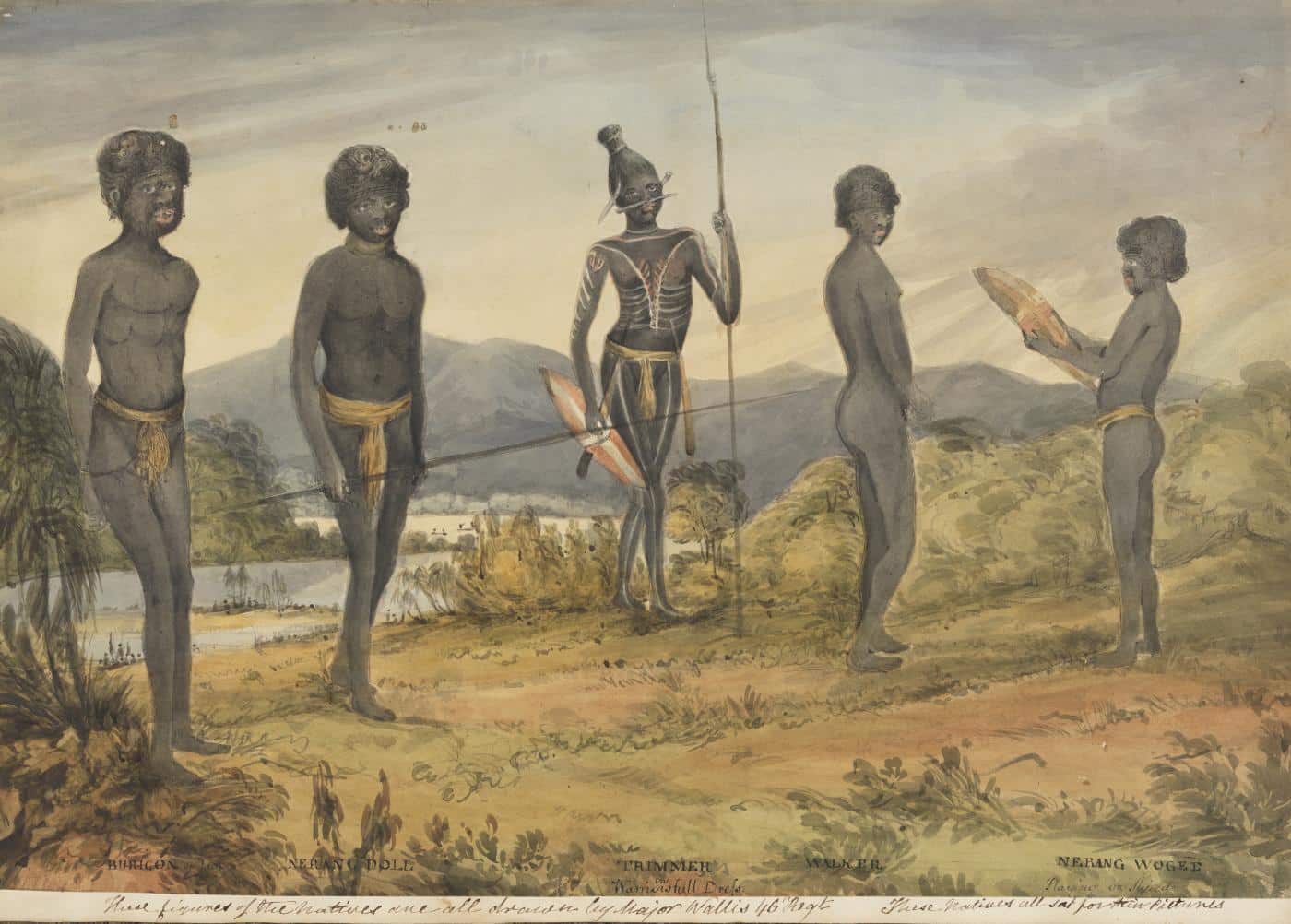
Henry Bradley and Patrick O’Connor absconded from assigned service in northwestern Tasmania and broke into a settler’s homestead on the night of 14 September 1853, tying up the household room by room. When the owner escaped through a window, the pair turned on his young relation, Alfred Phillips, and shot him dead as he begged them to spare the women and children.

To vanish from the island, they forced the crew of the schooner Sophia to sea at gunpoint, keeping a hostage tied to the mast until they reached Victorian waters. There they kept robbing, wounding one man near Brighton, until a police patrol cornered them near Kilmore. In the gunfight that followed, Bradley and O’Connor shot mounted Cadet Thompson through the chest; captured the next day after a second running battle, they boasted to their captors of already having killed six people back in Van Diemen’s Land.

Convicted of shooting Thompson, both men were hanged together in Melbourne on 24 October 1853.

On the scaffold, Bradley said he was willing to die and had already dictated a letter confessing the full extent of his crimes; O’Connor remained defiant to the end, refusing to join seriously in the priest’s prayers.
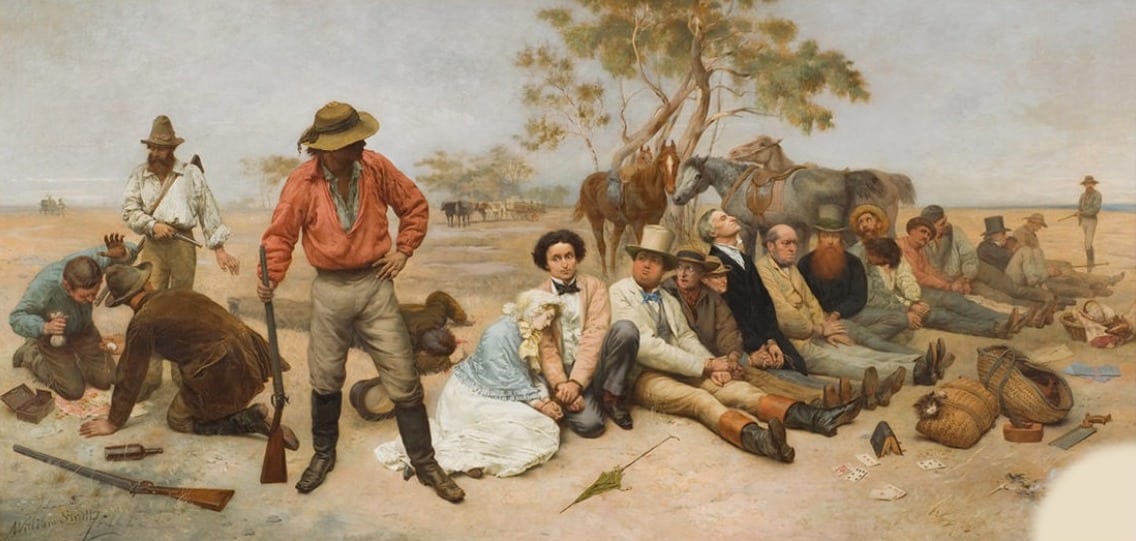

Bushrangers working sketches State Library Victoria

⬅ See all events from 24 October

Spread the word on your favourite platform!

1878: “Hung for Her Like a Man”: The Vow Before a Brutal Axe Murder and Hanging in Hobart

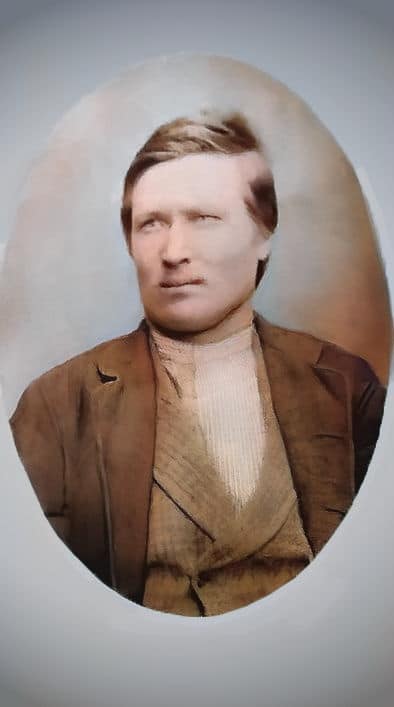
Richard Copping was jealous that his sweetheart, Susannah Stacey, had grown tired of him. On 12 May 1878 he followed her into her parents’ home near Sorell, in Tasmania’s south, and split her skull with an axe as she tried to shut a door against him. When her father ran out and accused him, Copping only clapped his hands and said, “Yes, I know I have,” before declaring, “She deceived me, and I’ll be hung for her like a man.”

He then tried to shoot himself, loading a gun with nails after finding no shot, and botched even that, surviving with a shattered jaw. His lawyer argued he was suffering from a diseased brain, but the jury convicted him, and he was hanged at Hobart’s Campbell Street Gaol on 20 October 1878, sobbing and unnerved on the gallows.

Copping never denied the killing, having confessed within minutes of the attack, and he reportedly left written confessions in the sheriff’s keeping before he died.

Portrait of prisoner Richard Copping Hobart Gaol 1878

⬅ See all events from 20 October

Spread the word on your favourite platform!

1884: Keep Away From Women: the Final Warning Scrawled on a Cell Wall Before a Hanging at Hobart

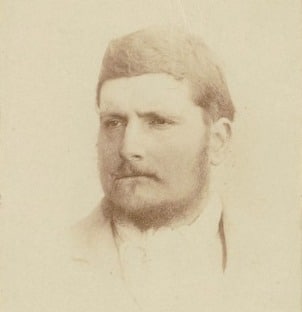
Henry Stock married Elizabeth Keats when she was nineteen and already raising another man’s child. The marriage soured, she took out a maintenance order against him, and when she vanished with her young son in April 1884, searchers found their badly decomposed remains in dense scrub near the Ouse district, both riddled with shot that matched Stock’s own gun. Witnesses recalled him muttering that he would “murder her yet” and would rather “swing” than live with her again.

His first trial ended in a deadlocked jury; a second, before Hobart’s Chief Justice Dobson, convicted him. On the morning of his execution at Campbell Street Gaol in Hobart, hangman Solomon Blay prepared to carry out his hundredth hanging. Before he was led to the scaffold, Stock scratched a message on his cell wall naming two sisters whose evidence had convicted him, hoping to see them “here before long,” and warning other young men to keep from woman. He walked to the gallows carrying a small bunch of flowers tied with a scripture text: “He shall speak peace unto the heathen.”

To the end he denied the killings, declaring on the drop, “I swear by Heaven that I am innocent.”

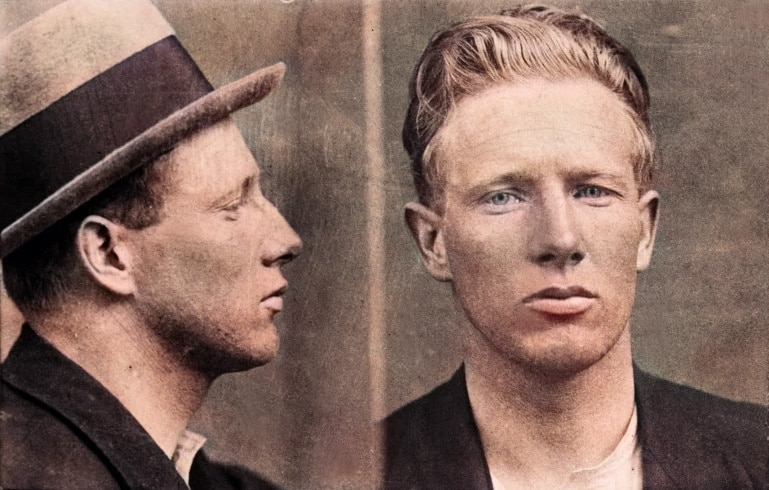
Henry Stock, c. 1883. Photograph attributed to T. J. Nevin. Tasmania Supreme Court, Death warrants and related papers, vol. 2, C 203. Mitchell Library, State Library of NSW.

⬅ See all events from 13 October

Spread the word on your favourite platform!

1845: She Watched Her Friend Killed and Waited for the Killers: A Woman Hanged at Hobart

Eliza Benwell was housemaid at an inn in New Norfolk, near Hobart, where fellow servant Jane Saunders worked alongside her. In January 1845 three of the inn’s male servants seized Saunders in the garden during what began as friendly play, stuffed a handkerchief into her mouth and dragged her, apparently lifeless, down to the river. Benwell stood by and watched it happen, then waited at the house for the men to return before letting them in.

The three killers were tried and hanged first. Benwell was convicted separately as an accessory before and after the fact, a charge carrying the same capital sentence as murder itself. She was hanged before a huge crowd on 30 September 1845, closing her eyes on the scaffold so she would not have to look at the spectators, reportedly the first woman executed in the city in fifteen years.

On the eve of her death she confessed that she could have saved Saunders’s life had she known a murder was intended.

Hobart, Tasmania, Australia - December 24 2016: Hobart city and derwent river viewed from suburb of sandy bay with sea mist rolling over eastern shore | ID 130062583 © Andrew Balcombe | Dreamstime.com
ID 130062583 © Andrew Balcombe | Dreamstime.com

⬅ See all events from 30 September

Spread the word on your favourite platform!
On This Day in True Crime History

Subscribe to Dark Stories

True crime stories, dark history and tour news, straight to your inbox.