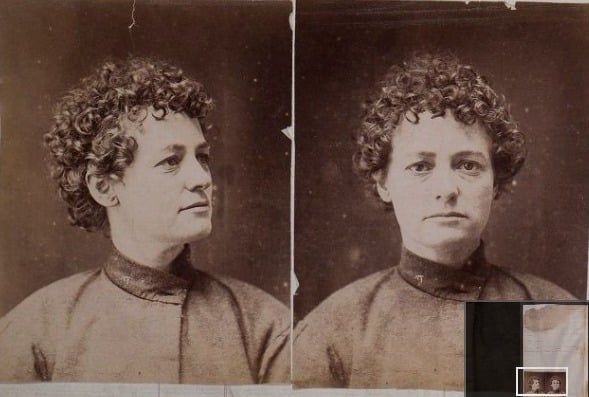
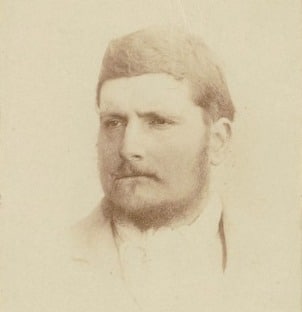
Henry Needle was a robust carpenter until 1889, when he began suffering violent, unexplained vomiting at the family home in Richmond, near Melbourne. His doctor once found untouched broth and jelly by his bed, and noted Henry had grown strangely wary of food prepared by his wife, Martha. He died on 4 October 1889; his death was recorded as hepatitis, no post-mortem was ordered, and no suspicion touched the devoted nurse at his side.
The truth emerged five years later, after police caught Martha handing a laced cup of tea to another man and Henry’s body was exhumed and found packed with arsenic, along with the bodies of the couple’s three young children, all of whom had died in her care under equally mysterious circumstances. Martha Needle was hanged at Melbourne Gaol in October 1894 for the poisoning of her fiance’s brother, the last of at least five family members she is believed to have killed.
Martha Needle: Public Record Office Victoria, VPRS 516/P0000, Central Register of Female Prisoners, register nos. 5926–6415 (1891–1896).
On September 29, 1982, 12 year old Mary Kellerman took a Tylenol capsule for a cold and died within hours. Within two days six more people in the Chicago area died the same way, including three members of a single family, the Januses, who had unknowingly shared capsules from the same tainted batch.
Someone had opened bottles on store shelves, replaced the medicine inside with potassium cyanide, and resealed them for unsuspecting buyers to find. No poisoner was ever caught. A man named James W. Lewis was convicted of extortion after writing to the manufacturer claiming responsibility and demanding a million dollars to stop the deaths, but he later insisted the letter was a bluff, and investigators could never tie him to the actual killings.
The case remains unsolved to this day, but it changed how medicine is sold worldwide, ending loose powder capsules and ushering in the tamper proof seals now standard on every bottle.
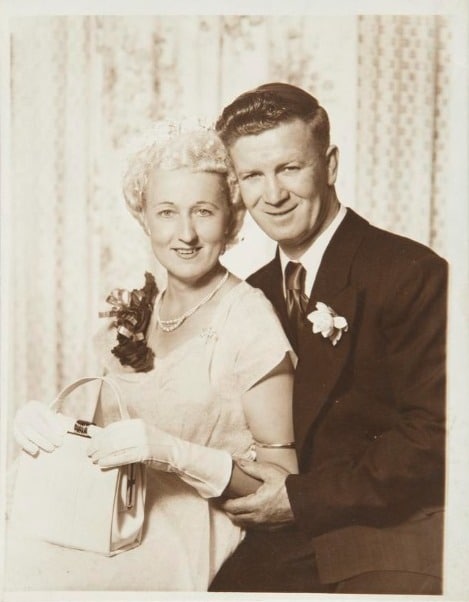
At the Central Criminal Court in Sydney, 30-year-old Yvonne Gladys Fletcher of Newtown was sentenced to death after a seven-day trial for the 1948 murder of her first husband, Desmond George Butler, who died after months of wasting illness caused by thallium poisoning. Asked if she had anything to say before sentence was passed, she replied simply, “No, your Honor,” but moments later a prayer book she had carried through every day of the trial crashed to the floor and she collapsed in the dock, sobbing, as police lifted her out.
Mr Justice Kinsella told the court the crime was “horrible” because the poison had been “secretly administered within the family circle” to an unsuspecting victim, destroying him “mentally and physically while permitting him to linger for months in wretched agony.” Fletcher was the first person in Australian criminal history convicted of murder by thallium poisoning, and the jury recommended that the sale of the poison to the public be banned outright.
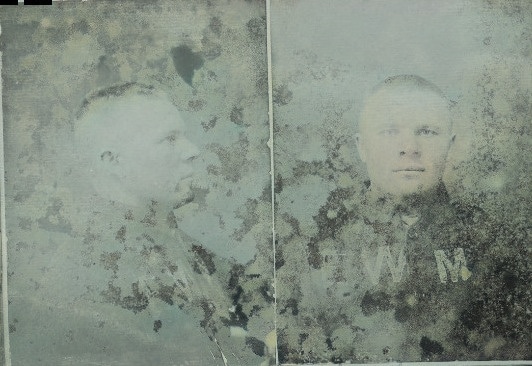
What the sentencing did not reveal to onlookers was already known to the court: Fletcher had also been committed for trial over the death of her second husband, who had died from the same poison at Newtown only months earlier. The Crown Prosecutor noted the chilling parallel between the two cases, telling the jury, “There is no question that both Butler and Fletcher died from thallium poisoning… the same matrimonial discord, the same hatred towards each man, the same sudden illness, and the same dreadful symptoms.” The judge himself observed that had this conviction concerned her second husband, evidence of his cruelty toward her might have offered some mitigation, but no such excuse existed for the killing of her first.
Yvonne Fletcher and Second Husband: Photograph by Robert Haswell. Gift, 2006. Justice & Police Museum Collection, Museums of History New South Wales, JP2006/1.
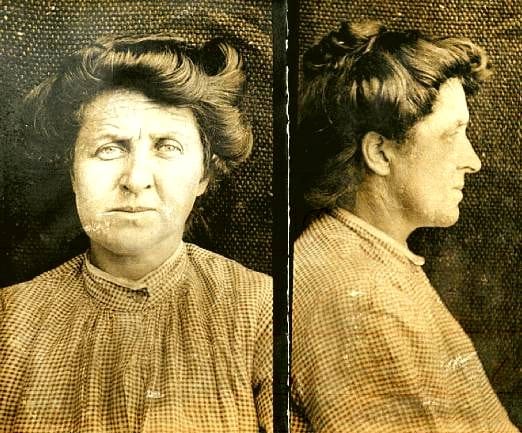
Martha Rendell, de facto wife of Thomas Nicholls Morris, was convicted in the Supreme Court of Western Australia at Perth of the wilful murder of her partner’s son, Arthur Joseph Morris, and sentenced to death by hanging. The court accepted that Thomas Morris had been unaware of what Rendell was doing until after the deaths of the children, and he was acquitted.
Acting Chief Justice Robert McMillan told the jury it was probably the most anxious case he had ever presided over, and voiced concern that newspaper coverage, might have prejudiced their judgement. Rendell maintained her innocence throughout, insisting she had only been treating the children for diphtheria.