1829: The Birth of Scotland Yard: London Gets Its First Modern Police Force

Before 1829, London had no unified police, just a patchwork of parish constables and private watchmen who could barely keep pace with a city rife with theft, riot and violence. Home Secretary Robert Peel changed that, pushing through the Metropolitan Police Act and creating a single force answerable to the Crown rather than local vestries.

Its headquarters took its name from the street behind it, a quiet lane called Great Scotland Yard, and the name stuck long after the force outgrew the building. The new constables, soon nicknamed bobbies and peelers after their founder, were unarmed, uniformed and deeply distrusted at first by a public wary of state surveillance. Within decades Scotland Yard would become the model for modern policing worldwide, and its name a byword for criminal investigation itself.
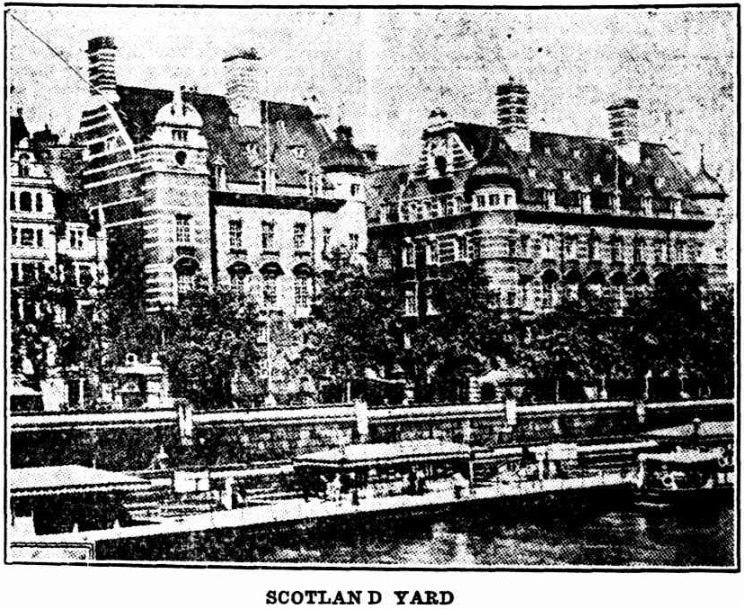

Scotland Yard headquarters in London police force: 1929 centenary celebration

⬅ See all events from 29 September

Spread the word on your favourite platform!

1889: Was Jack a Jill? Rumours of a Female Ripper Emerge in London

Jack the Ripper was a woman. That was the possibility London newspapers began to report: that the killer who had horrified the world for months was a woman disguised as a man, living and working unnoticed in Whitechapel. By the time the story spread, she had reportedly vanished. Police were confidently believed to be “at last on the track” of the murderer, and there was suddenly talk of “his or her crimes”.

Who, it was asked, could walk the streets at night without suspicion, possess the anatomical knowledge the mutilations suggested, and risk being found beside a body? One answer: a woman who was, or had been, a midwife. Discovered bending over a victim, she need only say she had been passing by and thought the woman required her medical attention. Though largely discounted, the Jill the Ripper theory has never completely gone away.

Victorian woman in London street with man in background

⬅ See all events from 21 September

Spread the word on your favourite platform!

1721: The Housebreaker Who Could Not Stay Away: Hanged at Tyburn for Returning from Transportation

John Meff was a housebreaker who had already cheated the gallows once, having been convicted and then transported to the colonies rather than executed. But transportation was meant to be permanent exile, and Meff broke its terms by making his way back to England, a crime that under the law of the day carried the same penalty as the original offence: death.

He was arrested, tried, and sentenced to hang for illegally returning from transportation. On 11 September 1721 he was taken to Tyburn and executed at the age of forty, going to the gallows alongside James Redding, who had been condemned separately for robbery.

For Meff the return to Tyburn marked the end of a second chance he could not keep: having once escaped the noose through transportation, the simple act of coming home proved fatal.

Life of John Meff_featured

⬅ See all events from 11 September

Spread the word on your favourite platform!

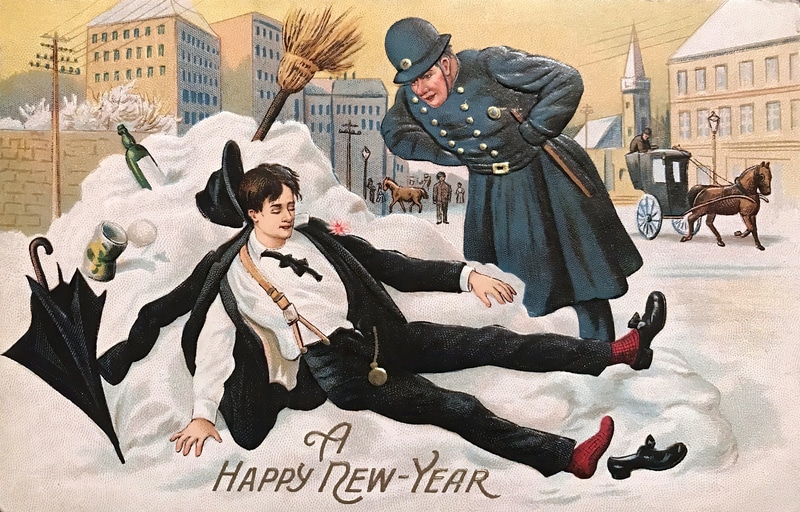
1897: The World’s First Drink-Driving Conviction, London 1897

Just before one in the morning on September 10, 1897, a taxi driver named George Smith lost control of his cab on New Bond Street, swerving across the road and crashing, smashing a water pipe and a front window. No one was hurt, cars of the era topped out at about 8mph, but Smith admitted to police that he had been drinking, and that confession was enough to convict him in what is recognised as the world’s first drink-driving case.

He was fined 20 shillings. There was no specific drunk-driving law to charge him under; the conviction rested entirely on his own admission, since officers otherwise had only their own snap judgement of a driver’s sobriety to go on. It would be almost a decade before any jurisdiction, enacted a dedicated drunk-driving law, and more than half a century before the breathalyser existed to test drivers objectively.

Humorous Vintage New Year Postcard: Policeman Discovers Man Asleep in Snow (circa 1900. A delightfully humorous and classic vintage postcard illustration from the early 20th century (circa 1900-1910s), perfectly capturing the aftermath of a lively New Year’s Eve celebration... The scene depicts a gentleman, dressed in a formal black suit with a white shirt, bow tie, and suspenders, comically sprawled out in a pristine snowdrift. His top hat is discarded nearby, his umbrella askew | ID 404164454 © Svetlana Gavrilyuk | Dreamstime.com
ID 404164454 © Svetlana Gavrilyuk | Dreamstime.com

⬅ See all events from 10 September

Spread the word on your favourite platform!
On This Day in True Crime History

Subscribe to Dark Stories

True crime stories, dark history and tour news, straight to your inbox.