Carol DaRonch had already escaped once. In 1974 a man posing as a police officer lured her to his car, snapped a handcuff on her wrist and tried to force her into it; she fought free, leapt from the moving vehicle and ran.

Months later she stood in a police lineup with two other women and picked out the same face: Ted Bundy. He was arrested and charged with her attempted kidnapping, denied any wrongdoing, and waived his right to a jury trial, gambling that a judge alone would be less swayed by the growing suspicion linking him to a string of disappearances across several states.

DaRonch’s escape and her identification became one of the threads that eventually unravelled Bundy’s double life, feeding directly into the case that first put him behind bars.
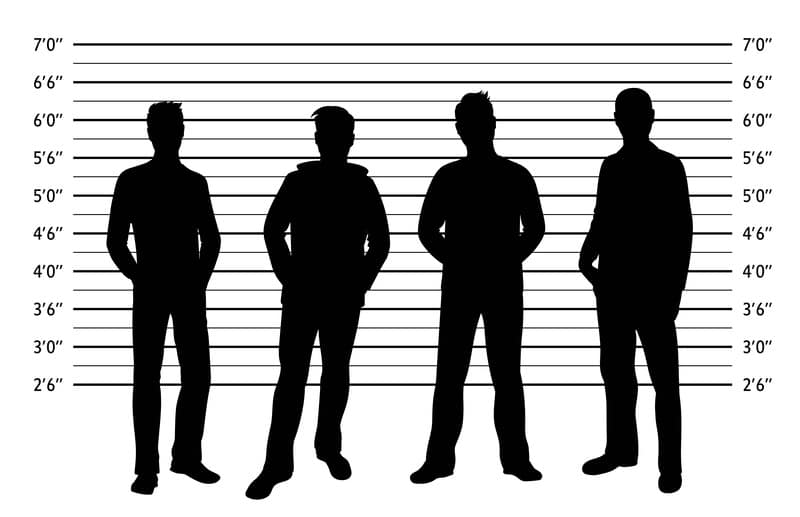

Police lineup. Mugshot background with silhouette of different men. Black silhouette of four men on white background. Isolation. Vector illustration | ID 161630052 © Larisa Balatskaya | Dreamstime.com
ID 161630052 © Larisa Balatskaya | Dreamstime.com

⬅ See all events from 2 October

Spread the word on your favourite platform!

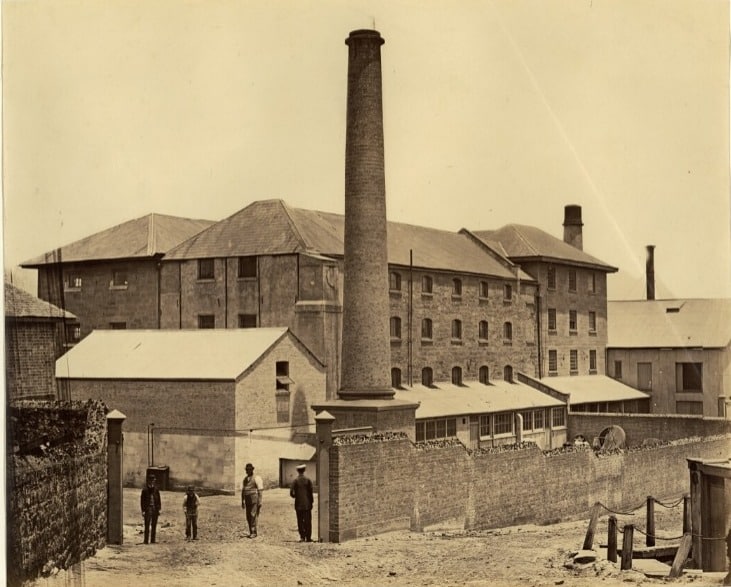
In September 1866 a boy’s dog began scratching at a rubbish heap near Sussex Street in Sydney, and uncovered a charred, half-roasted human head. Further searching turned up the dismembered chest of a woman, but no other remains were ever found, and no one in the city had reported her missing.

At the inquest a young doctor testified that the head wounds had killed her almost instantly, and that her body had been carefully dissected and burned afterwards, evidently by someone with real anatomical skill, in an apparent effort to destroy any means of identifying her. The jury returned a verdict of wilful murder against a person or persons unknown, and the government posted a reward of two hundred pounds, offering a pardon to any accomplice willing to name the killer.

Close to the scene of the crime: Barker & Co. Mills, corner of Sussex and Bathurst Streets, Sydney, before June 1872. Possibly photographed by Charles Pickering. State Library of New South Wales, SPF/484.

⬅ See all events from 2 October

Spread the word on your favourite platform!

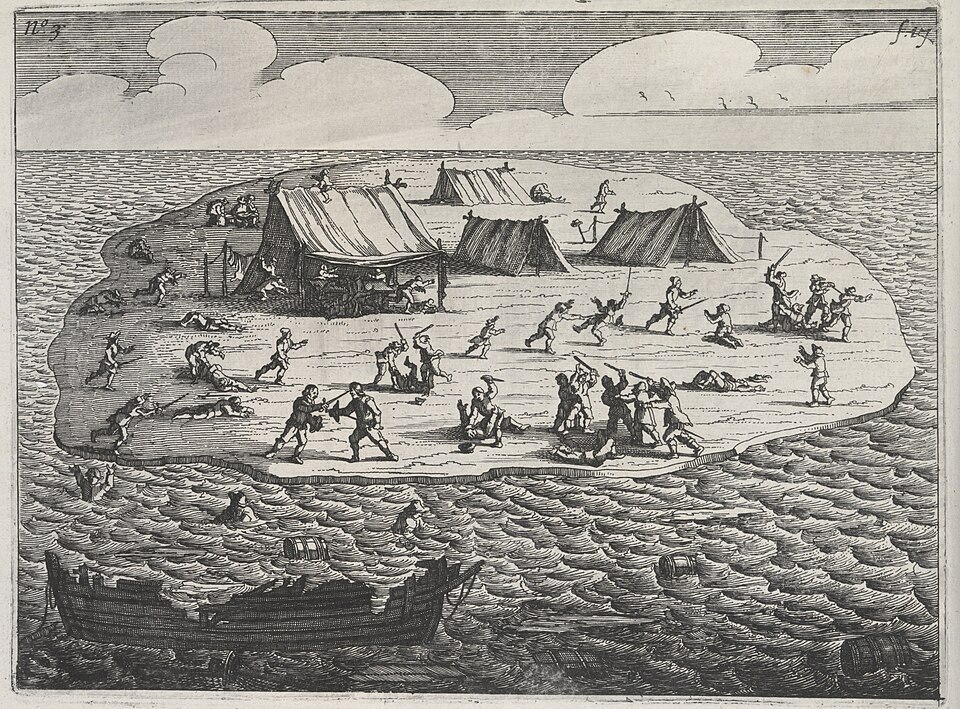
When the Dutch East India Company ship Batavia wrecked on a reef off Western Australia in 1629, disgraced merchant Jeronimus Cornelisz seized control of the survivors stranded on the barren Houtman Abrolhos islands. Fearing his crimes would be exposed once rescue came, he set his followers to killing anyone who might oppose him or drain the group’s meagre food and water. Over the following weeks his men murdered at least 125 men, women and children, drowning some and butchering others, while a small band of soldiers under Wiebbe Hayes held out against them on a nearby island.

When commander Francisco Pelsaert finally returned with a rescue ship, Cornelisz had already been captured. He and six of his men were hanged on Long Island in the Houtman Abrolhos on 2 October 1629, the first Europeans executed on Australian soil; Cornelisz had both hands amputated before he was strung up. Two lesser offenders were marooned on the mainland instead, becoming the first Europeans known to live in Australia.

Confessions were extracted from several of the mutineers under torture before the executions were carried out.

From Shipwreck to Massacre on Beacon Island

⬅ See all events from 2 October

Spread the word on your favourite platform!

Patrick Kennedy was a shepherd at an out-station near Penshurst in Victoria, sharing a hut with his wife and two other men. After a night of drinking, he turned on her the next afternoon without any clear provocation, kicking her so violently that the pattern of his boot nails was later found bruised into her body.

He was convicted at the Supreme Court and hanged at Melbourne Gaol on 1 October 1851. The drop failed to kill him instantly, and he struggled for nearly three minutes, prompting the hangman to boast to bystanders that he had predicted exactly how long it would take.

In his final days Kennedy revealed a chilling belief in fatalism, insisting he was merely an instrument of forces beyond his control. He recalled that his small son used to prattle a rhyme, “mammy dead and dady gone,” which he took as a dark omen; when the boy died in custody during his imprisonment, Kennedy said plainly that he was glad.

He showed no remorse for the killing, telling gaolers only, “Drink did it all, but if it had not been done by drink, something else would have done it, as it was decreed to be done.”

Skull and vintage hourglass on wooden background in beam of light

⬅ See all events from 1 October

Spread the word on your favourite platform!
On This Day in True Crime History

Subscribe to Dark Stories

True crime stories, dark history and tour news, straight to your inbox.