Archives: Dark Stories: On This Day In True Crime History - Page 9
1989: The Same Calendar Date, Six Years Apart: Harold Shipman Killed Two Elderly Patients in Hyde
Serial killer Dr Harold Shipman had a chilling habit of striking on the same date across different years. On 26 September 1989, he killed 82 year old Elizabeth Mary Burke in Hyde, the Greater Manchester town where his medical practice was based.
Exactly six years later, on the same date in 1995, he killed 87 year old Dora Elizabeth Ashton, another patient from Hyde. Despite the eerie coincidence, Shipman was never charged with either woman’s death; he was only later convicted for a separate group of murders, though he is suspected of killing far more patients over his career as a trusted family doctor.
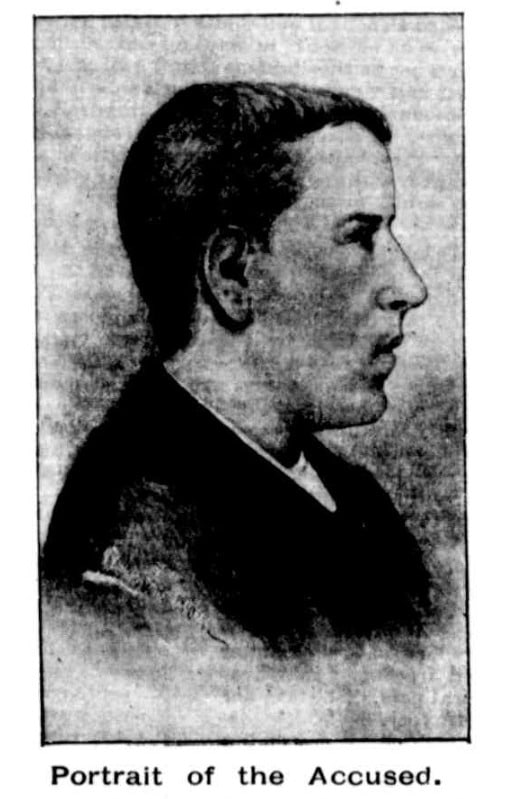
1892: He Stood at the Roadside as the Body Went By: a Brisbane Teenager Hanged for Murder
Frank Horrocks was barely 17, the son of a senior Queensland civil servant and only a year out of grammar school in Brisbane, when he was charged with murder. As police carted the body of his victim to the morgue, Horrocks was reportedly standing at a road junction, watching it pass.
Rudolph Weissmuller, 20, was a newly arrived immigrant looking for bush work, and Horrocks was the only fellow lodger he confided in. In April 1892 the pair left their boarding house together; only Horrocks came back, and he slipped away that night without paying his board. The body was found in the bush beside a small tomahawk, the twin of one Horrocks had bought the day before. He gave a false name when arrested, which proved useless: the detective sent to collect him had known him since he was a little boy.
Pleas for mercy on the grounds of his youth and unsound mind were refused. Several hundred people, some with infants in their arms, gathered outside the gaol on the morning of the execution. Horrocks had slept soundly and eaten a hearty breakfast, stood “steady as a rock” on the scaffold and never spoke.
On his arrest he had insisted “I did not kill him”, but before the end he sent a confession to the Governor, admitting the deed and the justice of his sentence.
1932: Nine Minutes on the Gallows: the Longest Last Speech in Melbourne History
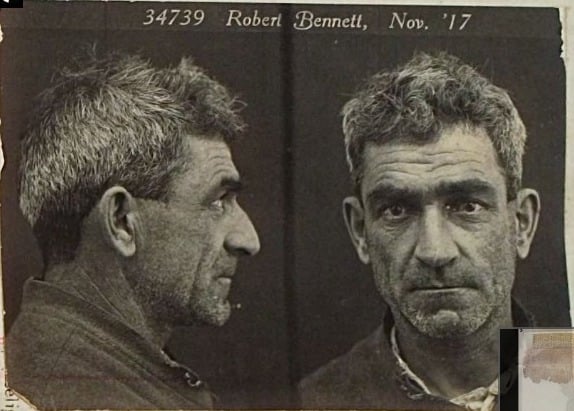
David Bennett spoke from the gallows for nine minutes, the longest statement ever made by a condemned man in Victoria. The 59-year-old painter and carpenter had walked to the scaffold calmly, and he spoke in a clear, steady voice.
He was hanged in Melbourne for a capital assault committed in July 1932, the first execution in Victoria since 1924 and the first since 1891 for any crime other than murder. It was not his first such conviction. In Western Australia in 1911 he had been sentenced to life imprisonment and a flogging by a judge who told him: “You are not fit to live in this world.”
He served just three years in Fremantle Gaol before the Attorney-General released him on legal doubts about the conviction, causing an outcry unprecedented in the state. Bennett moved east, and in 1930 he came forward to Melbourne detectives with information about a notorious unsolved murder. A man was arrested on his word, and was later found to be innocent.
Bennett admitted nothing. He claimed his defence had never been properly put to the jury, and ended: “I repeat that I am not guilty, and again ask forgiveness from those whom I have wronged as I forgive those who have wronged me. Good-bye.”
An Unspeakable Degenerate – CeVPRS 1100/P0002, David Bennett
1901: President McKinley’s Killer Sentenced to Death After Jury Deliberates Barely an Hour
Leon Czolgosz shot President William McKinley on 6 September 1901 at the Pan-American Exposition in Buffalo, New York, firing two shots from a revolver he had concealed inside a handkerchief. McKinley lingered for eight days before dying of his wounds on 14 September.
Czolgosz’s trial opened on 23 September. The jury took less than an hour to find him guilty, and on 26 September he was sentenced to death. He was executed in the electric chair at Auburn Prison on 29 October 1901, and prison officials later poured acid into his coffin to prevent the grave becoming a shrine.
Czolgosz showed no remorse for the killing. From the scaffold he declared, “I killed the President because he was the enemy of the good people, the good working people. I am not sorry for my crime.”