Henry Stock married Elizabeth Keats when she was nineteen and already raising another man’s child. The marriage soured, she took out a maintenance order against him, and when she vanished with her young son in April 1884, searchers found their badly decomposed remains in dense scrub near the Ouse district, both riddled with shot that matched Stock’s own gun. Witnesses recalled him muttering that he would “murder her yet” and would rather “swing” than live with her again.

His first trial ended in a deadlocked jury; a second, before Hobart’s Chief Justice Dobson, convicted him. On the morning of his execution at Campbell Street Gaol in Hobart, hangman Solomon Blay prepared to carry out his hundredth hanging. Before he was led to the scaffold, Stock scratched a message on his cell wall naming two sisters whose evidence had convicted him, hoping to see them “here before long,” and warning other young men to keep from woman. He walked to the gallows carrying a small bunch of flowers tied with a scripture text: “He shall speak peace unto the heathen.”

To the end he denied the killings, declaring on the drop, “I swear by Heaven that I am innocent.”


Henry Stock, c. 1883. Photograph attributed to T. J. Nevin. Tasmania Supreme Court, Death warrants and related papers, vol. 2, C 203. Mitchell Library, State Library of NSW.

⬅ See all events from 13 October

Spread the word on your favourite platform!

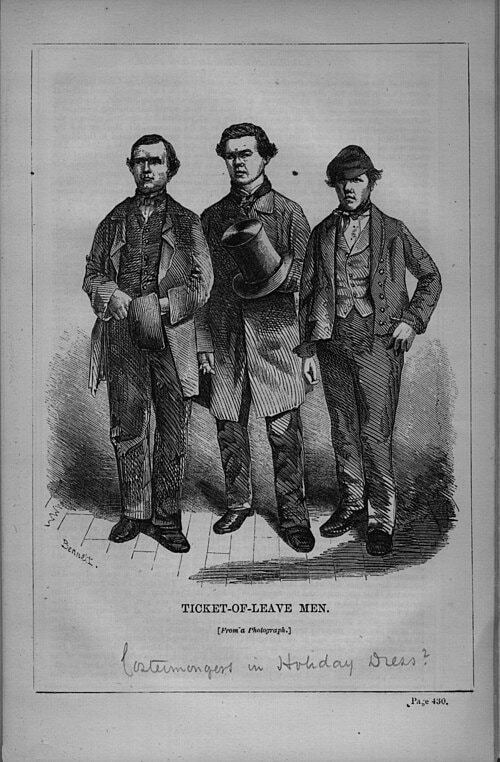
Thomas Airey had spent most of his adult life behind bars in England before he was transported to Western Australia aboard the Nile, arriving at Fremantle in December 1857 to serve a 15 year sentence for burglary. In June 1860 he was granted a ticket of leave, a conditional release that let convicts who had shown good behaviour work and live within a set district without constant supervision, a step short of full freedom but a clear sign the colony had judged him trustworthy.

That trust lasted barely four months. By October 1860 Airey stood before the Supreme Court in Perth convicted of a serious assault and sentenced to death. He was hanged at Perth Gaol on 13 October 1860, aged 29, and buried the following day at East Perth Cemetery.

Ticket of leave men historical photograph

⬅ See all events from 13 October

Spread the word on your favourite platform!

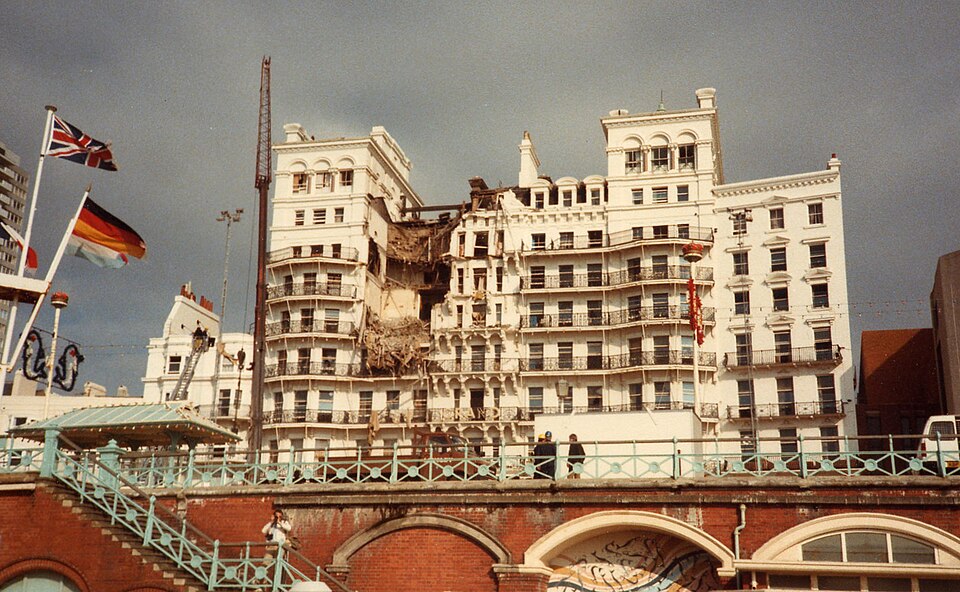
The Grand Hotel in Brighton was packed with Britain’s Conservative leadership for their annual conference when a long-delay bomb, planted by the Provisional IRA weeks earlier in a guest room, tore through the building in the early hours. Margaret Thatcher was still awake working on her conference speech in the room next door and escaped with only cuts, but five people died in the rubble and 31 more were injured, some permanently maimed.

The bomber, Patrick Magee, had checked into the hotel under a false name and set the timer so far in advance that he was long gone before it detonated. The IRA’s chilling statement afterward noted that Thatcher had been lucky that day, but they would only need to be lucky once. Magee was later caught through forensic evidence left on the bomb casing and convicted for the attack.

Grand Hotel, Brighton, after the bombing, 1984. Photo: D4444n / Wikimedia Commons, CC BY-SA 3.0 (creativecommons.org/licenses/by-sa/3.0/).

⬅ See all events from 12 October

Spread the word on your favourite platform!

Inejiro Asanuma, leader of the Japan Socialist Party, was mid speech at a political debate in Tokyo on 12 October 1960 when a seventeen year old ultranationalist named Otoya Yamaguchi sprinted across the stage and drove a short samurai sword into his chest, twice. Cameras were rolling for a live broadcast, and the killing was captured in full, shown and reshown to a horrified nation.

Yamaguchi was no stranger to the far right; he had trained with militant nationalist groups and viewed Asanuma, who had made friendly overtures toward Communist China, as a traitor to Japan. Arrested at the scene, he spent weeks in juvenile detention before hanging himself in his cell with a bedsheet, leaving behind a message of loyalty to the emperor.

His death meant he was never tried, and the killing remains one of the most notorious political murders of postwar Japan, preserved on film as it happened.

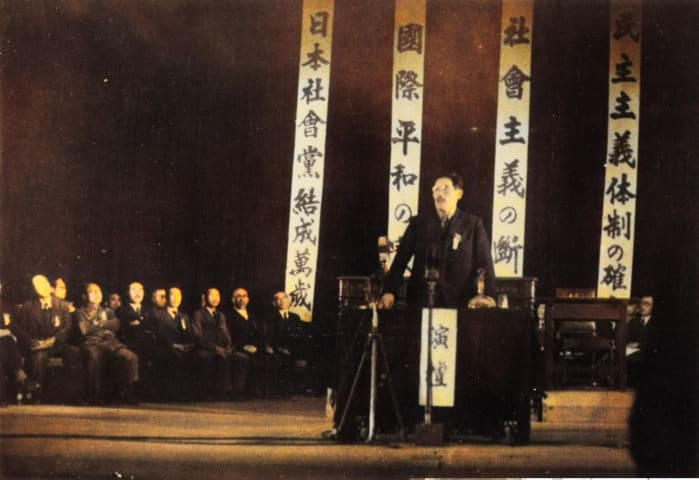
Inejiro Asanuma founds a new political party in 1945

⬅ See all events from 12 October

Spread the word on your favourite platform!
On This Day in True Crime History
1794·The First Free Settler Murdered in the Colony: Hanged at Sydney for a Parramatta Stabbing
1826·The Gun That Misfired Twice: Three Bushrangers Hanged Outside Sydney
1873·A Tearful Confession in Custody Cracked the Case: Two Men Hanged at Perth Gaol for Eating their Victim
1889·He Called It an Accident. The Jury Called It Murder: Robert Landells Hanged at Melbourne Gaol
1907·A Doctor Fooled Twice: Martha Rendell and the Second Child to Die of Diphtheria
2002·Shot Dead in His Own Bed: A Melbourne Gangland Killing Blamed on a Friend
More Crime On This Day →

Subscribe to Dark Stories

True crime stories, dark history and tour news, straight to your inbox.