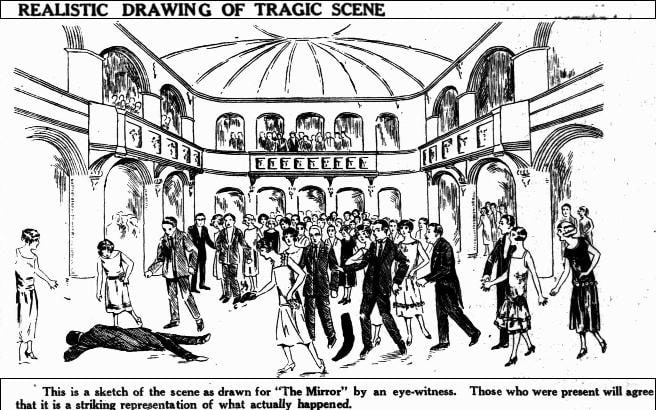
At a charity ball in the Government House Ballroom in Perth on the night of 26 August 1925, Audrey Jacob, a 20-year-old art student, shot her former fiance Cyril Gidley through the heart in front of hundreds of revellers.

Gidley, a 25-year-old ship’s engineer, had ended their engagement months earlier, dramatically throwing the engagement ring into the sea. Audrey had attended the ball in costume as Pierrette, a lovesick clown; when Gidley ignored her all evening, she slipped away, changed into a striking blue evening gown, and returned. As the orchestra struck up an encore dance number, she approached him on the floor. A single shot rang out and Gidley collapsed without a word.

Audrey stood over the body, smoking gun in hand, and declared to the stunned crowd: ‘I did it. Take me away. It’s all right. I know what I’ve done.’ She claimed the gun discharged accidentally during a confrontation. The case became a media sensation and led to a landmark trial in which she was found not guilty.

Murder On The Dance Floor

⬅ See all events from 27 August

Spread the word on your favourite platform!

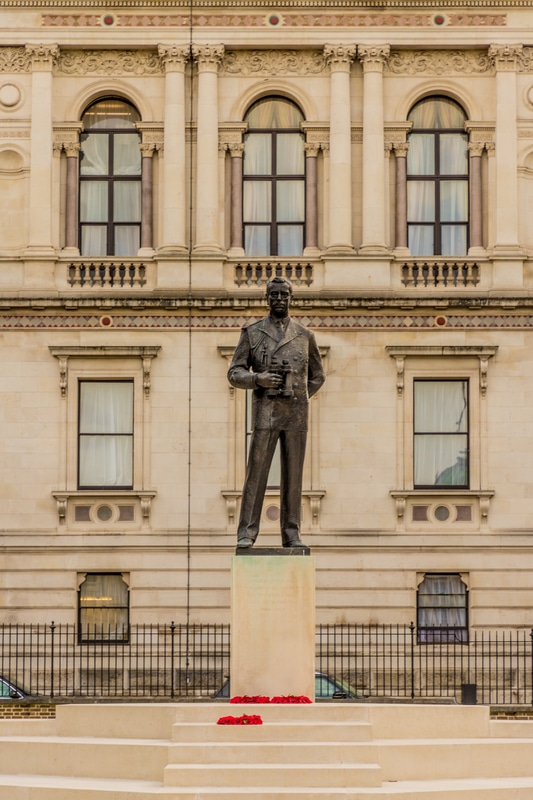
On 27 August 1979, Lord Louis Mountbatten, 79, was killed when a bomb planted by the Provisional IRA detonated aboard his fishing boat, Shadow V, in the waters off Mullaghmore, County Sligo, Ireland. The bomb, concealed on the vessel the night before, was remotely detonated as Mountbatten and family members set out from the harbour. Three others died in the blast, including his 14-year-old grandson Nicholas Knatchbull and a 15-year-old local boy.

Thomas McMahon, an IRA bomb-maker, was arrested hours before the explosion on unrelated grounds and later convicted of the murders based on forensic evidence linking him to the boat. The attack was coordinated with the Warrenpoint ambush the same day, which killed 18 British soldiers, making 27 August 1979 one of the deadliest days for British forces during the Troubles.

A typical view in London. London. October 2018. A statue of Lord Mountbatten in Horse guards parade in london | ID 130381623 © Chris Mouyiaris | Dreamstime.com
ID 130381623 © Chris Mouyiaris | Dreamstime.com

⬅ See all events from 27 August

Spread the word on your favourite platform!

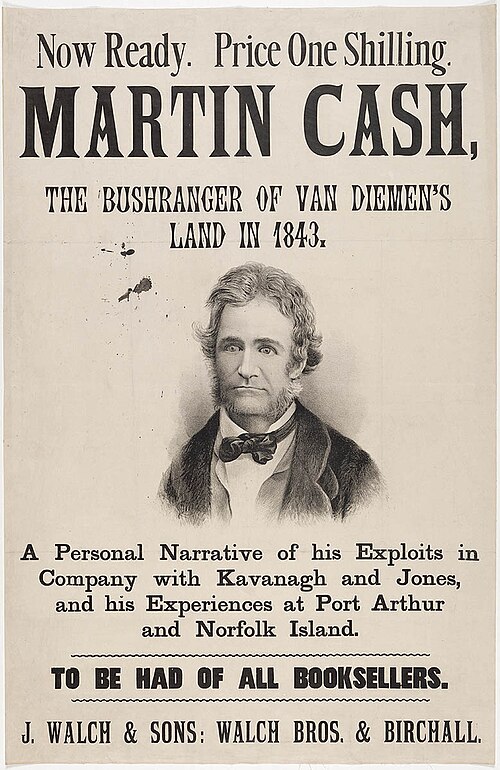
Martin Cash, Irish-born convict and bushranger, died on 26 August 1877 at his farm cottage in Glenorchy, Tasmania, aged 68. Twice he escaped from the supposedly escape-proof Port Arthur penal colony, the second time by swimming the shark-infested waters. On Boxing Day 1842, Cash and two companions absconded from a work party and launched an eight-month bushranging spree across Van Diemen’s Land, robbing mail coaches and homesteads before his eventual recapture. His 1870 autobiography, The Adventures of Martin Cash, ghostwritten by a fellow former convict, became a bestseller. He was one of the few bushrangers of his era to die of natural causes, cheating the gallows.

Martin Cash Author: The Bushranger of Van Diemen's Land in 1843
Martin Cash Author: The Bushranger of Van Diemen’s Land in 1843

⬅ See all events from 26 August

Spread the word on your favourite platform!

Thomas Doolan, described as an old offender who had been tried several times in the colony, was convicted of forcibly breaking into the house of John Styles at Hawkesbury. He had previously saved himself from execution by turning informant against his accomplices, some of whom were hanged on his testimony.

Doolan was hanged in Sydney on 26 August 1809. Court records from the same period reveal he had also been among those who burglariously broke into the dwelling of a settler named Thomas Harley, beating the occupants and ransacking the house, though he did not live to face that additional charge.

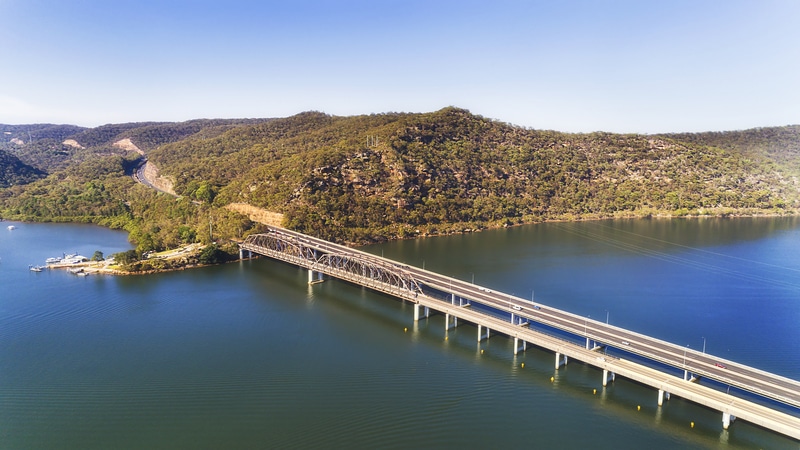
Motorway 1 bridge over Hawkesbury River near Sydney with traffic

⬅ See all events from 26 August

Spread the word on your favourite platform!
On This Day in True Crime History

Subscribe to Dark Stories

True crime stories, dark history and tour news, straight to your inbox.