The U.S. Department of Justice announced the acquisition of the military facility on Alcatraz Island on this day in 1933, marking the start of its transformation into a federal maximum-security penitentiary. It would be nearly a year before the island was formally designated a federal prison and the first inmates arrived.

Alcatraz was built for one purpose: to hold prisoners who had proven too disruptive, too dangerous, or too likely to escape from every other federal institution. Surrounded by cold currents and strict discipline, it would soon house names like Al Capone and Robert Stroud, cementing its reputation as America’s most feared prison.
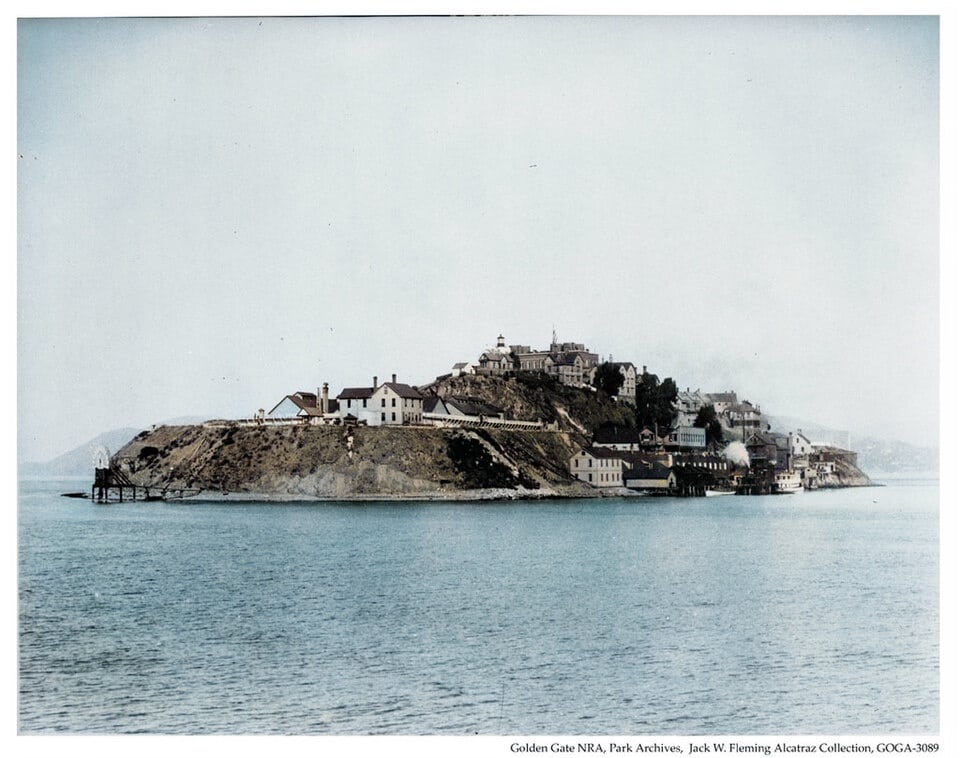

Coloried view of Alcatraz Island circa 1902-1905 (unknown author)

⬅ See all events from 12 October

Spread the word on your favourite platform!

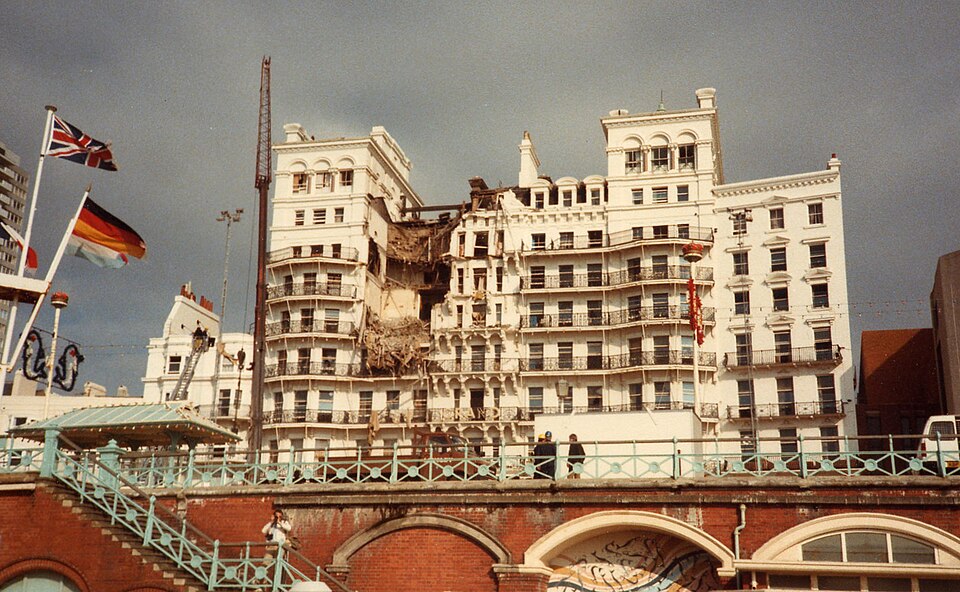
The Grand Hotel in Brighton was packed with Britain’s Conservative leadership for their annual conference when a long-delay bomb, planted by the Provisional IRA weeks earlier in a guest room, tore through the building in the early hours. Margaret Thatcher was still awake working on her conference speech in the room next door and escaped with only cuts, but five people died in the rubble and 31 more were injured, some permanently maimed.

The bomber, Patrick Magee, had checked into the hotel under a false name and set the timer so far in advance that he was long gone before it detonated. The IRA’s chilling statement afterward noted that Thatcher had been lucky that day, but they would only need to be lucky once. Magee was later caught through forensic evidence left on the bomb casing and convicted for the attack.

Grand Hotel, Brighton, after the bombing, 1984. Photo: D4444n / Wikimedia Commons, CC BY-SA 3.0 (creativecommons.org/licenses/by-sa/3.0/).

⬅ See all events from 12 October

Spread the word on your favourite platform!

On 12 October 1950, at Collie, near Perth, milk carter Raymond Armanasco murdered several members of his family. His own defence counsel told the jury it was possibly the most gruesome case ever unfolded in a Western Australian court, and argued Armanasco had been temporarily insane.

Through two days of evidence at his trial, Armanasco spoke only two words: “not guilty.” The jury took just forty minutes to convict him of murder, but attached to its verdict the “strongest recommendation for mercy.” He was sentenced to hang, yet in April 1951 the Executive Council accepted that plea and commuted his death sentence to life imprisonment with hard labour.

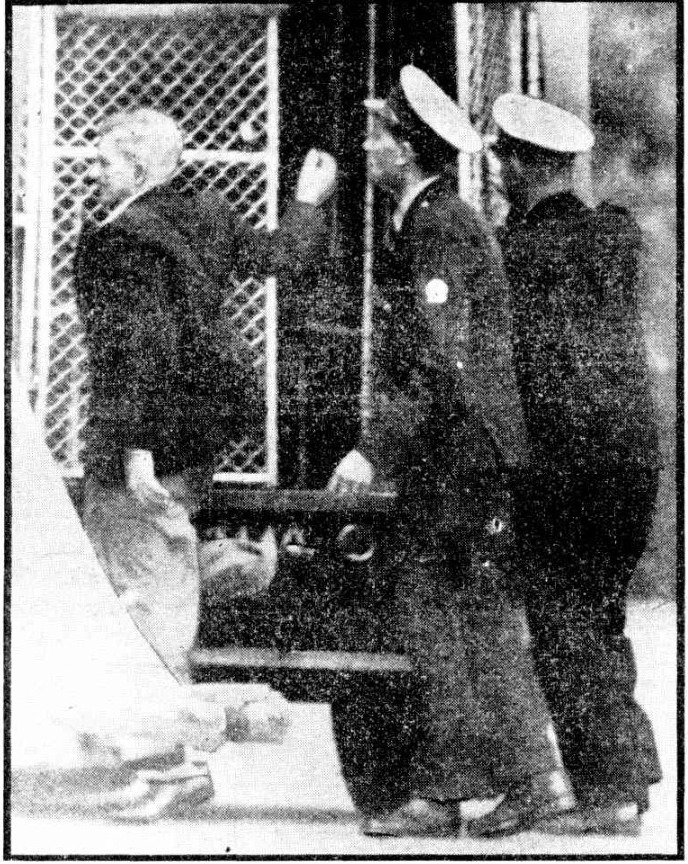
Raymond Armanasco arrives at court Perth 1950

⬅ See all events from 12 October

Spread the word on your favourite platform!

Peter McKean, alias William McDonald, bunked with William ‘Yorkie’ Marriott at a shepherd’s hut near Kojonup, both working for the same local farmer. Marriott was known for quietly saving his wages, and in June 1872 he vanished. His body was found slumped behind a cart more than a week later, the head so badly gnawed by dogs that he could only be identified by a missing finger on his right hand.

McKean was arrested on circumstantial evidence and convicted at the Albany Circuit Court of robbing and killing Marriott with an axe. After his arrest, McKean claimed Marriott had been killed by ‘a vicious horse’. He never offered proof, and the excuse died with him on the scaffold.

He was hanged at Albany on 12 October 1872, the rope worked by a fellow convict before a crowd that included schoolchildren.

Carpenters axe
Carpenters axe

⬅ See all events from 12 October

Spread the word on your favourite platform!
On This Day in True Crime History

Subscribe to Dark Stories

True crime stories, dark history and tour news, straight to your inbox.