1952: Jan Novotny Hanged at Fannie Bay Gaol for the Murder of a Darwin Taxi Driver

In April 1952, Czech migrants John Novotny, 19, and Jerry Koci, 20, hailed a taxi in Darwin driven by George Thomas Grantham, one of the town’s best-known cab owners. Ten miles out of town, Novotny shot Grantham in the face with a rifle he had purchased just days earlier, dragged the body into scrub 13 miles from Darwin, and fled south in the stolen taxi. The pair were intercepted on a Queensland road near Duchess, nearly 1,000 miles away, two days later.

At the Supreme Court, Novotny confessed in broken English: ‘I buy rifle in Darwin. Me and my friend get driver take us along road. Ten miles out I shoot driver with rifle, drag driver out of car.’ Both men were convicted of murder before Judge Kriewaldt. Novotny was hanged at Fannie Bay Gaol on 7 August 1952.

Suspects Jonas Nopotry and Jerr Koci leaving Mt Isa Police Court 1952

⬅ See all events from 7 August

Spread the word on your favourite platform!

1890: William Kemmler: The First Man Executed by Electric Chair

William Kemmler, a vegetable peddler from the slums of Buffalo, New York, became the first person in history executed by electric chair. On March 29, 1889, in the grip of a drunken rage, he accused his common-law wife Matilda ‘Tillie’ Ziegler of theft and betrayal, retrieved a hatchet from the barn, and beat her to death. He then walked to a neighbour’s house and announced what he had done.

Convicted of first-degree murder in May 1889 and sentenced to death, Kemmler was chosen as the inaugural test of New York’s new electrocution law, which had replaced hanging on January 1, 1888. His execution at Auburn Prison on August 6, 1890 did not go smoothly. Developers including George Westinghouse had fought to block use of their technology for executions, and legal appeals argued the chair violated the Eighth Amendment’s ban on cruel and unusual punishment. The appeals failed, and Kemmler died in the chair, though witnesses reported the process was prolonged and deeply disturbing.

Illustration of a man executed by electrocution in electric chair

⬅ See all events from 6 August

Spread the word on your favourite platform!

1991: Sir Terence Lewis, Queensland Police Commissioner, Convicted of Corruption

Sir Terence Lewis, Commissioner of the Queensland Police Service from 1976 to 1987, was found guilty on 5 August 1991 of 15 counts of corruption and one of forgery, following the explosive Fitzgerald Inquiry into police misconduct. A District Court jury determined that Lewis had accepted bribes totalling $700,000 to protect brothels, SP bookmakers, illegal casinos, and gaming machine operators. He had been handpicked for the commissioner’s role in 1976 by Premier Joh Bjelke-Petersen, bypassing 122 more senior officers.

Judge Healy sentenced Lewis to the maximum term available: 14 years for corruption and 10 years for forgery, to be served concurrently. Lewis was stripped of his knighthood and two other awards. He continued to protest his innocence and pursued appeals until the last one failed in August 2005.

Terence Murray Lewis, Queensland Police Commissioner. © State of Queensland (Queensland Police Service); original photographer unknown. Retouched by Georgfotoart. Wikimedia Commons, CC BY 4.0.

⬅ See all events from 5 August

Spread the word on your favourite platform!

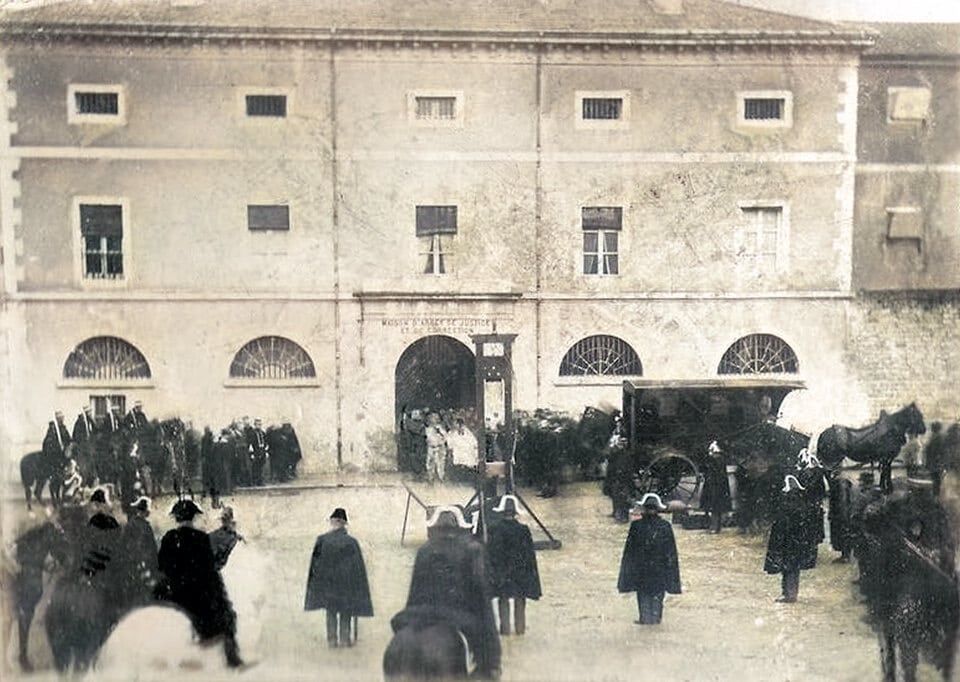
1858: Matthew Burns Hanged at Avoca for Assault in a Botched Double Execution

Matthew Burns, convicted of assault, and George Young, convicted of the murder of Esther Scott, were hanged together at the gaol in Avoca on 5 August 1858. Both men were attended by Catholic clergy until the final moment, clinging to every possible delay before the bolt was drawn.

The execution of Burns descended into a horror. The rope yarn used to pinion his arms gave way, allowing him to grasp the rope at his neck and resist the drop. The executioner was forced to physically compel Burns to release his hold before he finally fell, and he strangled slowly for several minutes after Young had died. The cause was later attributed to the authorities having refused to supply proper rope and twine, forcing the executioner to use whatever materials the gaol had on hand.

Neither man confessed from the scaffold, but neither protested his innocence. Both appeared, in the words of those present, to tacitly admit their guilt.

Avoca lockup

⬅ See all events from 5 August

Spread the word on your favourite platform!
On This Day in True Crime History

Subscribe to Dark Stories

True crime stories, dark history and tour news, straight to your inbox.