Annie Birkett married Harry Crawford in Sydney in 1913 not knowing that Crawford had been born Eugenia Falleni and had lived as a man for twenty years. A neighbour told her in 1917. That October the pair went picnicking at Chatswood and Annie never came home; a charred body was found in scrub off Mowbray Road the next morning, still alive when the fire was lit, the doctor said. It lay unidentified for three years. Falleni told her son she had run off with another man.

The boy remembered other things. Days after his mother vanished his stepfather took him to The Gap and tried to coax him to the cliff edge; a week later he led him into scrub at night, told him to dig a hole, then threw the shovel away and took him home. In 1920 the son went to police. The body was matched through its false teeth, and among its effects he knew his mother’s shoes, one sole mended by his stepfather. Tried at Darlinghurst in what the papers called the “Man-Woman case”, put into the dock first in a suit and then in a dress, Falleni was convicted in two hours.

Sentenced to death, later commuted to life, Falleni told the judge: “I am not guilty, your Honor. I know nothing whatsoever of this charge.”
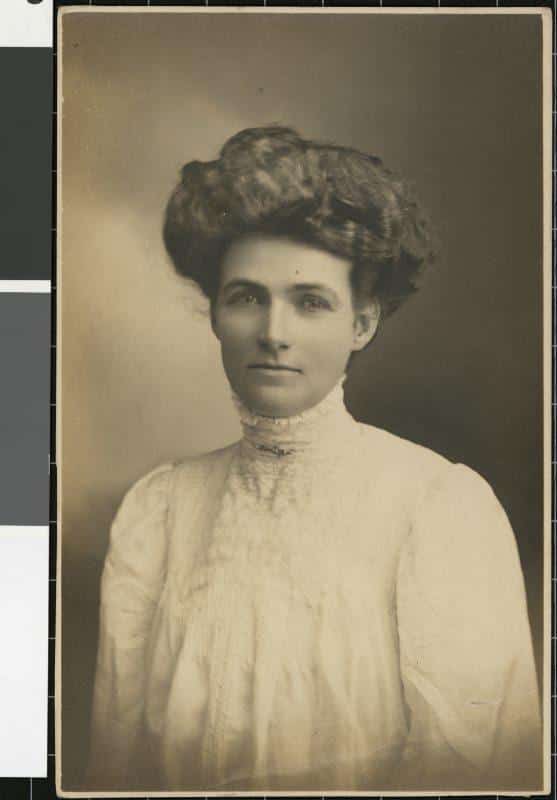

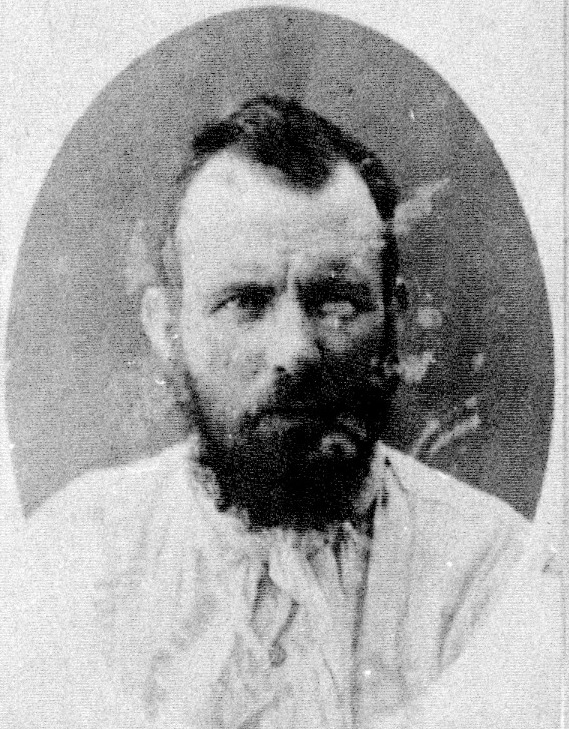
Portrait of Annie Birkett, circa 1910. Justice & Police Museum Collection, Museums of History NSW. Gift of Linda Slinger, 2011. Accession no. JP2011/1-2.

⬅ See all events from 1 October

Spread the word on your favourite platform!

Patrick Kennedy was a shepherd at an out-station near Penshurst in Victoria, sharing a hut with his wife and two other men. After a night of drinking, he turned on her the next afternoon without any clear provocation, kicking her so violently that the pattern of his boot nails was later found bruised into her body.

He was convicted at the Supreme Court and hanged at Melbourne Gaol on 1 October 1851. The drop failed to kill him instantly, and he struggled for nearly three minutes, prompting the hangman to boast to bystanders that he had predicted exactly how long it would take.

In his final days Kennedy revealed a chilling belief in fatalism, insisting he was merely an instrument of forces beyond his control. He recalled that his small son used to prattle a rhyme, “mammy dead and dady gone,” which he took as a dark omen; when the boy died in custody during his imprisonment, Kennedy said plainly that he was glad.

He showed no remorse for the killing, telling gaolers only, “Drink did it all, but if it had not been done by drink, something else would have done it, as it was decreed to be done.”

Skull and vintage hourglass on wooden background in beam of light

⬅ See all events from 1 October

Spread the word on your favourite platform!

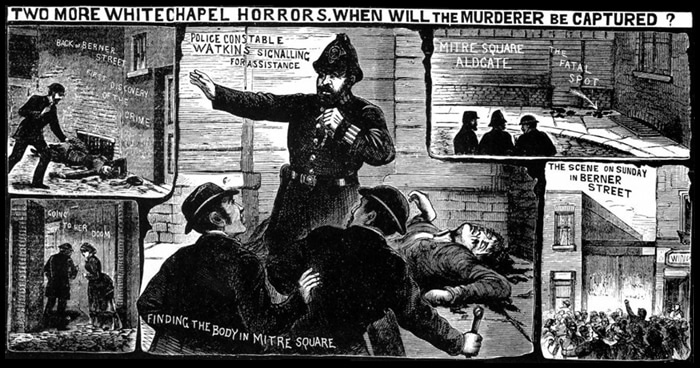
In the early hours, the killer known as Jack the Ripper struck twice within the same hour. His third victim, Elizabeth Stride, was found with her throat cut and still bleeding, her killer likely interrupted before he could mutilate her further. Denied his ritual, he found a fourth victim within the hour: Catherine Eddowes, whose body was left with her intestines arranged over her shoulder and part of her womb removed.

Weeks later, a Londoner opened a parcel addressed simply “From Hell” to find half a preserved kidney inside, accompanied by a taunting letter. Tests suggested it may have belonged to Eddowes herself, though the claim was never proven and the killer was never caught.

Murders of Liz Stride and Catherine Eddowes

⬅ See all events from 30 September

Spread the word on your favourite platform!

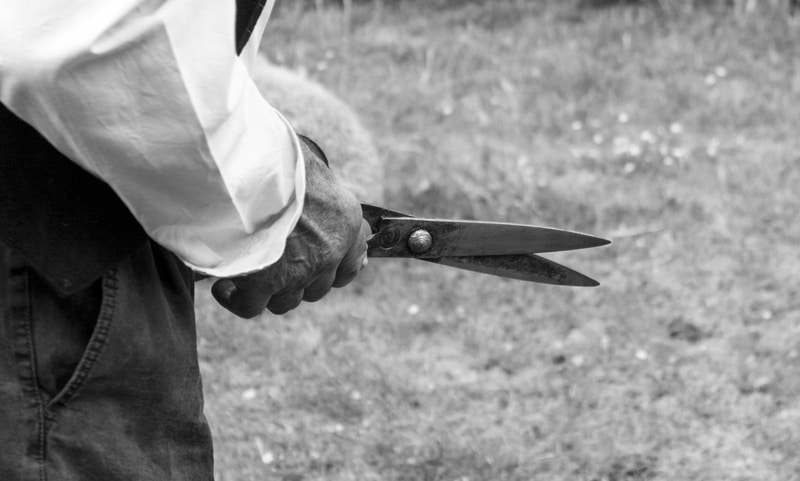
In October 1851, at a shearers’ hut on a station on the Castlereagh, a Chinese labourer named John Newing burst in armed with a shear blade lashed to a pole and stabbed a fellow countryman, Hing, in the groin. Bystanders wrenched the weapon from him, but he returned with two knives before he could be disarmed again, and Hing bled out within minutes.

At his trial at Bathurst in August 1852, defence counsel argued there had been no intent to kill, telling the court that Newing himself had said he aimed only for the knees. The jury was unmoved and returned a verdict of guilty, and Newing was sentenced to death without hope of mercy. He went to the gallows the following month alongside an unrelated condemned man, Timothy Sullivan, in an execution remembered chiefly for how badly it was botched.

Unable to speak or understand English, and with no interpreter willing to attend him at the end, Newing left no final statement and died in silence.

Sheep shearer scissors.

⬅ See all events from 30 September

Spread the word on your favourite platform!
On This Day in True Crime History
1853·"I Would Finish You Now": Hanged in Melbourne for the Murder of His Mistress
1853·The Young Witness Testifies: Alexander Ram Hanged in Melbourne for Murdering Kitty Hennessy
1883·Hanged in Perth, Each Still Blaming the Other to the End
1885·Hanged in Brisbane After a Feverish Stockman Shot the Manager Who Denied Him Hospital
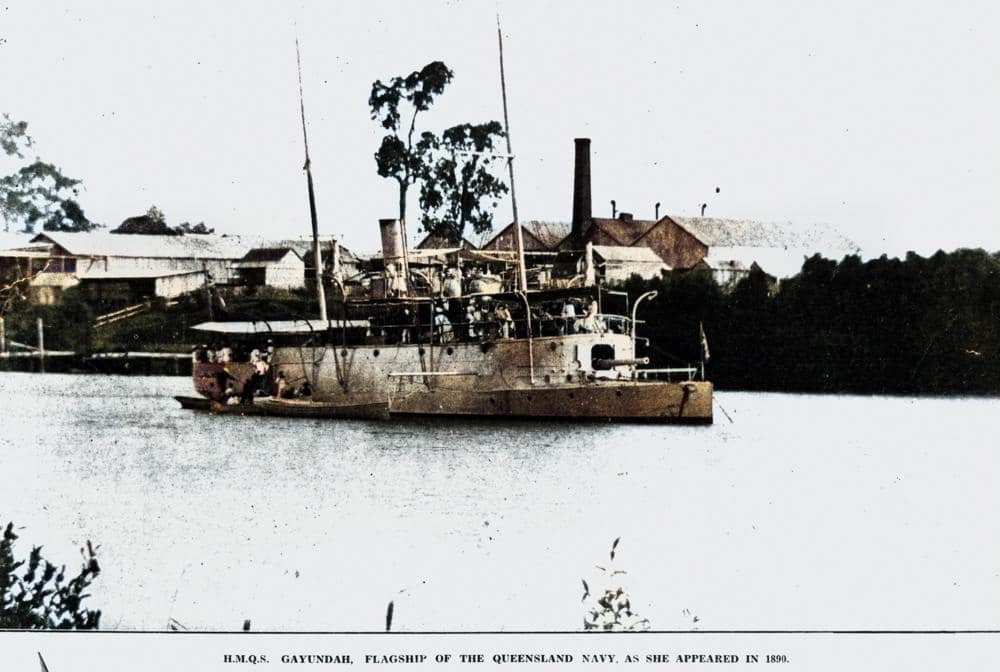
1888·Mutiny on the Brisbane River: the Captain Who Threatened to Turn His Guns on Parliament
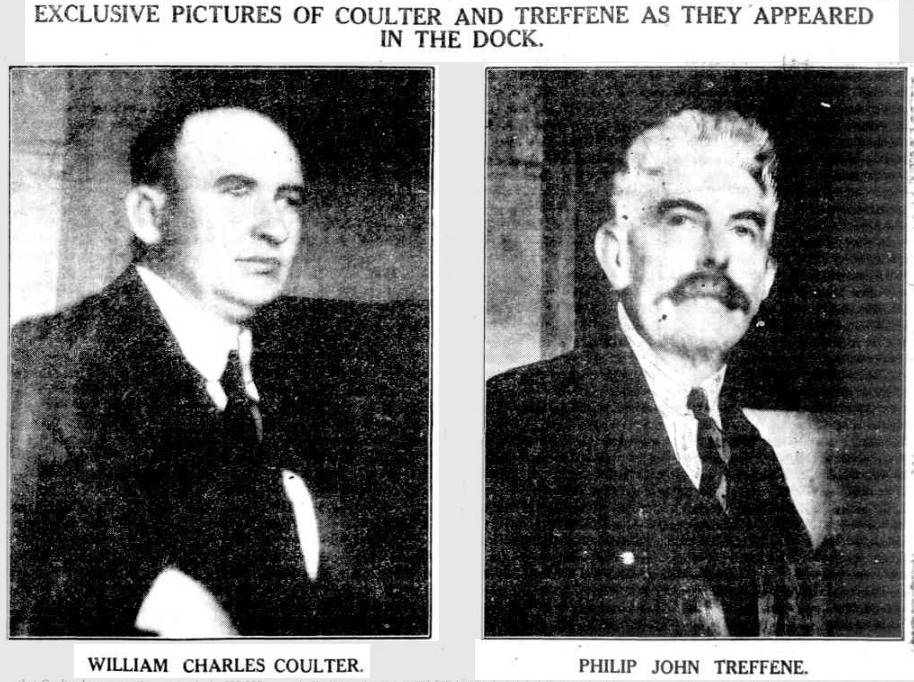
1926·The Gold He Took to His Grave: Two Men Hanged in Fremantle for Killing Two Police Officers
More Crime On This Day →

Subscribe to Dark Stories

True crime stories, dark history and tour news, straight to your inbox.