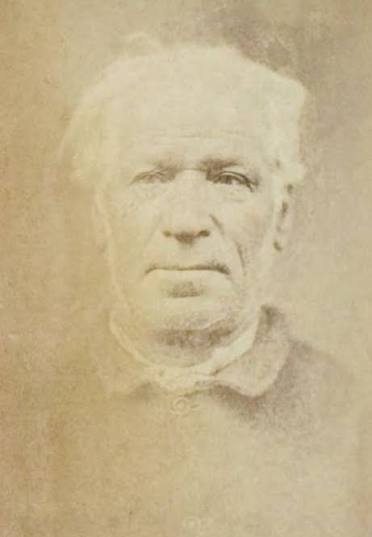
Timothy Sullivan lived with an elderly shepherd named Daniel Harrington at King’s Plains, near Carcoar in the Bathurst district. On the night of 4 June 1852, neighbours were woken by Sullivan himself shouting “robbers, robbers” from his hut. When a neighbour, Daniel Healy, ran to help, he found no robber, only Sullivan raining blows on the old man with a heavy weapon he then hurled onto the roof. Harrington, barely alive, managed to whisper his own name before he died.

At the Bathurst Assizes the judge dismissed the robbery story as invention, noting that nothing had actually been stolen and that the wounds showed deliberate, prolonged violence. Convicted of wilful murder, Sullivan was hanged on 30 September 1852; the drop was so severe it very nearly tore his head from his body.

On the scaffold a priest read a statement on Sullivan’s behalf: he claimed he had rushed out in the dark with a flesh fork believing a robber was near, striking blindly, and insisted “he did not know it was Harrington he was wounding.”
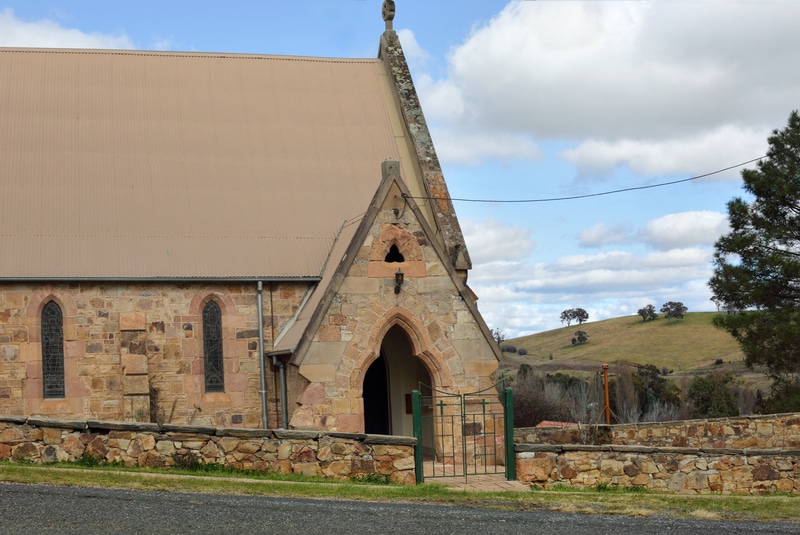

Sandstone building in Carcoar

⬅ See all events from 30 September

Spread the word on your favourite platform!

Carl Williams had already been convicted of multiple murders during Melbourne’s gangland war when he was bashed to death with the stem of an exercise bike in a high-security unit at Victoria’s Barwon Prison in 2010, an inmate supposedly protected by round-the-clock surveillance.

Matthew Charles Johnson, a fellow prisoner sharing the unit, was charged with the killing. On this day in 2011 a jury found him guilty of murdering the man once considered one of the country’s most feared underworld figures, in an attack that exposed how little safety the prison’s most secure wing actually offered its most notorious inmate.

Gangland: more than a dictionary definition in Melbourne, 1998–2010.

⬅ See all events from 29 September

Spread the word on your favourite platform!

Elijah Upjohn had hanged Ned Kelly at Melbourne Gaol in 1880, earning five pounds for the job. Two years later he was back in front of a City Court bench, this time as the accused: drunk in Carlton, he exposed himself in front of witnesses, to whom he tossed peppermints moments before.

Fined 10 pounds or three months, Upjohn refused to pay and was sent to Melbourne Gaol, the very institution he had served as executioner. While locked up he kept working, flogging inmates at Pentridge under sentence, and walked free at year’s end with wages still owed to him.

Elijah Upjohn: Executioner of Bushranger Ned Kelly

⬅ See all events from 29 September

Spread the word on your favourite platform!

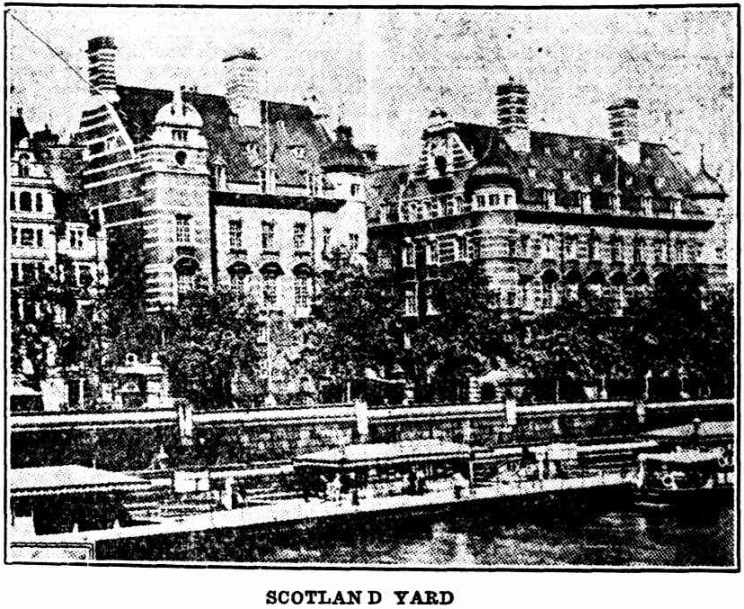
Before 1829, London had no unified police, just a patchwork of parish constables and private watchmen who could barely keep pace with a city rife with theft, riot and violence. Home Secretary Robert Peel changed that, pushing through the Metropolitan Police Act and creating a single force answerable to the Crown rather than local vestries.

Its headquarters took its name from the street behind it, a quiet lane called Great Scotland Yard, and the name stuck long after the force outgrew the building. The new constables, soon nicknamed bobbies and peelers after their founder, were unarmed, uniformed and deeply distrusted at first by a public wary of state surveillance. Within decades Scotland Yard would become the model for modern policing worldwide, and its name a byword for criminal investigation itself.

Scotland Yard headquarters in London police force: 1929 centenary celebration

⬅ See all events from 29 September

Spread the word on your favourite platform!
On This Day in True Crime History

Subscribe to Dark Stories

True crime stories, dark history and tour news, straight to your inbox.