Edgar Allan Poe vanished for nearly a week before he turned up outside a Baltimore, Maryland tavern being used as a polling place, incoherent and wearing clothes that were not his own. He was taken to Washington College Hospital, where he drifted in and out of consciousness for four days.

Witnesses said he repeatedly called out the name Reynolds in his final hours, a man no one has ever identified. Poe died on 3 October 1849 at age 40, and no doctor ever agreed on what killed him, leaving one of American literature’s most famous authors with one of its strangest unsolved endings.
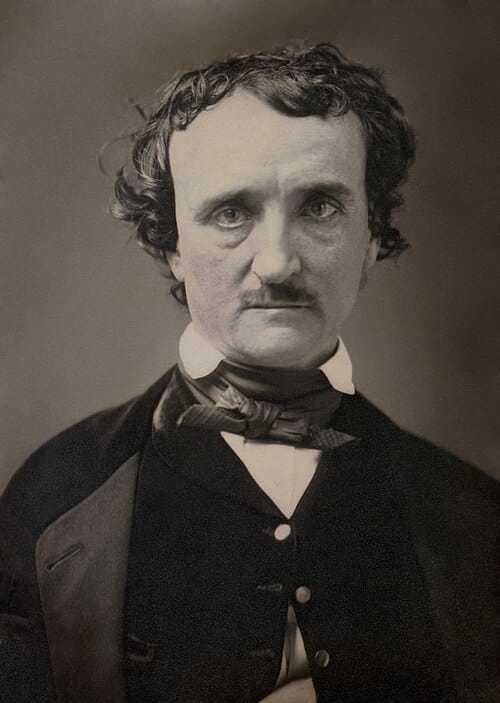

Restored portrait photo of Edgar Allan Poe circa 1849

⬅ See all events from 3 October

Spread the word on your favourite platform!

Within hours of his execution, the body of bushranger George Melville was handed to his widow, decorated with ribbons and laid out in the window of their oyster shop in Little Bourke Street. The Argus called it a disgusting and inhuman act, presuming it was staged simply to draw in customers.

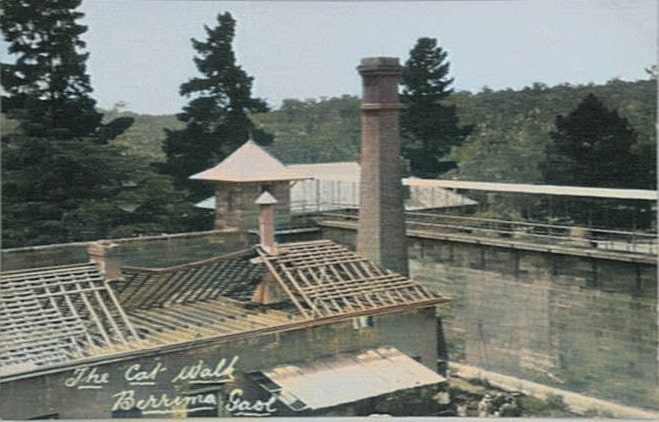
Melville had been hanged at Melbourne Gaol alongside William Atkins and George Wilson for the Private Escort gold robbery near Kalkallo, an ambush that left four mounted troopers shot, one of them fired on again as he lay wounded on the road. All three had been identified after an accomplice turned informer to the police before taking his own life with a razor.

None of the condemned made a clear confession. Wilson used his final moments on the scaffold to forgive the witnesses who had convicted him, while Melville, claiming the crowd could not hear him, simply said he could not make himself heard and wished them all a very good morning.

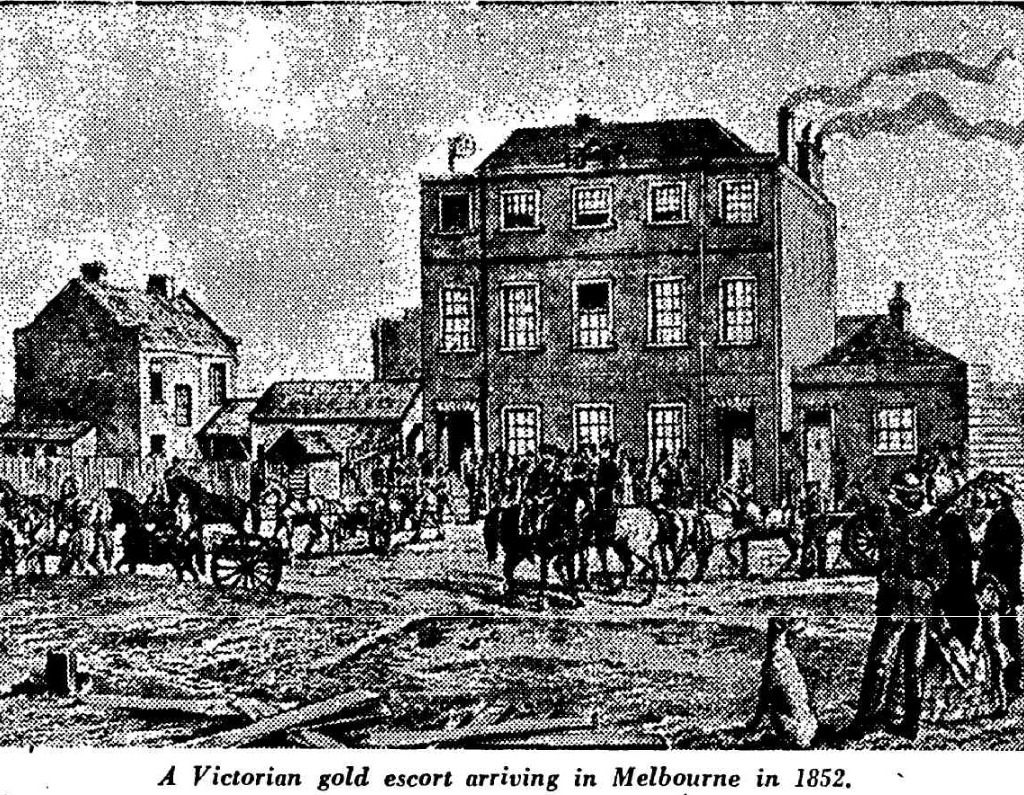
Victorian gold escort arriving in Melbourne 1852.

⬅ See all events from 3 October

Spread the word on your favourite platform!

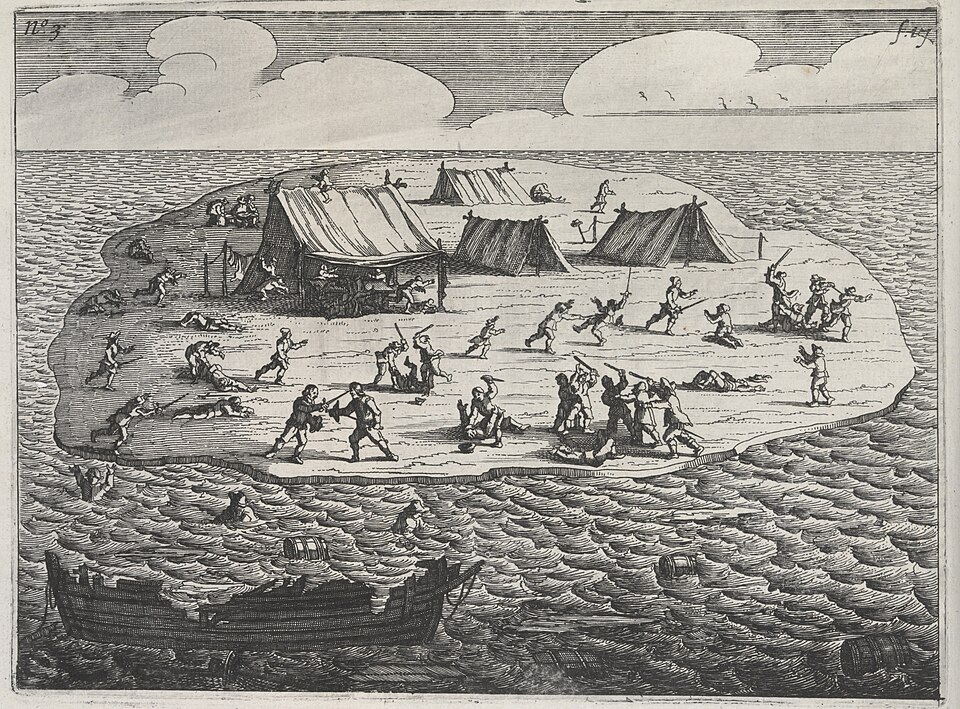
When the Dutch East India Company ship Batavia wrecked on a reef off Western Australia in 1629, disgraced merchant Jeronimus Cornelisz seized control of the survivors stranded on the barren Houtman Abrolhos islands. Fearing his crimes would be exposed once rescue came, he set his followers to killing anyone who might oppose him or drain the group’s meagre food and water. Over the following weeks his men murdered at least 125 men, women and children, drowning some and butchering others, while a small band of soldiers under Wiebbe Hayes held out against them on a nearby island.

When commander Francisco Pelsaert finally returned with a rescue ship, Cornelisz had already been captured. He and six of his men were hanged on Long Island in the Houtman Abrolhos on 2 October 1629, the first Europeans executed on Australian soil; Cornelisz had both hands amputated before he was strung up. Two lesser offenders were marooned on the mainland instead, becoming the first Europeans known to live in Australia.

Confessions were extracted from several of the mutineers under torture before the executions were carried out.

From Shipwreck to Massacre on Beacon Island

⬅ See all events from 2 October

Spread the word on your favourite platform!

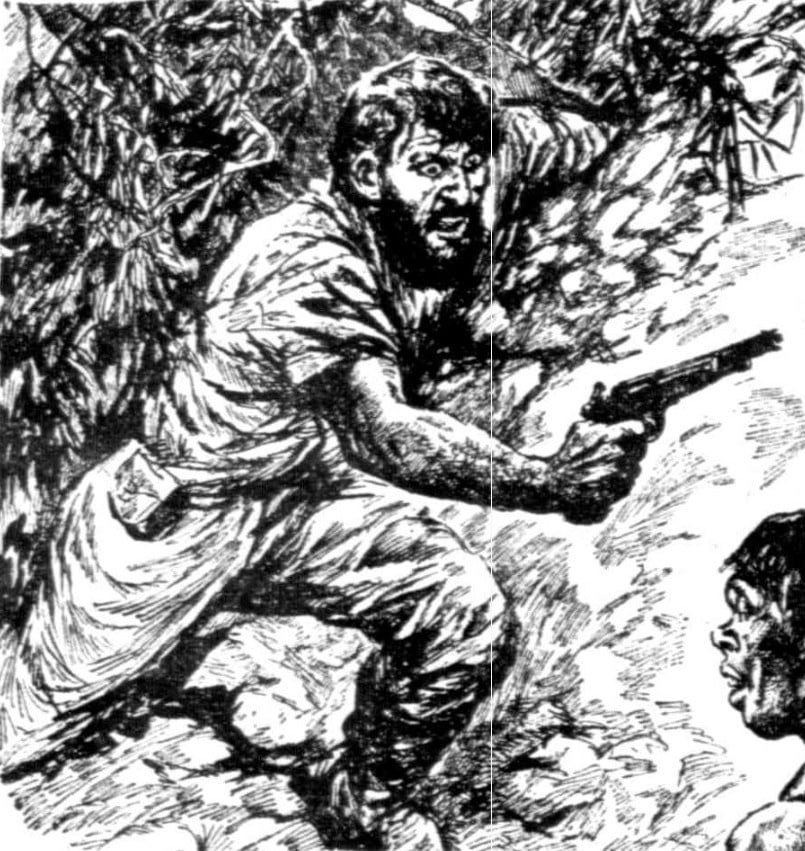
On Warland’s Range near Murrurundi in April 1863, a masked rider named Henry Wilson held up a party of drovers and stripped young Peter Clarke of his watch and chain. When Clarke lunged at him, Wilson shot him three times; Clarke was dead within minutes. So furious was the crowd that gathered at the scene that police had to physically stop them from hanging Wilson on the nearest tree.

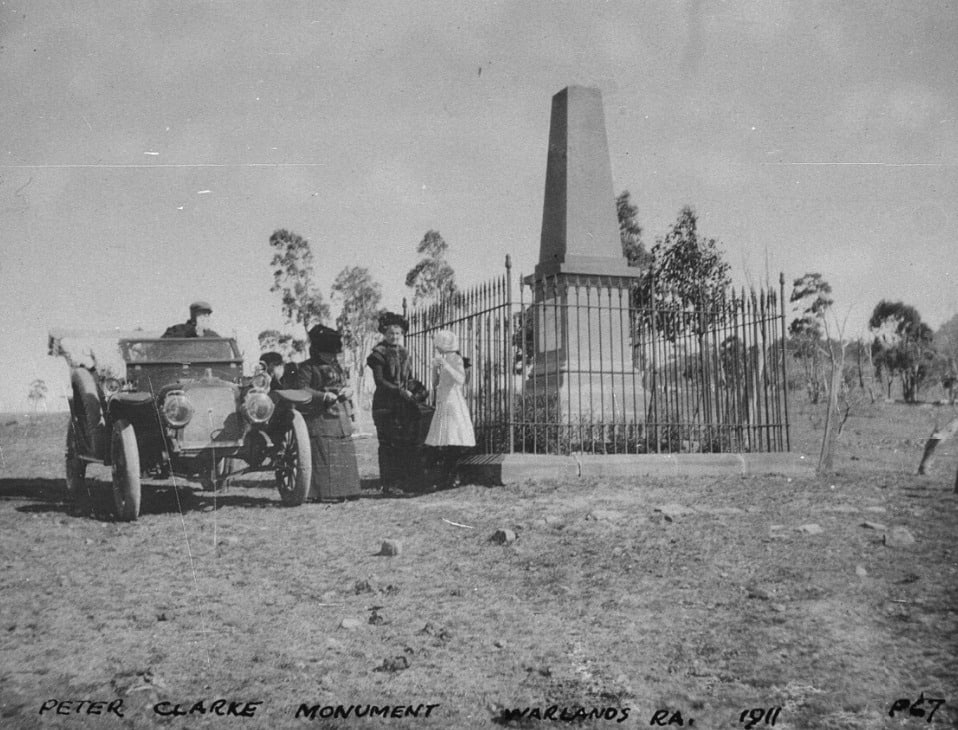
He was tried instead at Maitland Circuit Court, where his counsel argued the fatal shot had gone off accidentally in the struggle. The jury took ten minutes to convict him, and he was hanged at East Maitland Gaol on 2 October 1863. Clarke’s bravery was later honoured with a public monument erected on the spot where he fell.

Wilson admitted firing the shots but denied meaning to kill, blaming drink and panic in the scuffle; still, he told his priest he accepted the justice of his sentence and deserved to die.

Peter Clarke monument, Warland’s Range, near Blandford, NSW. Mitchell Library, State Library of New South Wales, At Work and Play - 05492.
Peter Clarke monument, Warland’s Range, near Blandford, NSW. Mitchell Library, State Library of New South Wales, At Work and Play – 05492.

⬅ See all events from 2 October

Spread the word on your favourite platform!
On This Day in True Crime History

Subscribe to Dark Stories

True crime stories, dark history and tour news, straight to your inbox.