Annie Birkett married Harry Crawford in Sydney in 1913 not knowing that Crawford had been born Eugenia Falleni and had lived as a man for twenty years. A neighbour told her in 1917. That October the pair went picnicking at Chatswood and Annie never came home; a charred body was found in scrub off Mowbray Road the next morning, still alive when the fire was lit, the doctor said. It lay unidentified for three years. Falleni told her son she had run off with another man.

The boy remembered other things. Days after his mother vanished his stepfather took him to The Gap and tried to coax him to the cliff edge; a week later he led him into scrub at night, told him to dig a hole, then threw the shovel away and took him home. In 1920 the son went to police. The body was matched through its false teeth, and among its effects he knew his mother’s shoes, one sole mended by his stepfather. Tried at Darlinghurst in what the papers called the “Man-Woman case”, put into the dock first in a suit and then in a dress, Falleni was convicted in two hours.

Sentenced to death, later commuted to life, Falleni told the judge: “I am not guilty, your Honor. I know nothing whatsoever of this charge.”
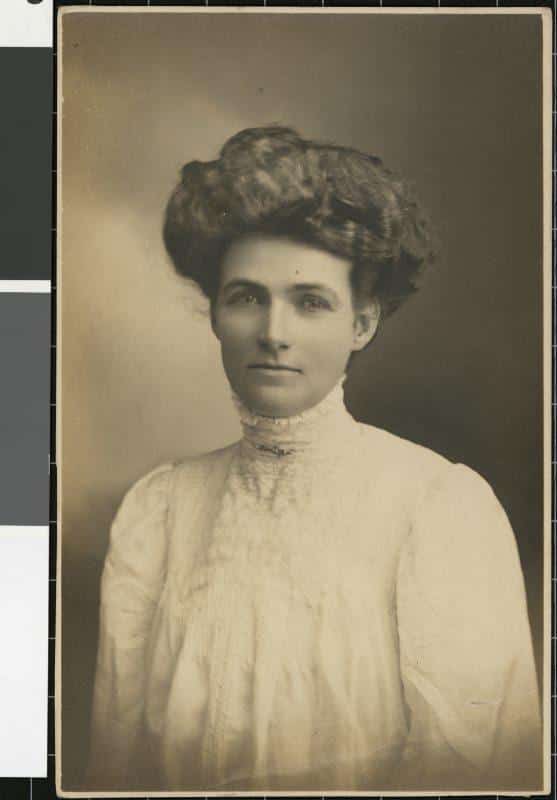

Portrait of Annie Birkett, circa 1910. Justice & Police Museum Collection, Museums of History NSW. Gift of Linda Slinger, 2011. Accession no. JP2011/1-2.

⬅ See all events from 1 October

Spread the word on your favourite platform!

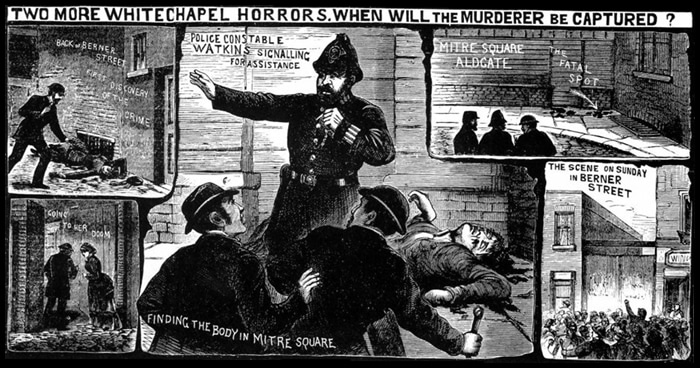
In the early hours, the killer known as Jack the Ripper struck twice within the same hour. His third victim, Elizabeth Stride, was found with her throat cut and still bleeding, her killer likely interrupted before he could mutilate her further. Denied his ritual, he found a fourth victim within the hour: Catherine Eddowes, whose body was left with her intestines arranged over her shoulder and part of her womb removed.

Weeks later, a Londoner opened a parcel addressed simply “From Hell” to find half a preserved kidney inside, accompanied by a taunting letter. Tests suggested it may have belonged to Eddowes herself, though the claim was never proven and the killer was never caught.

Murders of Liz Stride and Catherine Eddowes

⬅ See all events from 30 September

Spread the word on your favourite platform!

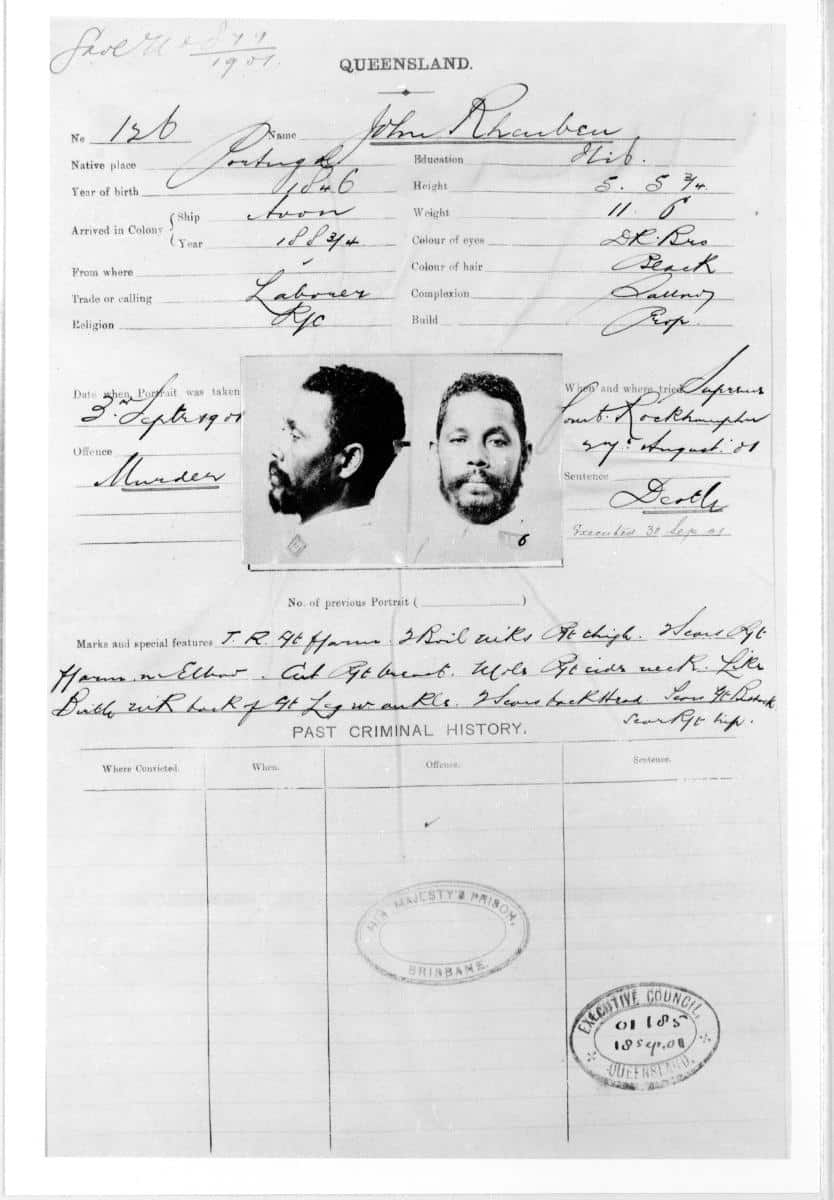
John Rheuben had lived with Fanny Hardwick for two years, supporting her mother and child, until he turned her out and she took up with another man. Furious at her refusal to return, he beat his rival twice, threatened to “do for him”, and quietly sharpened a sheath knife at the local gasworks. On a Sunday evening in Rockhampton he forced his way into the house where she was staying, dragged her into a back bedroom, and stabbed her five or six times, one wound reaching her heart.

Tried before Mr Justice Power, Rheuben was convicted despite a defence of temporary insanity, and a petition for mercy signed across Rockhampton failed to move the Executive. He was hanged in Brisbane on 30 September 1901, praying loudly on the drop and thanking the warders for their kindness before the trap fell.

He never admitted the killing outright. To his priest he said only that he had been “mad drunk” and remembered striking at someone, but nothing more.

John Rheuben Criminal Record

⬅ See all events from 30 September

Spread the word on your favourite platform!

Timothy Sullivan lived with an elderly shepherd named Daniel Harrington at King’s Plains, near Carcoar in the Bathurst district. On the night of 4 June 1852, neighbours were woken by Sullivan himself shouting “robbers, robbers” from his hut. When a neighbour, Daniel Healy, ran to help, he found no robber, only Sullivan raining blows on the old man with a heavy weapon he then hurled onto the roof. Harrington, barely alive, managed to whisper his own name before he died.

At the Bathurst Assizes the judge dismissed the robbery story as invention, noting that nothing had actually been stolen and that the wounds showed deliberate, prolonged violence. Convicted of wilful murder, Sullivan was hanged on 30 September 1852; the drop was so severe it very nearly tore his head from his body.

On the scaffold a priest read a statement on Sullivan’s behalf: he claimed he had rushed out in the dark with a flesh fork believing a robber was near, striking blindly, and insisted “he did not know it was Harrington he was wounding.”

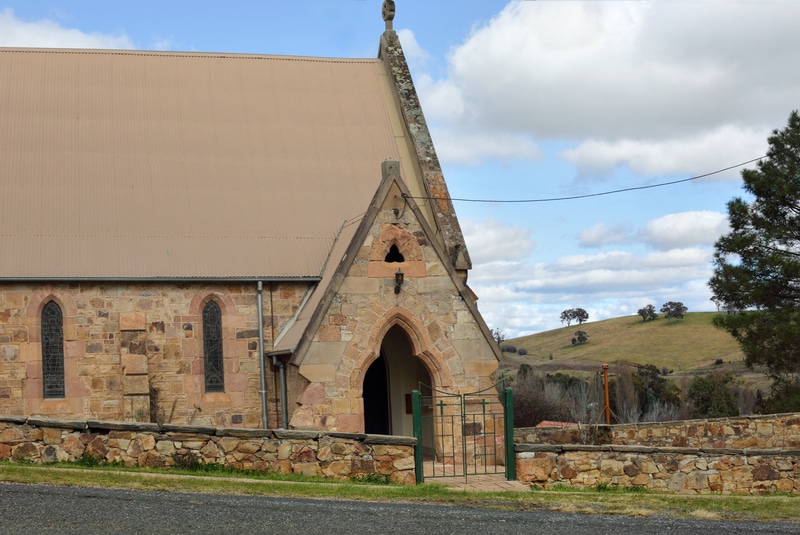
Sandstone building in Carcoar

⬅ See all events from 30 September

Spread the word on your favourite platform!
On This Day in True Crime History

Subscribe to Dark Stories

True crime stories, dark history and tour news, straight to your inbox.