1985: Jeremy Bamber Kills Five Family Members at White House Farm

At 3:26am on 7 August 1985, Jeremy Bamber called Essex Police claiming his adoptive sister Sheila had gone berserk with a rifle at the family farm in Tolleshunt D’Arcy. Officers arrived to find a scene staged to look like a murder-suicide: Bamber’s adoptive father Neville shot multiple times in the kitchen, mother June dead in her bedroom, and Sheila’s six-year-old twins shot in their beds. Sheila herself lay dead, clutching a rifle and a bible, shot through the throat.

The scene appeared so convincing that police initially accepted the murder-suicide theory and even helped Bamber burn bloodstained carpets and bedding. It was Bamber’s former girlfriend who broke the case, telling police he had confessed the killings to her. Forensic evidence, including a silencer found at the farm bearing traces of Sheila’s blood inside the barrel, proved she could not have shot herself with it attached. Bamber was convicted in 1986 and sentenced to five concurrent life terms, later made whole life, meaning he will never be released.


Jeremy Bamber Kills Five Family Members at White House Farm

⬅ See all events from 7 August

Spread the word on your favourite platform!

1890: William Kemmler: The First Man Executed by Electric Chair

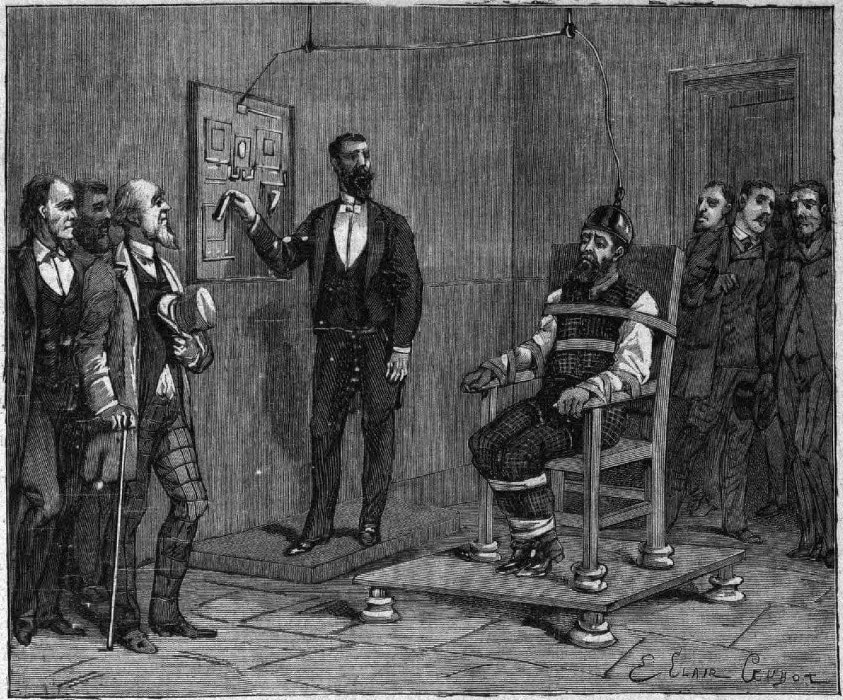
William Kemmler, a vegetable peddler from the slums of Buffalo, New York, became the first person in history executed by electric chair. On March 29, 1889, in the grip of a drunken rage, he accused his common-law wife Matilda ‘Tillie’ Ziegler of theft and betrayal, retrieved a hatchet from the barn, and beat her to death. He then walked to a neighbour’s house and announced what he had done.

Convicted of first-degree murder in May 1889 and sentenced to death, Kemmler was chosen as the inaugural test of New York’s new electrocution law, which had replaced hanging on January 1, 1888. His execution at Auburn Prison on August 6, 1890 did not go smoothly. Developers including George Westinghouse had fought to block use of their technology for executions, and legal appeals argued the chair violated the Eighth Amendment’s ban on cruel and unusual punishment. The appeals failed, and Kemmler died in the chair, though witnesses reported the process was prolonged and deeply disturbing.

Illustration of a man executed by electrocution in electric chair

⬅ See all events from 6 August

Spread the word on your favourite platform!

1991: Sir Terence Lewis, Queensland Police Commissioner, Convicted of Corruption

Sir Terence Lewis, Commissioner of the Queensland Police Service from 1976 to 1987, was found guilty on 5 August 1991 of 15 counts of corruption and one of forgery, following the explosive Fitzgerald Inquiry into police misconduct. A District Court jury determined that Lewis had accepted bribes totalling $700,000 to protect brothels, SP bookmakers, illegal casinos, and gaming machine operators. He had been handpicked for the commissioner’s role in 1976 by Premier Joh Bjelke-Petersen, bypassing 122 more senior officers.

Judge Healy sentenced Lewis to the maximum term available: 14 years for corruption and 10 years for forgery, to be served concurrently. Lewis was stripped of his knighthood and two other awards. He continued to protest his innocence and pursued appeals until the last one failed in August 2005.

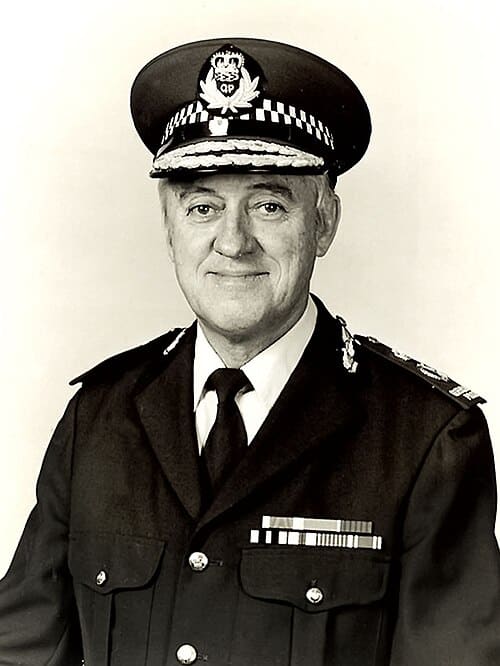
Terence Murray Lewis, Queensland Police Commissioner. © State of Queensland (Queensland Police Service); original photographer unknown. Retouched by Georgfotoart. Wikimedia Commons, CC BY 4.0.

⬅ See all events from 5 August

Spread the word on your favourite platform!

1944: The Cowra Breakout: Bloodiest Mass Prison Escape of World War II

In the early hours of 5 August 1944, more than 1,000 Japanese prisoners of war held at the 12th Australian Prisoner of War and Internees Camp near Cowra, New South Wales, launched a mass breakout. Climbing over dead bodies and barbed wire, the escapees stormed the perimeter in what many had accepted as a suicide mission, a final bid to reclaim lost honour in the face of capture. It remains the largest mass escape of World War II and one of the bloodiest in history.

By the time the chaos subsided, 234 Japanese prisoners were dead and 108 wounded. Three Australian guards were killed, and a fourth officer was stabbed to death during the subsequent manhunt. Over 300 men were recaptured across the following nine days. The Cowra camp, opened in 1941, had grown to hold some 4,000 POWs and internees by 1944, including Italians, Formosans, Koreans, and Japanese non-commissioned officers, all held under Australia’s National Security Act 1939.

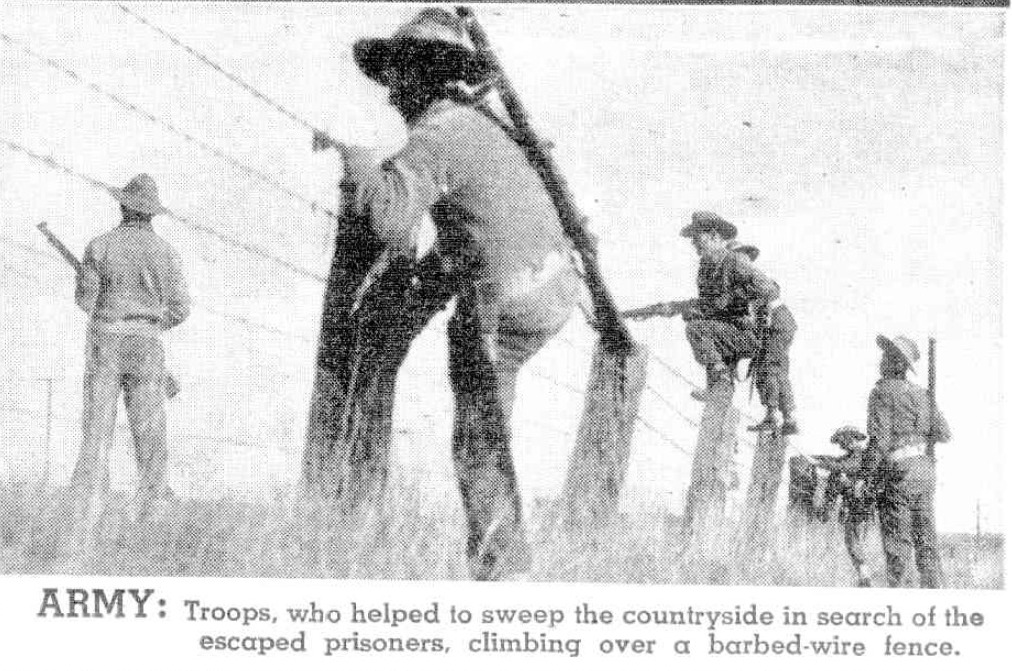
Police and troops search for Cowra POW camp escapees August 1944

⬅ See all events from 5 August

Spread the word on your favourite platform!
On This Day in True Crime History

Subscribe to Dark Stories

True crime stories, dark history and tour news, straight to your inbox.