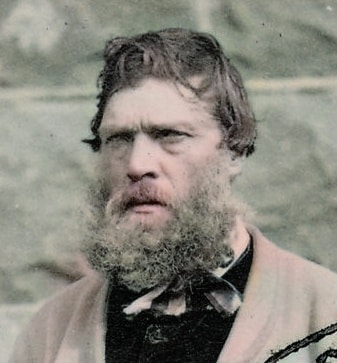
Joseph Samuel was condemned to hang in 1803 for a robbery tied to the murder of Constable Luker in Sydney. On the scaffold, the rope snapped clean in the middle the instant the cart was drawn away, dropping him unconscious to the ground.

Officials dragged his limp body back onto the cart and fitted a second rope, only for it to unravel entirely, lowering him so slowly that his legs trailed on the ground while he half hung there. The assembled crowd was horrified by the spectacle as a third rope was rigged and this one snapped again, close against his neck, as the body was lowered.

With the crowd unnerved and three ropes failed in a row, Governor King, took the repeated failures as a sign of divine intervention and granted Samuel a reprieve. His sentence was commuted to life imprisonment, and he was nursed back to health and eventually to sanity.

After his reprieve, Samuel remained a convict. In April 1806, he made an escape attempt from Newcastle with seven other convicts in a small boat. All were presumed drowned in a storm, less than three years after he had survived three attempts to hang him.
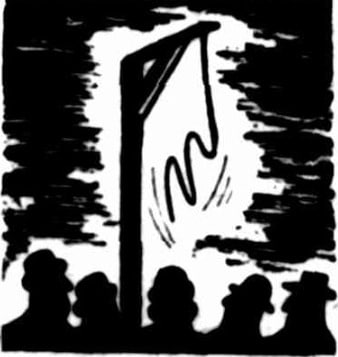

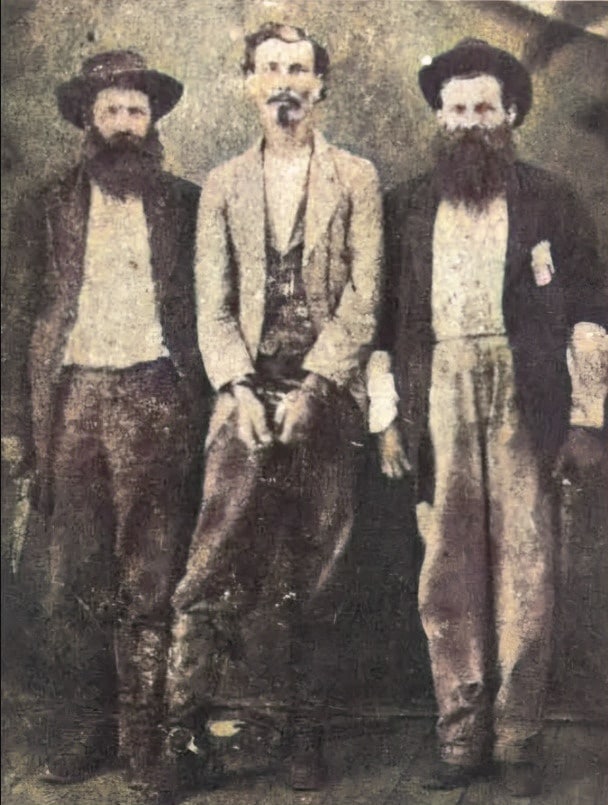
Joseph Samuels hanging attempt rope snaps three times in 1803 Sydney

⬅ See all events from 26 September

Spread the word on your favourite platform!

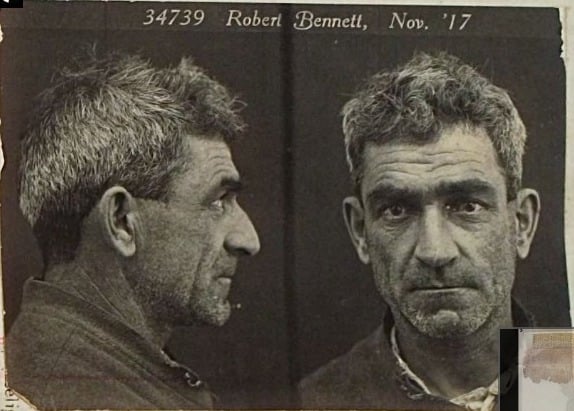
David Bennett spoke from the gallows for nine minutes, the longest statement ever made by a condemned man in Victoria. The 59-year-old painter and carpenter had walked to the scaffold calmly, and he spoke in a clear, steady voice.    He was hanged in Melbourne for a capital assault committed in July 1932, the first execution in Victoria since 1924 and the first since 1891 for any crime other than murder. It was not his first such conviction. In Western Australia in 1911 he had been sentenced to life imprisonment and a flogging by a judge who told him: “You are not fit to live in this world.”    He served just three years in Fremantle Gaol before the Attorney-General released him on legal doubts about the conviction, causing an outcry unprecedented in the state. Bennett moved east, and in 1930 he came forward to Melbourne detectives with information about a notorious unsolved murder. A man was arrested on his word, and was later found to be innocent.    Bennett admitted nothing. He claimed his defence had never been properly put to the jury, and ended: “I repeat that I am not guilty, and again ask forgiveness from those whom I have wronged as I forgive those who have wronged me. Good-bye.”

An Unspeakable Degenerate - CeVPRS 1100/P0002, David Bennett
An Unspeakable Degenerate – CeVPRS 1100/P0002, David Bennett

⬅ See all events from 26 September

Spread the word on your favourite platform!

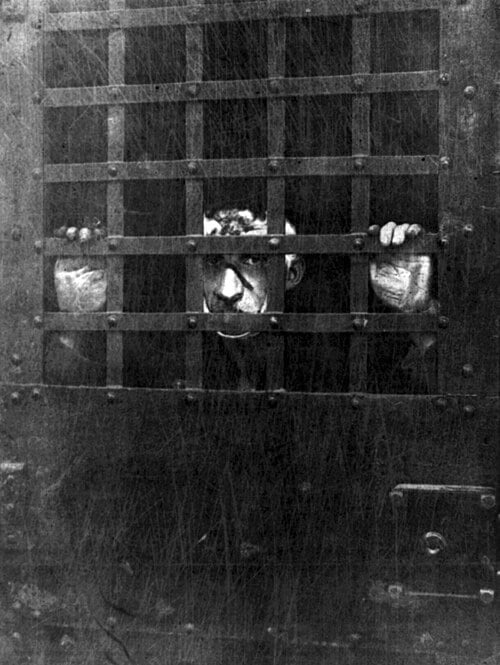
Leon Czolgosz shot President William McKinley on 6 September 1901 at the Pan-American Exposition in Buffalo, New York, firing two shots from a revolver he had concealed inside a handkerchief. McKinley lingered for eight days before dying of his wounds on 14 September.

Czolgosz’s trial opened on 23 September. The jury took less than an hour to find him guilty, and on 26 September he was sentenced to death. He was executed in the electric chair at Auburn Prison on 29 October 1901, and prison officials later poured acid into his coffin to prevent the grave becoming a shrine.

Czolgosz showed no remorse for the killing. From the scaffold he declared, “I killed the President because he was the enemy of the good people, the good working people. I am not sorry for my crime.”

Leon F Czolgosz in Jail

⬅ See all events from 26 September

Spread the word on your favourite platform!

Leon Czolgosz shot President William McKinley on 6 September 1901 at the Pan-American Exposition in Buffalo, New York, firing two shots from a revolver he had concealed inside a handkerchief. McKinley lingered for eight days before dying of his wounds on 14 September.

Czolgosz’s trial opened on 23 September. The jury took less than an hour to find him guilty, and on 26 September he was sentenced to death. He was executed in the electric chair at Auburn Prison on 29 October 1901, and prison officials later poured acid into his coffin to prevent the grave becoming a shrine.

Czolgosz showed no remorse for the killing. From the scaffold he declared, “I killed the President because he was the enemy of the good people, the good working people. I am not sorry for my crime.”

Leon F Czolgosz in Jail

⬅ See all events from 26 September

Spread the word on your favourite platform!
On This Day in True Crime History

Subscribe to Dark Stories

True crime stories, dark history and tour news, straight to your inbox.