1870: Andrew Vair Hanged at Ararat for the Ambush Murder of Amos Cheale

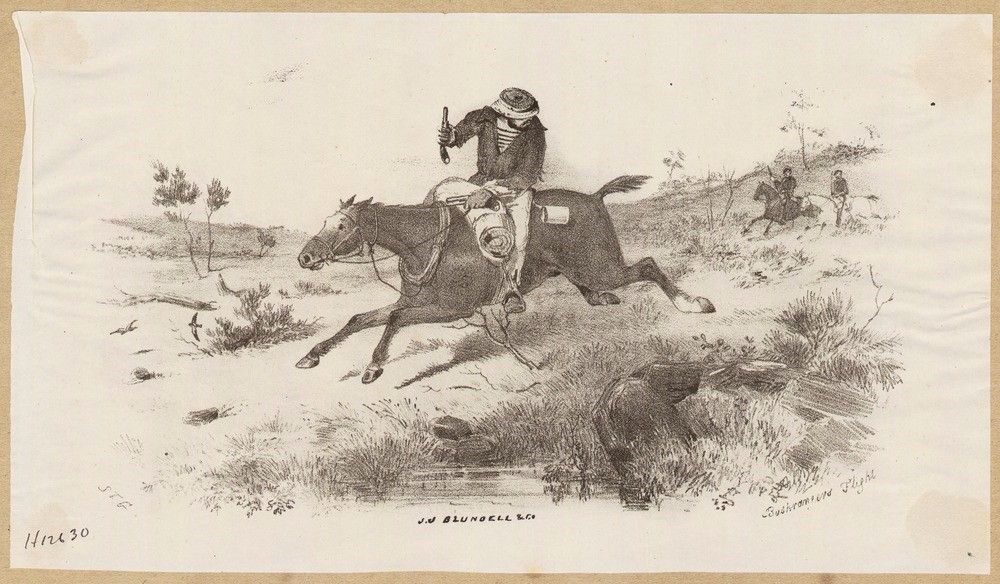
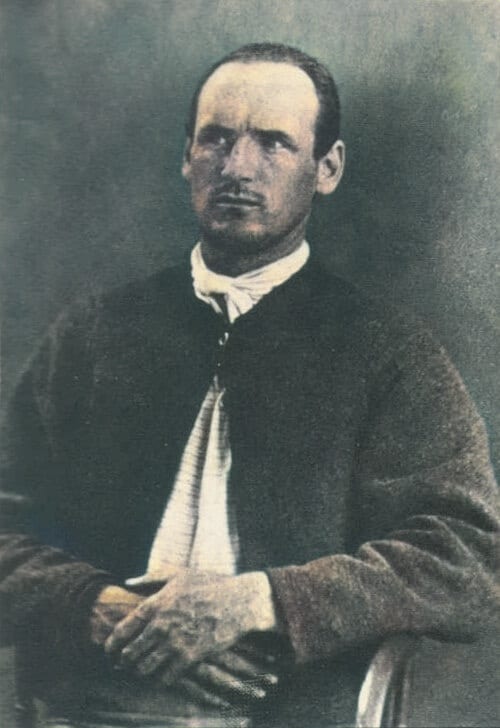
Amos Cheale, a mining manager formerly of Maldon and later overseeing the Silver Mines Company at St Arnaud, was ambushed and shot in the scrub near the mine in broad daylight. His killer, Andrew Vair (also reported as Vere), a Scottish miner aged around 34, had harboured a grudge rooted in a dispute over mining shares at the Friburg reef, which Vair himself had discovered. He stepped out of the scrub, levelled a double-barrelled pistol at Cheale, and fired both barrels at close range. Cheale died shortly after.

Vair fled into the scrub and was hunted across the colony before his arrest. He was tried, convicted, and hanged at Ararat. Before his execution, he wrote a final letter to his mother and a poem:-

Not in my innocence I trust, I bow before Thee in the dust, And through my Saviour’s blood alone, I look for mercy at Thy throne. What is life? ’tis all a vapor, Soon it vanishes away; Life is like a dying taper – Oh, my soul, why wish to stay? Why not spread thy wings and fly Straight to yonder world of joy? I come, I come, at Thy command, I give my spirit to Thy hand. Stretch forth Thine everlasting arms, And shield me in the last alarms. The hour of my departure’s come – I hear the voice that calls me home. Now, O my God, let trouble cease. Now let Thy servant die in peace.

Old prayer book with ink pen and letter on desk

⬅ See all events from 15 August

1893: Baby Farmer John Makin Hanged at Darlinghurst Gaol

John Makin and his wife Sarah were convicted of murdering infants left in their care in one of the most notorious baby farming cases in the history of Sydney. The couple had accepted children for informal adoption and killed them for profit, burying the small bodies around their properties.

Makin was hanged at Darlinghurst Gaol on 15 August 1893, precisely at 9 o’clock. When asked if he had anything to say on the scaffold, Makin simply muttered ‘No.’ Hangman Howard adjusted the noose with care, the lever was pulled, and death was instantaneous.

The night before his execution, Makin wrote a statement he claimed related to the child Amber Murray, for whose death he had been convicted. The statement maintained he had been convicted for the wrong child entirely.

John Makin hanged 15 Aug 1893

⬅ See all events from 15 August

1963: Henry Burnett Hanged at Craiginches Prison, the Last Execution in Scotland

On August 15, 1963, Henry John Burnett was hanged at Craiginches Prison in Aberdeen by executioner Harry Allen, becoming the last person executed in Scotland and the first in Aberdeen since 1891. His crime: the murder of merchant seaman Thomas Guyan, shot in the face at close range after Burnett broke into the Guyan family flat on May 31, 1963, furious that his lover Margaret May Guyan had chosen to return to her husband.

Burnett had become obsessively controlling of Margaret, locking her in his flat at Skene Terrace when he went out. On the day of the murder, after she announced she was returning to Thomas, Burnett stole a shotgun from his brother’s home in the Bridge of Don area of Aberdeen, boarded a bus to Jackson Terrace, and shot Guyan dead. He was tried at the High Court in Aberdeen between July 23 and 25, 1963, convicted, and executed three weeks later. A crowd of around 200 gathered outside the prison gates.

Scotland flag

⬅ See all events from 15 August

1971: The Stanford Prison Experiment: When a Simulation Turned Brutal

In August 1971, Stanford University psychology professor Philip Zimbardo launched a two-week simulation of prison life using 24 male college students, randomly assigned as either guards or prisoners. Recruited through a newspaper advertisement, participants were paid $15 a day. Within days, the guards, given uniforms designed to strip individual identity, began psychologically abusing the prisoners with escalating cruelty.

The experiment collapsed on the sixth day after psychologist Christina Maslach visited the site and confronted Zimbardo over the conditions she witnessed. He shut it down, later admitting he had become too absorbed in his own role as superintendent. The study became a landmark case in research ethics, prompting American universities to strengthen institutional review processes for human experimentation. Later critics, including researcher Thibault Le Texier, argued the guards had been coached to behave aggressively, and that Zimbardo’s conclusions were largely written before the experiment began.

Prisoner hands gripping steel lattice close up

⬅ See all events from 14 August

On This Day in True Crime History

Subscribe to Dark Stories

True crime stories, dark history and tour news, straight to your inbox.