Archives: Dark Stories: On This Day In True Crime History - Page 19
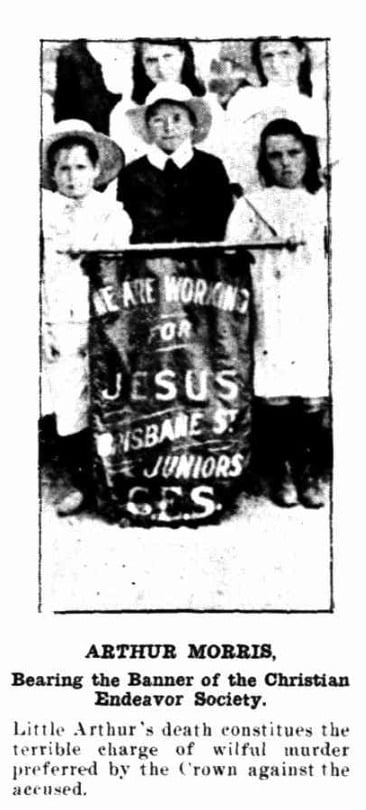
Arthur Morris was the last of three children to die after his stepmother, Martha Rendell, began swabbing their throats with hydrochloric acid at the family home in East Perth, Perth. His two sisters had died the previous year from the same treatment, disguised as a cure for diphtheria. Arthur, 15, suffered for months before he finally succumbed in 1908.
A doctor who had treated the boy, suspicious of the family’s string of throat deaths, requested an autopsy. The first examination found nothing to tie Rendell to the deaths, and she would remain free a while longer before the full truth of her method finally emerged.
Arthur Morris, a prize-winning essayist, was poisoned to death two years before his death.
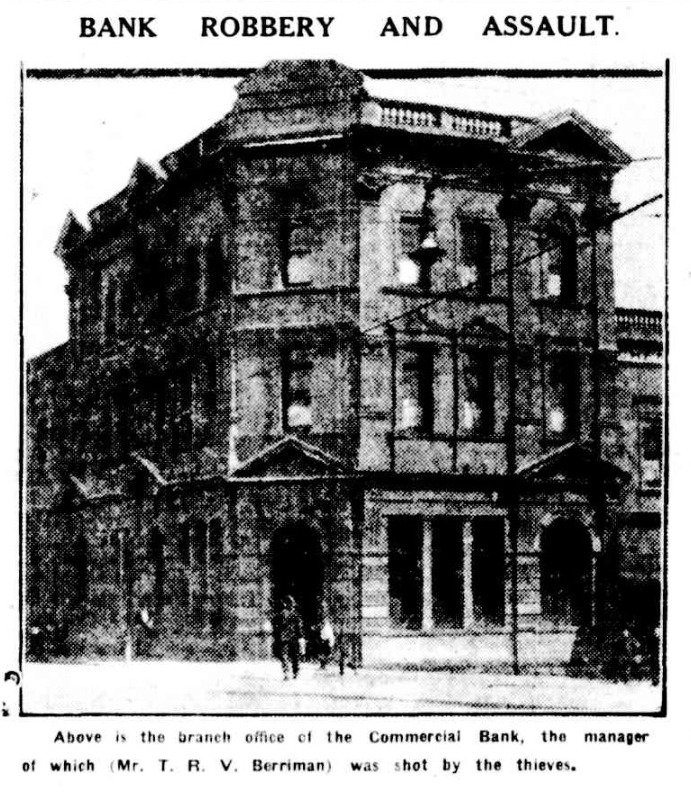
Thomas Berriman, manager of the Hawthorn branch of the Commercial Bank, was shot outside Glenferrie Station in Melbourne on this date while carrying £1,851 in bank funds to the head office. He died from the wound two weeks later.
Angus Murray was hanged for the killing, convicted as a principal even though it was his companion who actually pulled the trigger. Underworld figure Squizzy Taylor, swept up as the robbery’s alleged organiser, escaped a murder charge, convicted only of occupying a house frequented by thieves and serving six months.
The actual gunman, Richard Buckley, vanished for almost seven years before detectives traced him, bearded and living quietly, to a house in Moonee Ponds. His death sentence was commuted to life imprisonment, and in 1946, dying and in his eighties, he was released to spend his final days at home.
Commercial Bank branch where manager T R V Berriman was shot: 1923
One October night in 1965, Ian Brady and his lover Myra Hindley brought a seventeen-year-old back to their home near Manchester, where Brady killed him with an axe in front of Hindley’s brother-in-law, David Smith, whom they had wrongly taken for a kindIan Brady and Myra Hindley brought 17-year-old Edward Evans back to their home near Manchester after Brady had approached him at Manchester Central station. Brady attacked Evans with a hatchet in front of Hindley’s brother-in-law, David Smith, whom Brady apparently believed could be drawn into his criminal world, before strangling Evans with electrical flex.
Smith was horrified and notified police the next morning. Police Superintendent Bob Talbot arrived at the house wearing a bread deliveryman’s overall over his uniform. Inside, Brady was lying on a divan writing to his employer about his injured ankle. Talbot said he was investigating “an act of violence involving guns”, and Hindley denied that any violence had occurred.
When officers asked for the key to a locked spare bedroom, Hindley claimed it was at work. Police offered to take her there to retrieve it, at which point Brady told her to hand it over. Inside the room, they found Evans’s body, and Brady was arrested on suspicion of murder.
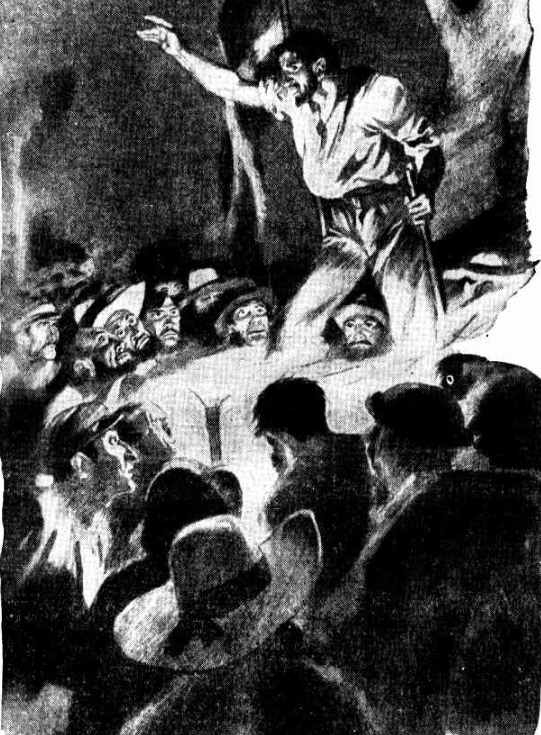
James Scobie, a Scottish gold miner, was killed outside Bentley’s Hotel at Ballarat on this date after he and a companion found the pub shut and tried to get in. A hand smashed through a window to strike him, the publican’s wife accused him of breaking it, and as he fled a group of men caught up with him; one blow, delivered with something Peter Martin, the only witness, described as resembling a battle-axe, killed him on the spot.
At the inquest that same afternoon, hotelkeeper James Bentley and his staff denied any involvement, and despite a strong case against them the magistrate let the matter drop. Miners furious at the whitewash burned Bentley’s Hotel to the ground, and only after public outcry was a fresh trial held at Melbourne‘s Supreme Court, where Bentley and two others were convicted of manslaughter. The anger over Scobie’s death and its botched cover-up became one of the sparks that lit the Eureka Rebellion weeks later.