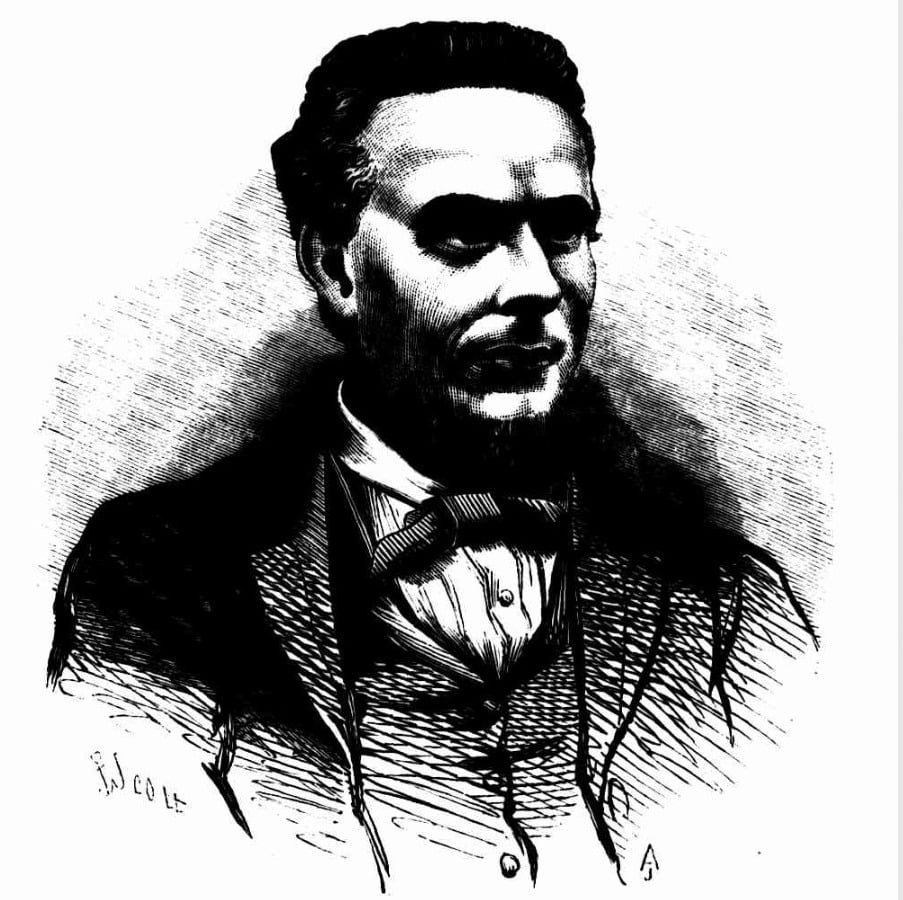
1904: “She Was Always Kind and Good to Me”: Employee Hanged at Melbourne Gaol for Murdering His Employer’s Wife

On the morning of 10 July 1904, Mrs Veitch, wife of baker A. C. T. Veitch, was found dead in the passage of the family’s bakery on O’Grady Street, Clifton Hill, a suburb of Melbourne. She still clutched a buggy whip in her hand, and a deep gash on one hand suggested she had fought desperately for her life. Whoever attacked her had locked the back doors, the front gate and the shop door beforehand, and had even tried to silence the family’s terrier tied up in the yard, evidence of careful planning rather than a chance intrusion.

The body was discovered by James Coleman Augustus Williams, an employee of the bakery who had been out on his delivery round. He raised the alarm after a boy came to buy bread and got no answer. Williams was soon charged with the murder, and at trial evidence pointed to a robbery gone wrong at the nearby office, though nothing suggested any personal grievance against the victim.

Williams was hanged at Melbourne Gaol on 8 September 1904.

The night before his execution, Williams wrote out a formal confession, insisting the killing was not for gain or lust but committed “in a fit of passion”, and that Mrs Veitch “was always kind and good to me”. He asked that the public not judge his family for what he had done and thanked the gaol’s governor and chaplains for their kindness to him in his final days.


Vintage bakery storefront on a sunny day

⬅ See all events from 8 September

Spread the word on your favourite platform!
True Crime Scene Tape

2025: Mushroom Murderer Erin Patterson Sentenced to Life, Could Walk Free at 82

Supreme Court Justice Christopher Beale handed Erin Patterson three life sentences for murder and 25 years for attempted murder, setting a non-parole period of 33 years. That means Patterson, who poisoned relatives with a beef Wellington laced with death cap mushrooms, cannot be considered for release until 2056, when she would be 82 years old.

The judge described the crime as an ‘enormous betrayal’ marked by substantial premeditation, and noted that Patterson had shown no remorse for the deaths she caused.

Poisonous death cap mushrooms

⬅ See all events from 8 September

Spread the word on your favourite platform!
True Crime Scene Tape

1863: An Escaped Convict Asked for Directions After a Fatal Attack, Then Was Hanged at Perth Gaol

John Thomas, a convict known as prisoner number 7279, escaped from a work party at Sutherland’s Bay in June 1863, taking a blanket, a carpenter’s axe and other items. He made his way to Peninsula Farm near Perth, where he entered the cottage of 70-year-old servant Duncan Urquhart and began helping himself to clothing.

When Urquhart returned and discovered the intruder, Thomas fled through a window armed with Urquhart’s own axe. He pursued the elderly man outside and struck him repeatedly, fracturing his skull. Despite his terrible injuries, Urquhart managed to make his way more than half a mile towards the farmhouse on his hands and knees, covered in blood.

Around noon, farmhouse owner Joseph Hardey stepped outside and saw a stranger walking up the cart road, coatless and carrying a bundle over his shoulder. The man calmly asked Hardey for directions to a property several miles further inland, apparently unconcerned that the man he had just attacked lay gravely injured nearby. Hardey later identified the stranger as Thomas.

Urquhart survived for more than two months, but died in the Colonial Hospital on 24 August 1863 from his injuries. Thomas was tried before Chief Justice Burt at the Supreme Court on 2 September and convicted of wilful murder. He was hanged in front of Perth Prison on 8 September 1863.

Carpenters axe
Carpenters axe

⬅ See all events from 8 September

Spread the word on your favourite platform!
True Crime Scene Tape

1974: Gerald Ford Pardons Richard Nixon for Any Crimes Committed in the Watergate Scandal

On September 8, 1974, President Gerald Ford granted former President Richard M. Nixon a full and unconditional pardon, covering any federal crimes he may have committed while in office during the Watergate scandal. The pardon came just a month after Nixon resigned the presidency on August 9, 1974, the first US president to do so, and it meant Nixon would never face criminal prosecution or trial over the affair.

Ford’s decision was hugely controversial, drawing accusations that a secret deal had been struck to spare Nixon accountability, and it is widely believed to have cost Ford the 1976 presidential election. No charges were ever brought against Nixon, and the pardon remains one of the most debated presidential acts in American history.

President Richard Nixon made of Wax. Wax figure Richard Nixon reading documents with american flag at desk | ID 59298060 © Lequint | Dreamstime.com
ID 59298060 © Lequint | Dreamstime.com

⬅ See all events from 8 September

Spread the word on your favourite platform!
True Crime Scene Tape
On This Day in True Crime History

Subscribe to Dark Stories

True crime stories, dark history and tour news, straight to your inbox.