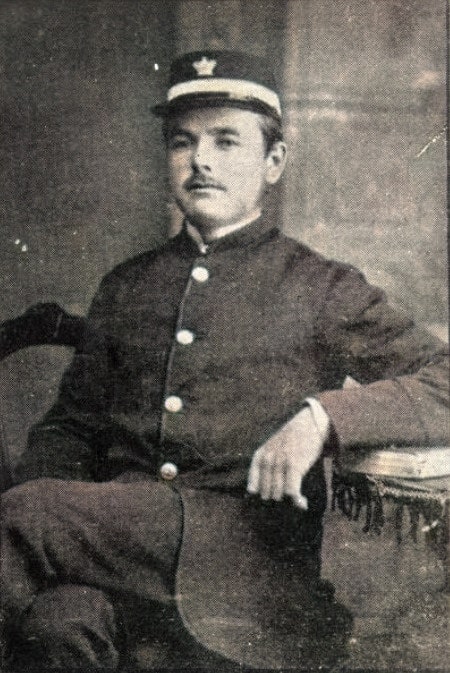
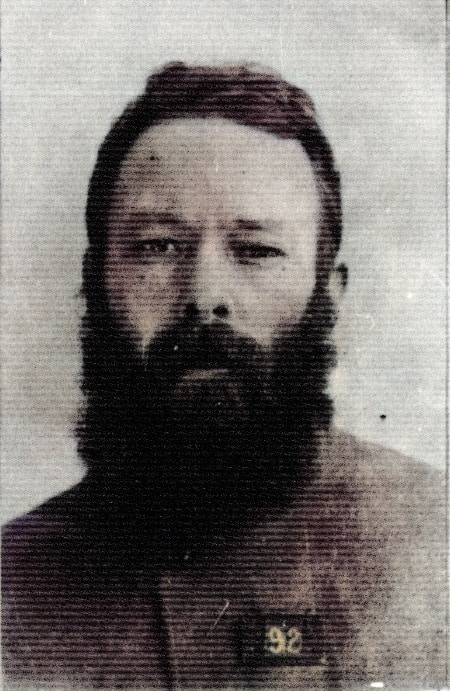
Betsy was known to frequent the Red Lion Tavern in Liverpool Street and was living with Cullen in a house behind the tavern. On the night of the murder, witnesses saw her drinking at the Red Lion before she later returned towards the area with Cullen.
Cullen had lost his wife only a few months earlier and was supporting his young daughter. His landlord described him as sober, hardworking and careful with money, saying Cullen would sometimes explain how much he had earned, pay half towards the rent, and keep the rest “to feed the child.”
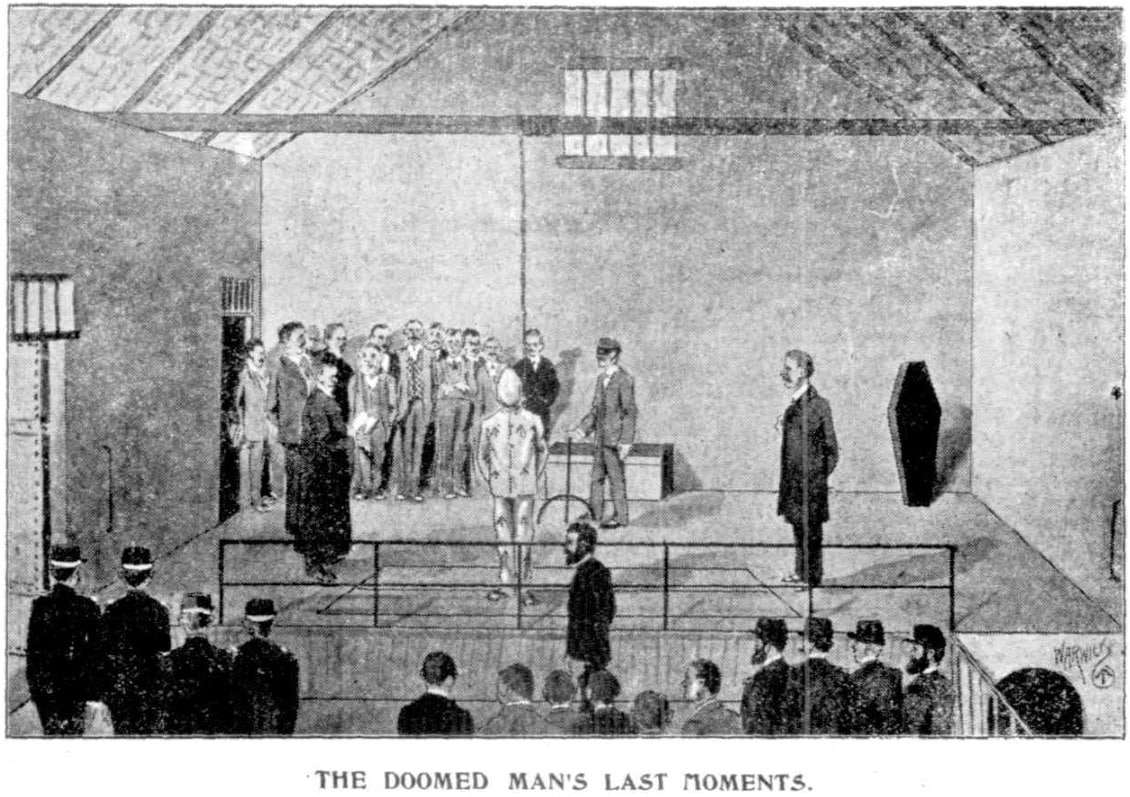
Later that night, Betsy was found dead inside their home with a bloodied tomahawk beside her. Cullen was arrested with blood on his hands and later admitted, “I have done it, and I am sorry for it.” He was convicted of murder andexecuted at the Campbell Street Gaol.
Donald Harvey, an Ohio hospital orderly who described himself as an ‘angel of death’, was sentenced to triple life terms after pleading guilty to poisoning 24 patients. Harvey claimed to have begun killing in 1970 to ease the suffering of the terminally ill, smothering his first victim, 88-year-old Logan Evans, with a pillow at Marymount Hospital in London, Kentucky. His methods expanded to include arsenic, cyanide, morphine, insulin, and suffocation, deployed across multiple hospitals over 17 years.
Harvey ultimately claimed 87 murders, with 37 confirmed victims. To avoid execution, he pleaded guilty and received 28 life sentences in total. He died in custody at Toledo Correctional Institution on March 30, 2017, one of the most prolific hospital killers in American history.
Dennis Rader, a church council president and compliance officer from Wichita, Kansas, was sentenced to ten consecutive life terms totalling 175 years in prison for a killing spree that began in 1974 and claimed ten lives over three decades. Methodical and media-savvy, he bound, tortured, and killed his victims, earning the acronym BTK. He stalked neighbours, executed families, and kept trophies, all while living an unremarkable suburban life.
Rader had evaded capture for thirty years before his own need for notoriety led to his undoing. In 2004 he resumed contact with police and local media after a long silence. A floppy disk he sent to a television station was traced back to his church computer, and he was arrested in February 2005. He pleaded guilty to all ten murders in June 2005 and was sentenced in August of that year, using his final court appearance to describe each killing in cold, methodical detail.
Forensics expert examining floppy disk with magnifying glass
A respectable wigmaker on the Old Bailey begins to spend faster than he earns, drawn into pleasures he cannot afford and will not abandon. Lives of the Most Remarkable Criminals captures his slide with quiet precision: James Wright does not turn to crime out of malice but out of want, a man whose appetites gnaw through his livelihood until nothing remains but the road.
What makes Wright linger in the annals of true crime is not his daring but his conscience. He is described as a highwayman who could hardly rob a traveller without weeping, a man forever promising himself he would stop, forever failing to keep that promise.
The tension between remorse and repetition shapes everything that follows, a loop of guilt and need tightening around a man who cannot break free. Lives of the Most Remarkable Criminals tells his story in full; listen now and step into the dimly lit world of a criminal who could never quite harden his own heart.
Click the RSS feed link below to subscribe and get new episodes the moment they drop.
Subscribe via RSS
Dark Lexicon: Old words. Dark meaning.
The past speaks its own dialect; here is what to listen for in this episode.
Malefactor: today this word sounds almost theatrical, something pulled from a superhero film. In the eighteenth century it was deadly serious: a malefactor was simply a person who committed a crime, a wrongdoer in the eyes of the law. It carried no dramatic flair; it was the plain, official label pinned to anyone awaiting judgement.
Peruke-maker: a maker of perukes, which is to say wigs. In Georgian England the wig trade was a legitimate and often lucrative craft, serving everyone from lawyers to gentlemen of fashion. To be apprenticed to a peruke-maker was a perfectly respectable start in life; the fact that Wright had one makes his fall all the sharper.
Equipage: today this word is virtually extinct, but in the 1700s it referred to the carriage, horses, servants and general outfit a wealthy person travelled with. Wright used equipage as his guide; the finer the coach and livery, the fatter the target.
Villainies: not the cartoonish scheming the word might conjure now, but a straightforward plural for criminal acts. In this era it carried real legal weight; a list of villainies was a list of offences that could send a person to the gallows.
Impeached: in modern usage we think of presidents and parliamentary proceedings, but in eighteenth century criminal slang, to be impeached meant to be informed upon by an associate. It was betrayal dressed in legal clothes: one thief turning evidence against another to save his own skin.
Assizes: the travelling courts that moved through the English counties, bringing the full power of royal justice to provincial towns. The assizes at Kingston, where Wright was tried and acquitted on one occasion, were periodic sessions where serious criminal cases were heard by visiting judges.
Ignominious: bearing public shame and disgrace. Wright uses the word when speaking of the death that awaits him, and in the context of a public hanging it is precise; the punishment was designed not merely to kill but to humiliate, serving as a spectacle of disgrace for all who watched.
About This Series
Lives of the Most Remarkable Criminals is one of the earliest works of true crime writing in the English language, nearly 300 years old, covering murderers, thieves, highwaymen, forgers, coiners and worse.
The book is entirely in the public domain and every word of it can be read today for free. But if you would rather listen, this podcast does exactly that: one criminal at a time, every week, read aloud.
True crime was not invented by podcasts or streaming services. Eighteenth century readers were just as fascinated by outlaws and killers as we are today. They just consumed their dark stories by candlelight.
The voice you hear is David Dark: crime researcher, theatre script writer, producer of live immersive experiences, and audiobook narrator and voice artist. This podcast uses an AI voice model trained on David’s own voice, built using the maximum available training data to faithfully represent how he actually sounds. To hear David’s real voice in human generated form, visit him on Audible, Online Stage, Voices of Today, Spoken Realms, and Internet Archive.
Spread the word on your favourite platform!
Subscribe to Dark Stories
True crime stories, dark history and tour news, straight to your inbox.