1893: Baby Farmer John Makin Hanged at Darlinghurst Gaol

John Makin and his wife Sarah were convicted of murdering infants left in their care in one of the most notorious baby farming cases in the history of Sydney. The couple had accepted children for informal adoption and killed them for profit, burying the small bodies around their properties.

Makin was hanged at Darlinghurst Gaol on 15 August 1893, precisely at 9 o’clock. When asked if he had anything to say on the scaffold, Makin simply muttered ‘No.’ Hangman Howard adjusted the noose with care, the lever was pulled, and death was instantaneous.

The night before his execution, Makin wrote a statement he claimed related to the child Amber Murray, for whose death he had been convicted. The statement maintained he had been convicted for the wrong child entirely.
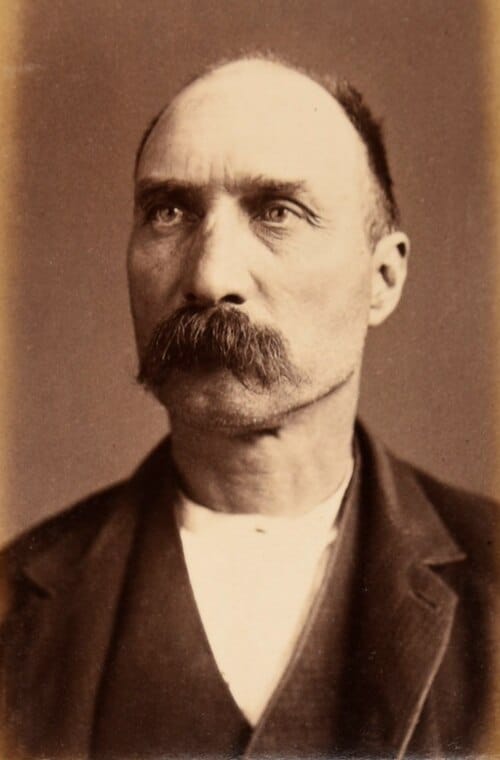

John Makin hanged 15 Aug 1893

⬅ See all events from 15 August

Spread the word on your favourite platform!

1917: Tilly Devine Marries an Australian Soldier in London, Sealing a Turbulent Union

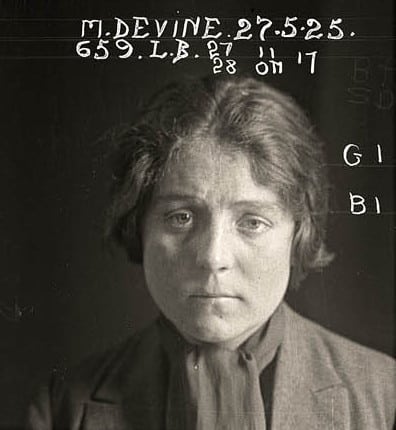
Matilda Twiss, born in Camberwell, London in 1900, married James Edward Devine, an Australian soldier serving in World War I, on 12 August 1917. Jim Devine, known as ‘Big Jim’, was a Victorian-born digger with a reputation for being sour and quick-tempered; Tilly was vivacious and already working as a prostitute. The pair were opposites in almost every way.

Tilly followed Jim to Sydney after the war, arriving in February 1920 and quickly building a criminal empire centred on Darlinghurst and Kings Cross. As the self-styled Queen of Woolloomooloo, she became one of the most notorious figures in the razor gang wars of the late 1920s and early 1930s. The marriage lasted 25 years before ending in divorce in 1943.

Portrait of Tilly Devine in 1925

⬅ See all events from 12 August

Spread the word on your favourite platform!

1789: The Birth of Policing in New South Wales

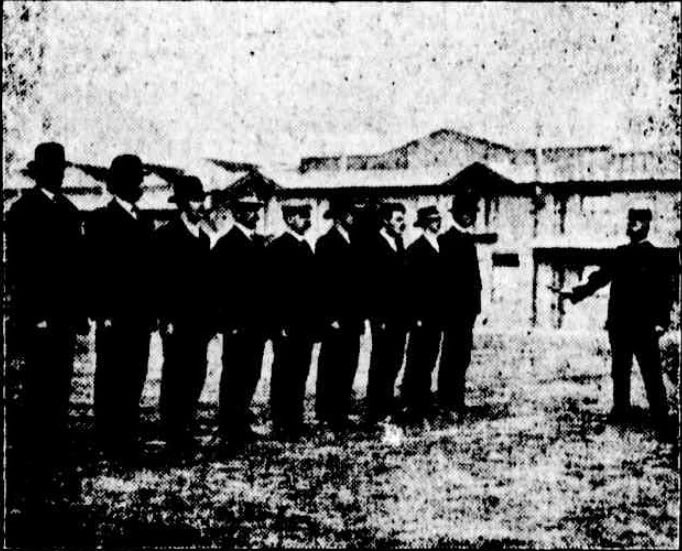
On 8 August 1789, Governor Arthur Phillip authorised the formation of a nightwatch at Sydney Cove, drawing eight of the best-behaved convicts from the colony’s population. The Royal Marines, originally tasked with policing duties, had proved unwilling to discipline their fellow convicts, forcing Phillip’s hand. A free settler named John Smith had earlier been appointed as the colony’s first constable, becoming the first recorded police officer in Australia.

The Night Watch was joined by a Row Boat Guard, also composed of selected convicts. The Night Watch was replaced by the Sydney Foot Police in 1790 and evolved into an organised force that endured until the amalgamation of all New South Wales colonial police forces in 1862.

NSW Police Force recruits training with horses revolvers drill and gear

⬅ See all events from 8 August

Spread the word on your favourite platform!

1796: First Fleet Convict John Finlow Hanged in Sydney for Murder

John Fendlow (c.1768-1796), a tinsmith convicted at the Old Bailey in 1783 for highway robbery, arrived in Sydney with the First Fleet in January 1788. After time on Norfolk Island, he received a 30-acre land grant at Mulgrave Place in November 1794 and worked as a settler in the Hawkesbury region with his partner Eleanor Byrnes.

On 4 July 1796, Fendlow shot dead his servant David Lane after Lane attempted to assault Byrnes. Byrnes testified that all three had been drinking on a boat that evening, and that Lane had come after her in the house. Fendlow was hanged in Sydney on 8 August 1796.

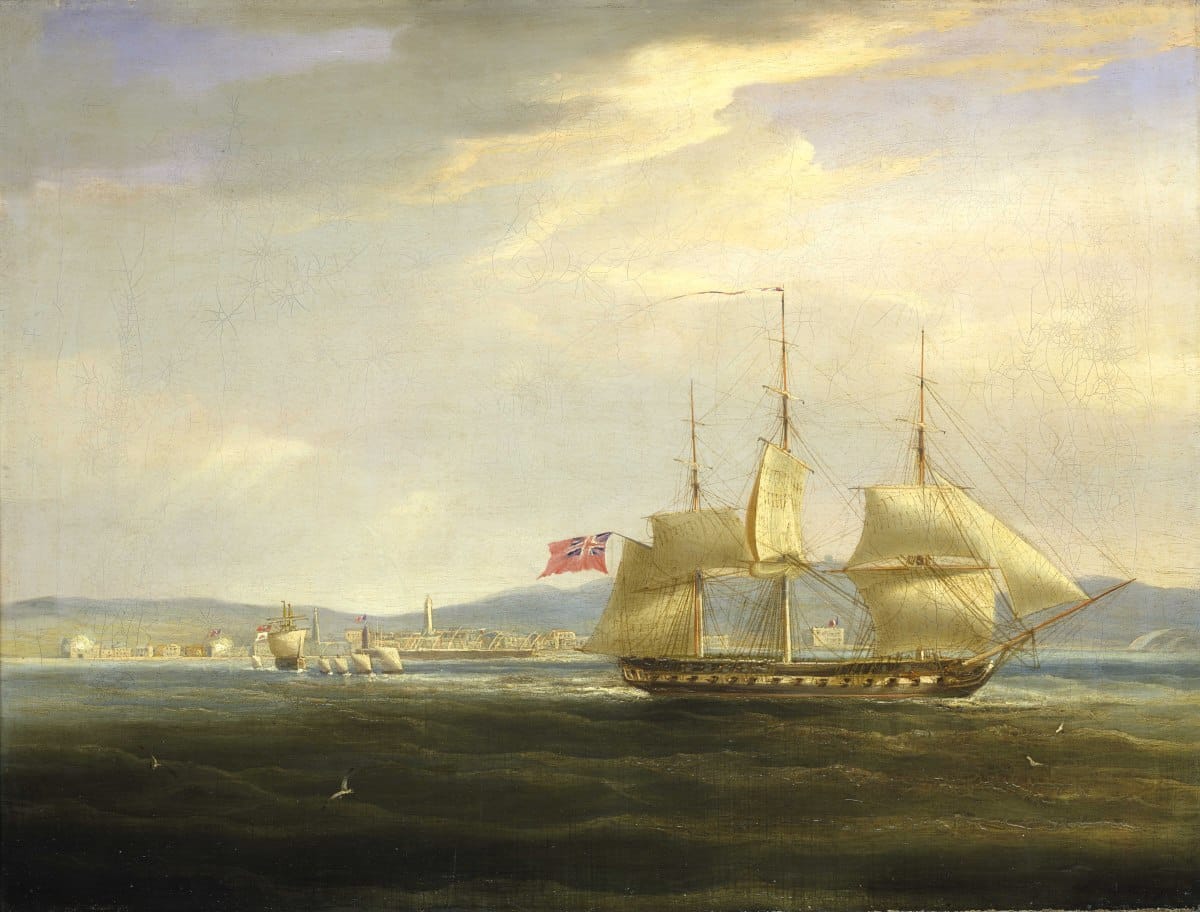
HMS Mercury after 1809. By William Huggins. National Maritime Museum, Greenwich, London

⬅ See all events from 8 August

Spread the word on your favourite platform!
On This Day in True Crime History

Subscribe to Dark Stories

True crime stories, dark history and tour news, straight to your inbox.