1790: Freed From Prison at Dawn, Burgling Again by Dusk: One of the Earliest Hangings Near Sydney.

William Harris had only just walked free from a Birmingham gaol, a three month sentence for robbing an outhouse behind him, when he broke into another house in the same street that same night. Caught in the act, he was convicted of burglary and condemned to death, later reprieved to transportation for life. He survived the notorious Second Fleet voyage aboard the Neptune, one of the deadliest convict crossings in Australia's history, in which scores of prisoners perished before the ship ever reached Sydney.

In the young colony, Harris fell in with fellow convict Edward Wildblood, and the pair spent weeks pilfering from other convicts' huts before fleeing into the bush. Recaptured and chained together on bread and water, they escaped again within weeks and broke into a hut, beating a sick settler and stealing beef, flour, a frock and a book. Tried for the break-in, the two men were hanged together on this day in 1790, among the first executions carried out in the young colony, with settlers gathered to watch them die from a tree.

In an extraordinary coincidence, Harris and Wildblood were both recorded as having been born on 1 January 1764. Their lives would ultimately end together, on the same day and at the same gallows, aged just 26.
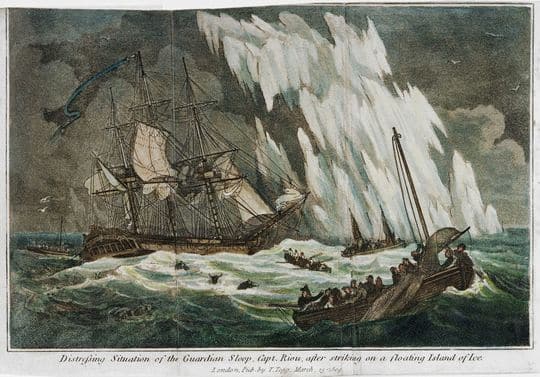

Second Fleet aka The Death Fleet in distress

⬅ See all events from 28 October

Spread the word on your favourite platform!

1826: The Informer Who Refused to Kill: Two Bushrangers Hanged Near Sydney

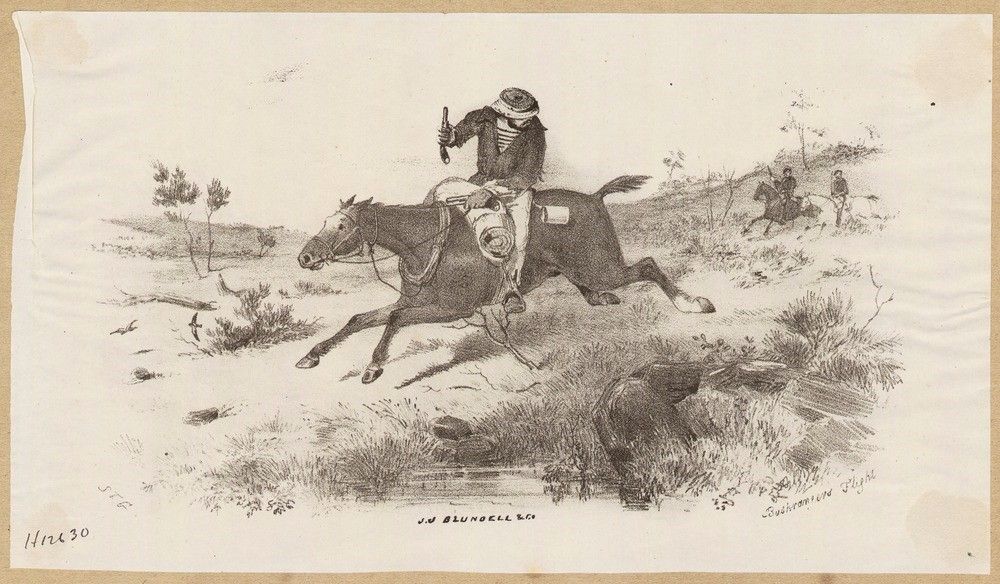
Patrick Sullivan and James Moran led a gang of bushrangers who terrorised the Bathurst district through 1826, raiding stations and homes for firearms, horses and supplies. When Sullivan ordered a gang member to murder a stockman in cold blood, the man balked, slipped away in the dark and turned himself in, giving evidence that broke the gang apart.

Tried before the Sydney Criminal Court, Sullivan and Moran pleaded guilty to burglary and horse theft and were sentenced to death. They were hanged at Irish Town on the Liverpool Road, near present-day Bankstown, on 18 October 1826, two days after their accomplices were. Their bodies were left suspended for the rest of the day as a warning to others.

Bushrangers flight scene from 1856 illustration

⬅ See all events from 18 October

Spread the word on your favourite platform!

1794: The First Free Settler Murdered in the Colony: Hanged at Sydney for a Parramatta Stabbing

John Hill, a butcher, had spent the day drinking with Simon Burn at Parramatta on 5 October 1794 when he turned on the woman he lived with, beating her until Burn stepped in to stop him. Hill stabbed Burn through the heart; dying within the hour, Burn had just enough strength left to name his killer before witnesses, declaring that the butcher had done it. Burn, a First Fleet convict who had earned his freedom and settled his own farm, was reportedly the first free man in the colony to be murdered by another colonist.

Hill tried to set up an alibi at his trial, but the wound and Burn's own dying words undid him. He was hanged at Sydney on 16 October 1794, his body handed over for dissection as his sentence required.

Bloody Halloween killer dressed as butcher on dark blue background
Butcher and butcherer

⬅ See all events from 16 October

Spread the word on your favourite platform!

1826: Sullivan Gang Bushrangers Hanged Near Parramatta, One Sobbing to the Last

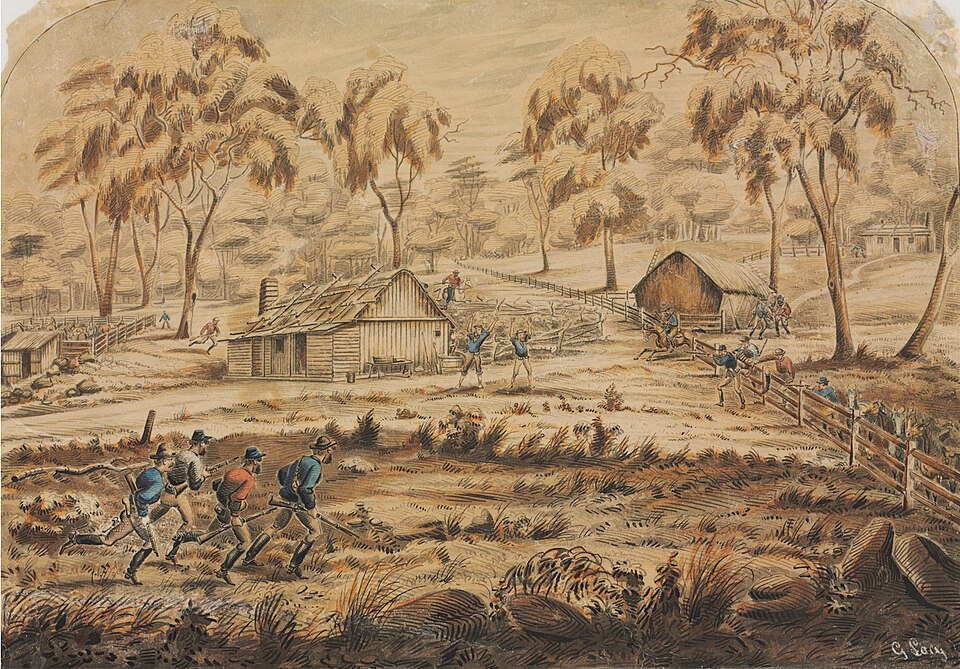
Matthew Craven and Thomas Cavanagh rode with a bushranging gang led by Patrick Sullivan that terrorised stations around Bathurst for half a year, robbing homesteads, stealing horses and holding settlers at gunpoint. Captured after a shootout at a bark hut, the pair pleaded guilty at trial to burglary and theft and were sentenced to hang.

On 16 October 1826 they left Sydney Gaol with three other condemned men bound for Burwood, where they were hanged before a large crowd that morning. Straight afterwards, the two men, Craven and Cavanagh travelled further on on to the Western Road near Parramatta, arriving about noon to face their own gallows.

Witnesses said their contrition was conspicuous; Craven, described as barely twenty, reportedly hung his head and sobbed bitterly as the ropes were fitted.

Bushrangers in action: Water colour drawing created by George Lacy 1867

⬅ See all events from 16 October

Spread the word on your favourite platform!
On This Day in True Crime History

Subscribe to Dark Stories

True crime stories, dark history and tour news, straight to your inbox.