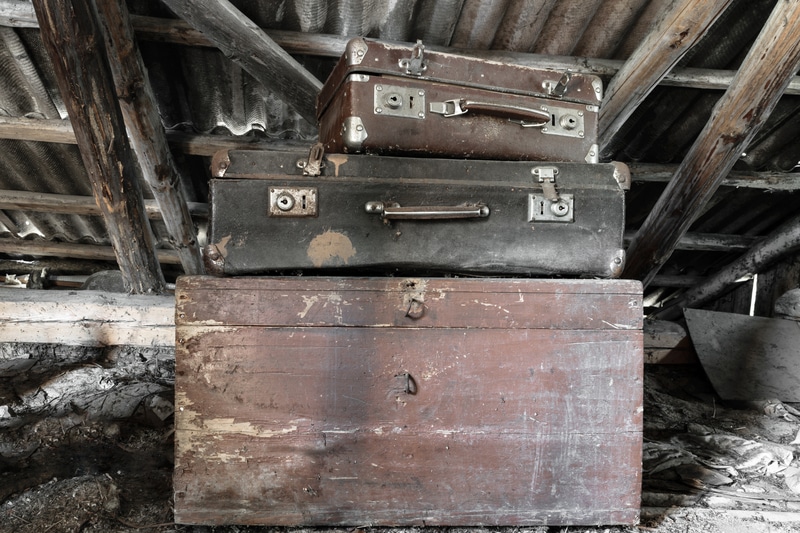
George Holland broke into the Parramatta home of Laughlane Galligheoghan in broad daylight, prising open a chest for just ten shillings. When the elderly, frail occupant tried to stop him, Holland turned the fractured door hinge in his hand into a weapon, stabbing him in the side. The court later heard he had plainly meant to kill, and was only stopped by the arrival of help.
Tried in Sydney, Holland was condemned to death, the Judge Advocate delivering a lengthy admonition on the heinous nature of the crime before the man was led back to gaol. The sentence was carried out the following morning at eight o'clock; the ten shillings and the hinge were the only measure of a life taken for a life.
Human skull with treasure chest and gold jewelry still life
John Dunn was convicted at the Parramatta Court of Criminal Jurisdiction of murdering Mary Rowe, largely on the testimony of a sixteen year old accomplice, John Welch, whose evidence also saw Welch's father, Thomas Welch, convicted as an accessory after the fact.
Dunn was due to hang at Parramatta two days beforehand, on Monday 16 September 1811, but as the execution was about to proceed the boy, John Welch, suddenly retracted everything he had sworn at trial. He declared Dunn innocent and claimed that he and his father were the true killers. The Acting Provost Marshal, unable to consult anyone and acting on what observers called motives of humanity, respited the hanging on the spot.
The reprieve lasted only two days. Dunn was finally executed at Parramatta on the Wednesday following, as near as possible to the site of the murder itself, amid what one witness described as far gloomier circumstances than the original sentence would have produced.
After he was cut down, Dunn's body was delivered to the medical officer at Parramatta General Hospital, where it was dissected and anatomised before burial. The scaffold retraction left lingering public doubt over Dunn's guilt, with contemporary accounts noting the boy's claim that Dunn was innocent and that he and his father were the real perpetrators.
Lady Justice Themis statue on gallows with scales and sword
John Dunn, Thomas Welch and Ann Wilson were charged before the Court of Criminal Jurisdiction at Parramatta with the murder of Mary Rowe. After a lengthy hearing, the court convicted Dunn of the murder largely on the evidence of an accomplice, John Welch, a boy of about sixteen.
Dunn was ordered hanged the following Monday, between eight and twelve. But as the execution was about to proceed, the teenage witness suddenly retracted his sworn testimony in front of the assembled spectators, declaring that Dunn was innocent and that he and his father, Thomas Welch, were the true killers. The Acting Provost Marshal, with no precedent to guide him, respited the hanging, which did not take place until the following Wednesday, under far gloomier circumstances than before.
Despite the boy's dramatic gallows reversal accusing himself and his father of the killing, the original verdict against Dunn stood and his execution went ahead two days later than planned.
Lady Justice Themis statue on gallows with scales and sword
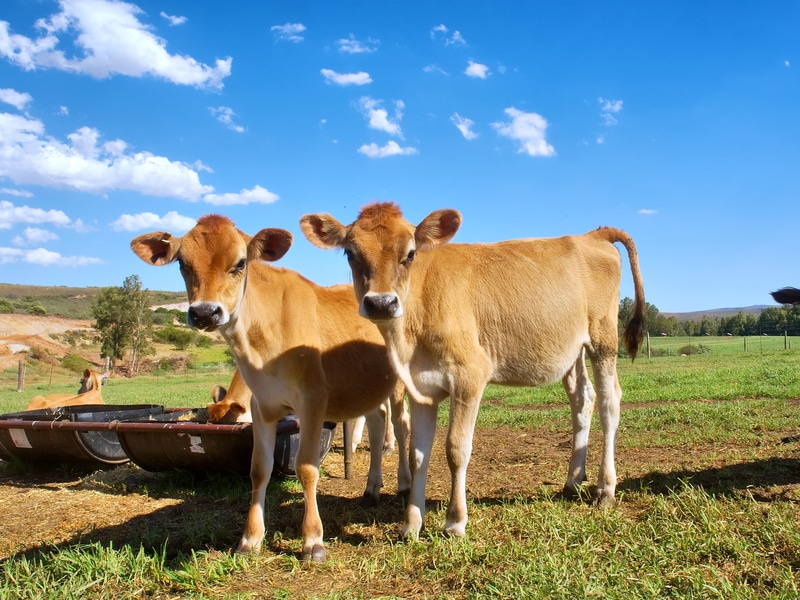
Stockmen, Richard Broughton and John Cheeseman, conspired to steal two head of cattle from their employer's flock at Hawkesbury in April 1808.
Cheeseman paid off Broughton for the two heads of cattle, which were then driven through Parramatta and on to a farm near the Brickfields in Sydney. A king's evidence witness revealed he had overheard the deal being struck and later spotted the cattle in a herd at the Nepean River.
Broughton and Cheeseman were tried, found guilty and hanged in Sydney. A third accused, Joseph Tilson, was found to have been an unwitting hired drover and escaped the same fate.