1993: A Firewood Hunt Led to Two More Bodies in Belanglo Forest

In October 1993, a local man out gathering firewood stumbled on human remains in a remote corner of Belanglo State Forest. The bones belonged to Deborah Everist and James Gibson, a Melbourne couple missing since 1989.

What unsettled investigators was that Gibson’s camera and backpack had already turned up years earlier, dumped by the roadside at Galston Gorge, more than 120 kilometres from where his body finally lay. Within weeks, a wider search of the forest uncovered four more young backpackers buried nearby, confirming Belanglo as the burial ground of a serial killer.


Belanglo State Forest

⬅ See all events from 5 October

Spread the word on your favourite platform!

1999: Timestamps Do Not Lie: the Software Trail That Caught Harold Shipman

Harold Shipman was a trusted family doctor in Hyde, England, who killed his patients with lethal injections of diamorphine and then falsified their medical records to make the deaths look natural. He often urged grieving families toward cremation, quietly destroying the evidence a post-mortem might have found.

What he did not understand was his own surgery computer. The practice software secretly time stamped every entry, and when investigators compared those hidden timestamps to the dates on his altered files, the lie was obvious: he had been rewriting patient histories after his victims were already dead. He went on trial in 1999 charged with just 15 murders, though he is believed to have killed close to 250 patients over more than two decades, making him Britain’s most prolific serial killer.

Shipman never confessed and maintained his innocence throughout the trial. He was convicted on all counts and later took his own life in prison.

A Serial Killers Computer Log tracked everything.

⬅ See all events from 5 October

Spread the word on your favourite platform!

1866: He Was Fed Breakfast, Then Declared Himself a Bushranger and Shot His Host

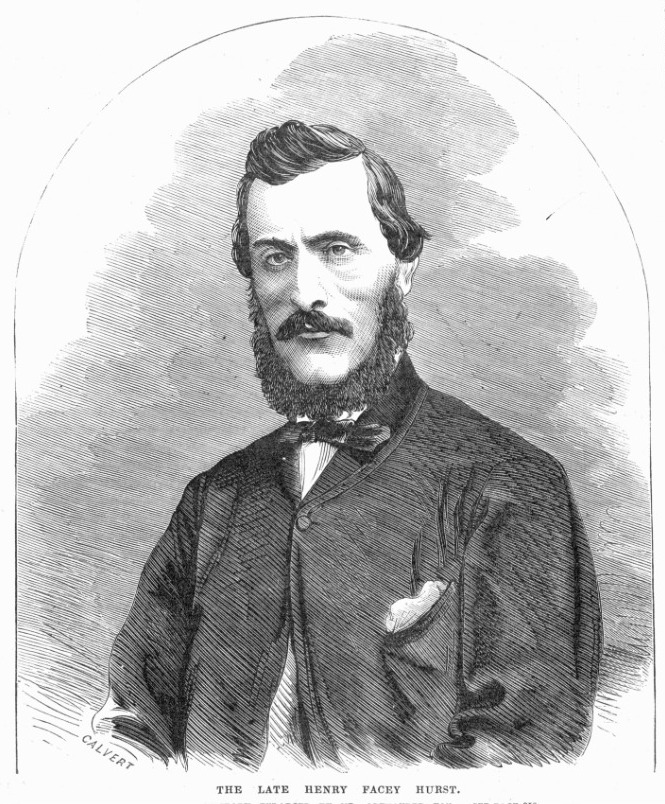
Henry Facey Hurst, the pioneer settler after whom Hurstbridge in Victoria was later named, was feeding a hungry stranger at his station near Diamond Creek on the morning of 4 October 1866 when his sister spotted a revolver hidden under the man’s coat. Hurst quietly loaded his own gun and confronted him. Offended at what he called an insult, the stranger leapt up and announced, “I am a bushranger”: Robert Burke. Burke tried to fire first, but the cap misfired; Hurst got his shot away, and Burke then fired three rounds of his own, one tearing into Hurst’s stomach and lodging in his own leg.

Though mortally wounded, Hurst clung to Burke until a friend, Joseph Abbott, wrestled the bushranger down and tied him with a halter. Hurst bled to death that evening. Burke was convicted of wilful murder, though the jury recommended mercy on the grounds that Hurst had fired the first shot. He was hanged at Melbourne Gaol.

The late Henry Facey Hurst, engraving by Samuel Calvert, 27 October 1866. State Library Victoria, IMP27/10/66/356.

⬅ See all events from 4 October

Spread the word on your favourite platform!

1875: “I Come From a Race That Will Not Take an Insult”: Hanged at Melbourne Gaol for a Double Murder

Henry Howard ran the Frankston Hotel, near Melbourne, in partnership with widowed licensee Elizabeth Wright. When she hired a barman named Thomas Harman to keep an eye on the books, Howard convinced himself the pair were lovers, though Harman had a wife of his own and, as the judge later noted, there was no evidence of any affair. On the night the hotel’s contents were sold off, Howard stabbed Wright to death with a freshly sharpened butcher’s knife, then killed Harman as he ran to her screams.

He was found sitting calmly beside Wright’s body with the bloody knife at his feet, and when told Harman had also died, witnesses said he smiled. Arrested on the spot, he told police only, “Prove it.” At his trial his single explanation was, “I come from a race that will not take an insult, even if it brings them to the gallows.” He was hanged at Melbourne Gaol on 4 October 1875, the hangman’s badly set noose leaving him convulsing for several minutes before he died.

On the scaffold he confessed to murdering Wright but insisted he had never meant to kill Harman.

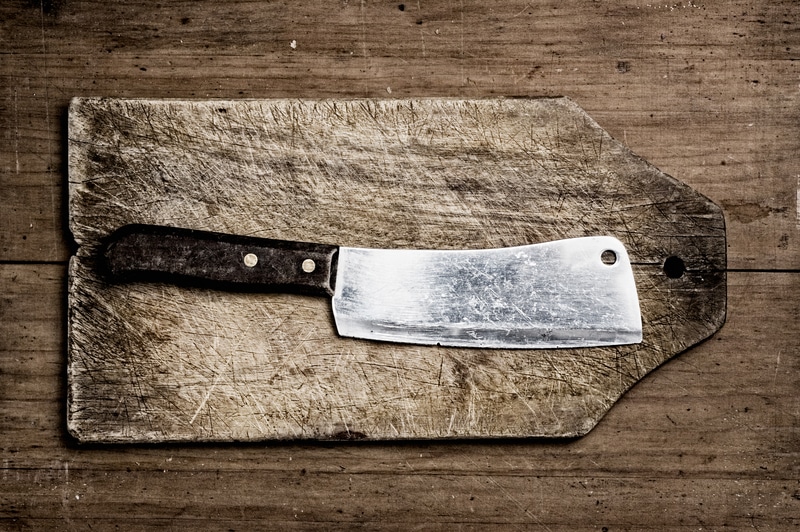
Butcher knife on cutting table close-up

⬅ See all events from 4 October

Spread the word on your favourite platform!
On This Day in True Crime History

Subscribe to Dark Stories

True crime stories, dark history and tour news, straight to your inbox.