1869: James Ritson Hanged at Melbourne Gaol for the Murder of a Prison Chaplain

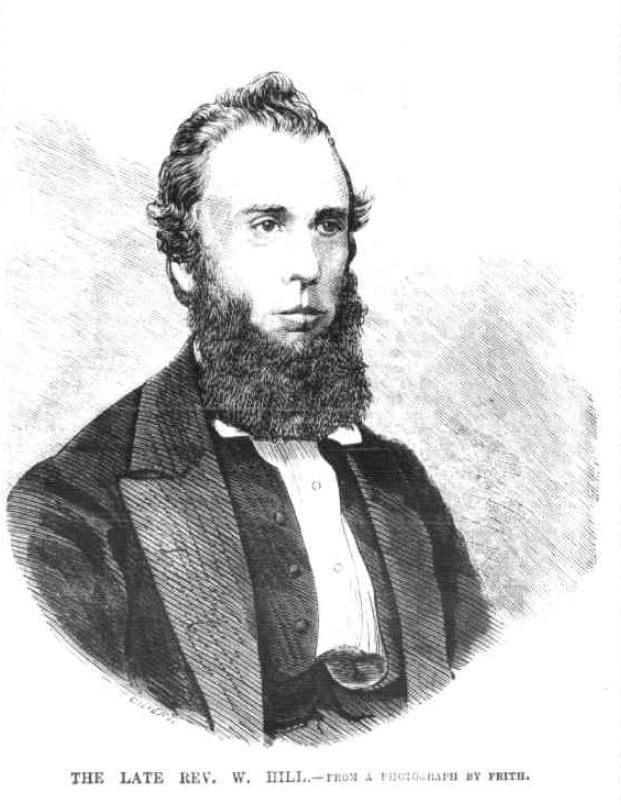
James Ritson, a prisoner at Pentridge Stockade already serving time for shooting a market inspector, killed the Reverend William Hill inside his solitary confinement cell in July 1869. Hill, the Wesleyan chaplain and superintendent of the second Wesleyan Circuit, had entered the cell alone to offer religious instruction. Ritson attacked him with a bed hinge he had wrenched free, battering in the chaplain’s skull. A warder heard Hill cry out “Mercy, man” but mistook it for prayer; by the time he forced the barricaded door open, Hill was dying on the floor in a pool of blood.

Hill had served the colony for fourteen years, was acting editor of the Wesleyan Chronicle, and left four young children orphaned, their mother having died only months earlier. He was buried at Melbourne Cemetery on 15 July 1869. Ritson, described at the time as a homicidal maniac, was hanged at Melbourne Gaol on 3 August 1869.

The Late Reverend Hill

⬅ See all events from 3 August

Spread the word on your favourite platform!

1848: Augustus Dancey Hanged at Melbourne Gaol for the Murder of a Boy at Stony Creek

Augustus Dancey was hanged at Melbourne Gaol on 1 August 1848 for the murder of Matthew Lucke, a young boy, at Stony Creek. The case drew considerable public attention, and Dancey spent his final hours receiving the sacrament, joining the prison chaplain in hymns, and eating a hearty breakfast of beefsteak before calmly submitting to the pinioning of the executioner.

Despite repeated entreaties from the Reverend Mr. Thompson to confess his guilt, Dancey maintained his innocence to the last. Waking at midnight in his cell the night before his execution, he declared he was ‘as innocent as the child unborn’ of the crime for which he was to hang.

Augustus Dancey Hanged at Melbourne Gaol for the Murder of a Boy at Stony Creek

⬅ See all events from 1 August

Spread the word on your favourite platform!

1996: The Ivan Milat Verdict: Seven Murders, Life Without Parole

Ivan Robert Marko Milat, known as the Backpacker Murderer, was found guilty on 27 July 1996 of seven counts of murder, the worst serial killing case in Australian history. His victims, mostly young backpackers travelling the Hume Highway between Sydney and Melbourne between 1989 and 1992, were lured under the pretence of a lift before being taken into the Belanglo State Forest in New South Wales and murdered.

Milat was sentenced to life imprisonment without possibility of parole and spent 25 years appealing his sentence. Police remained confident he was responsible for more killings than those proven at trial. He died in custody on 27 October 2019.

The <a href='https://darkstories.com.au/belanglo-state-forest-ivan-milat/' target='_blank' rel='noopener noreferrer'>Ivan Milat</a> Verdict: Seven Murders, Life Without Parole
Belanglo State Forest

⬅ See all events from 27 July

Spread the word on your favourite platform!

Whispers from Gun Alley: False Prophecy

Madame Ghurka was a prominent and mysterious figure in early to mid-20th-century Melbourne. A medium by trade, she gained notoriety not only for her fortune-telling and palm reading but also for her controversial involvement in one of Melbourne’s most infamous miscarriages of justice—the wrongful conviction of Colin Ross.

Aside from the police, Madame Ghurka was arguably the most influential figure in bringing about Ross’s conviction for the 1921 murder of 12-year-old Alma Tirtschke in what became known as the Gun Alley Tragedy.

Possibly driven by a personal feud with Ross, Madame Ghurka was the first to name him as a suspect in the murder. She later went further, reportedly orchestrating the coming forward of key witnesses whose testimonies proved critical in securing his conviction.

Among them was a former employee of Ross – recently dismissed – who claimed Ross had privately confessed the murder to her. Several other witnesses of dubious character also took the stand to deliver testimony that sealed Ross’s fate and secured their share of reward money for a successful conviction.

Madame Ghurka - Criminologist

Desperate to save him, Ross’s family managed to track down the key witness the day before his execution. She reportedly agreed to recant her story and admit the confession was fabricated—but she never appeared the next morning.

The family’s last minute appeals to the Attorney-General fell on deaf ears with one high ranking official later stating, “Your son had to die Mrs Ross. Had he lived the prestige of the police force would have been shattered”.

It would only be a short while after Colin Ross’s execution that doubt began to grow about the legitimacy of the case. Nearly a century later, in 2008, he was posthumously pardoned—which falls short of an exoneration, and leaves the guilty verdict intact.

As for Madame Ghurka, she briefly continued to dabble in criminal investigations, inserting her “psychic” talents into murder cases that drew public attention, with her notoriety destined to linger to her last days.

Discuss On Substack

To uncover more Melbourne Crime History, please consider booking tickets to Melbourne’s True Crime Tour here @ https://darkstories.com.au/melbournes-true-crime-tour/.

Spread the word on your favourite platform!
On This Day in True Crime History
1794·The First Free Settler Murdered in the Colony: Hanged at Sydney for a Parramatta Stabbing
1826·The Gun That Misfired Twice: Three Bushrangers Hanged Outside Sydney
1873·A Tearful Confession in Custody Cracked the Case: Two Men Hanged at Perth Gaol for Eating their Victim
1889·He Called It an Accident. The Jury Called It Murder: Robert Landells Hanged at Melbourne Gaol
1907·A Doctor Fooled Twice: Martha Rendell and the Second Child to Die of Diphtheria
2002·Shot Dead in His Own Bed: A Melbourne Gangland Killing Blamed on a Friend
More Crime On This Day →

Subscribe to Dark Stories

True crime stories, dark history and tour news, straight to your inbox.









