In July 1798, the court of criminal judicature convened in Sydney specifically to try John Raynor, described by contemporaries as an incorrigible offender whose fate had long been predicted. Convicted of house-breaking, Raynor was hanged at Sydney Cove on 31 July 1798.
Before his execution, Raynor left a written letter enumerating the many offences he had committed over his criminal career, while also denying several charges that had been laid against him.
William Henry Terry, known under a string of aliases including Hopkins, Williams, and Mitchell, was convicted at the Castlemaine Circuit Court before Chief Justice Sir William Stawell of the wilful murder of his mate Peter Reddick at the Coliban on 14 July 1862. The case rested on bones and other remains found at the scene, surveyed and mapped for the court. Terry had listened to the prosecution with apparent indifference throughout the trial.
On 31 July 1867, Terry was hanged at Castlemaine Gaol before around 100 witnesses. The execution was badly botched: too thick a rope and an improperly adjusted noose left him convulsing for eleven minutes, with the hangman pressing down on his shoulders to hasten death. Standing on the scaffold, Terry forgave those he blamed for his conviction, naming two detectives, Hockey and his daughter, and a man called Dring, accusing them of perjury.
Terry made no confession of the murder itself, though he had told the attending Wesleyan minister that he deserved to die for his many crimes.
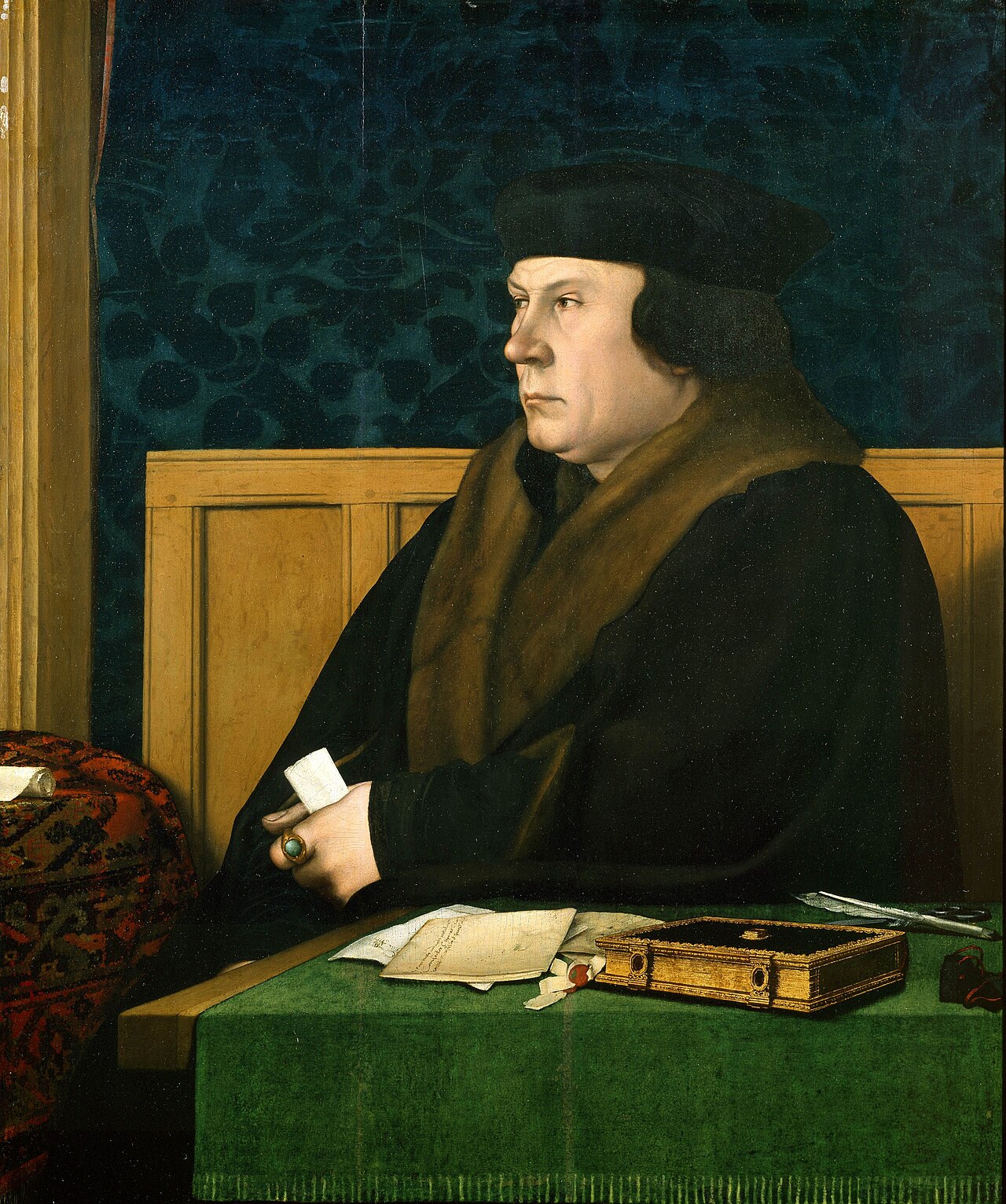
Thomas Cromwell, chief minister to King Henry VIII and chief architect of the English Reformation, was executed on Tower Hill on 28 July 1540. Born around 1485 in Putney, Surrey, he had risen from humble origins to become the most powerful man in England after the king, reshaping both church and government. His downfall came after he arranged the king's disastrous marriage to Anne of Cleves, a union annulled within six months. Arraigned under an act of attainder for treason and heresy, he was beheaded without trial.
On the same day Cromwell lost his head, Henry VIII married his fifth wife, Catherine Howard. Henry later expressed deep regret at the execution of his chief minister, widely regarded as one of the most consequential acts of his reign.
Matthew Clark, a footpad from St. Albans, murdered Sarah Goldington, a maid at an alehouse near Willesden Green, stabbing her in the throat and cutting her neck to the bone before robbing the premises. He was 24 years old. Pursuers caught him shortly after when they noticed blood on his shirt sleeve, and he confessed before standing trial at the Old Bailey.
Clark was executed on 28 July 1721. His capture came swiftly, his guilt established by blood on his sleeve and his own words against him.