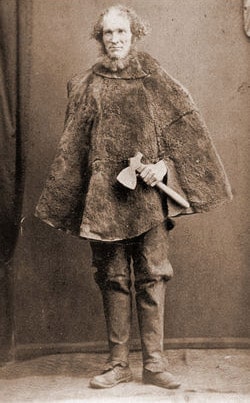
Joseph Bolitho Johns, born in Wales around 1826 and transported to Fremantle in 1853 as convict 1790, became the most celebrated escape artist in Western Australian history. Known as Moondyne Joe, the Cornish-Welsh convict turned bushranger broke out of custody so many times that his repeated escapes became legend.
He made his final escape on 13 August 1900, dying at the Fremantle Lunatic Asylum after years of confinement and declining health. He was buried two days later in a pauper’s grave at Fremantle Cemetery.
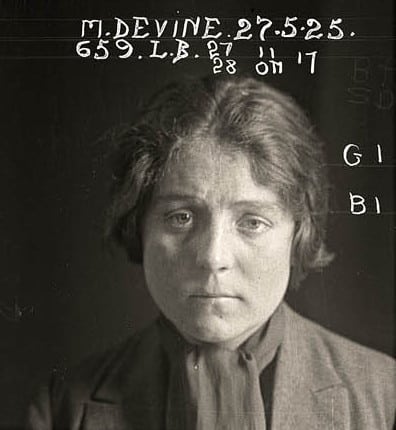
Matilda Twiss, born in Camberwell, London in 1900, married James Edward Devine, an Australian soldier serving in World War I, on 12 August 1917. Jim Devine, known as ‘Big Jim’, was a Victorian-born digger with a reputation for being sour and quick-tempered; Tilly was vivacious and already working as a prostitute. The pair were opposites in almost every way.
Tilly followed Jim to Sydney after the war, arriving in February 1920 and quickly building a criminal empire centred on Darlinghurst and Kings Cross. As the self-styled Queen of Woolloomooloo, she became one of the most notorious figures in the razor gang wars of the late 1920s and early 1930s. The marriage lasted 25 years before ending in divorce in 1943.
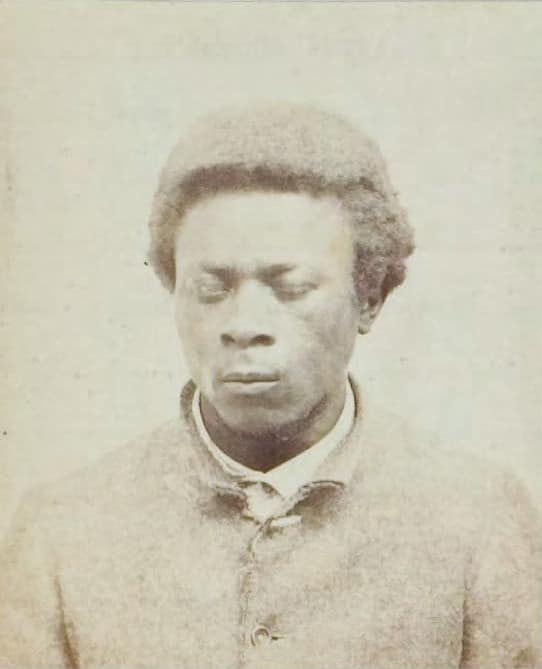
Oscar Wallace, known also by the aliases James and Hasker, had only been free for six weeks when he committed a brutal armed assault on Mary Cook at her isolated farmhouse near Mount Beckworth, outside Clunes, on 4 August 1873. Her husband was away, and Wallace, disguised with a bran bag over his head and a sack about his body, entered the property, seized a double-barrelled gun, locked the children in an adjoining room, and attacked the homeowner at knifepoint. He then fled through the district, robbing several men, firing at a Mr Prentice near Beaufort, and reportedly heading toward a hotel to settle an old score. He had served two years in Pentridge for larceny and had openly threatened the life of a witness from that trial.
Senior Constable Woods disguised himself as a digger and tracked Wallace to a store near Beaufort, where he overpowered him before Wallace could use the butcher’s knife he still carried. Wallace was tried, convicted, and hanged at Ballarat on 11 August 1873. He reportedly showed complete indifference to his fate from the moment of his capture.
James Wallace (tried as Oscar Wallace), prisoner no. 8775. PROV, VPRS 515/P0000, Volume 13, p. 167
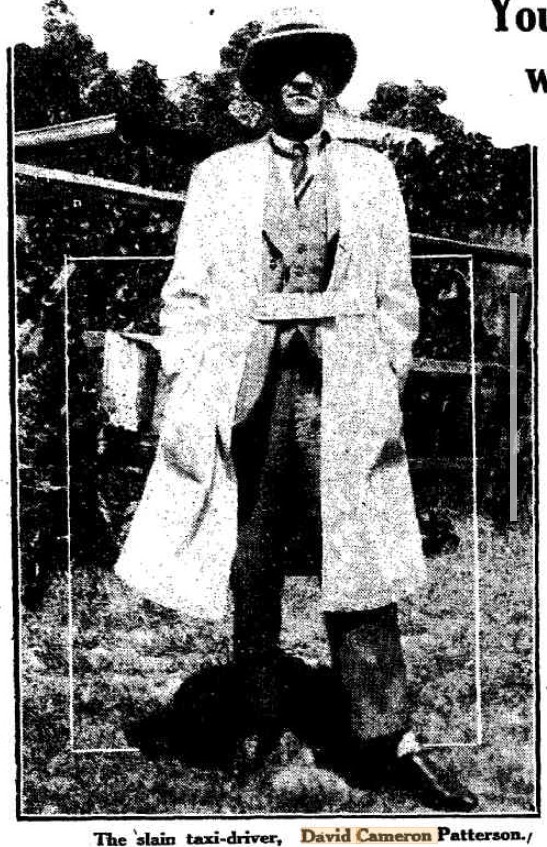
On the evening of Monday 11 August 1930, taxi driver Charles David Cameron Patterson, 27, was shot dead in his own sedan on a lonely stretch of Hale Road, about ten miles from Perth, near Maida Vale. Patterson had been hired to drive a passenger from Victoria Park Post Office to a rural orchard property beyond the crime scene. He was found slumped behind the wheel, shot at close range inside the cab.
Within twelve hours, police arrested Clifford Wray, a 19-year-old English-born city clerk employed at Bairds Co. Ltd., who had been living with his father on a property near the scene. Wray allegedly made two statements to detectives: the first claimed Patterson was killed by the accidental discharge of a revolver Wray was handling while Patterson attended to a fault on the car. A second statement followed, after which Wray was charged with wilful murder. Police noted the case bore striking similarities to the earlier unsolved murder of another Perth taxi driver, John O’Neill.